Apple Podcasts

 YouTube

 Spotify

 Amazon Music

 iHeartRadio

 TuneIn

 Goodpods

 Podchaser
 RSS Feed
A Deep Dive into Masculinity, Politics, and Society

Reimagining Masculinity with Political Organizer, Ross Morales Rocketto
In this episode of Real Men Feel, host Andy Grant engages in a deep conversation with Ross Morales Rocketto, co-founder of Run For Something and the lead organizer for White Dudes for Harris. They discuss the evolving notions of masculinity, the challenges men face in today's society, and the importance of political and societal engagement. Ross shares his personal journey into political activism, his perspective on the current crisis for men, and his thoughts on how to effectively reach and support men who feel isolated or marginalized.
Key topics include the weaponization of fear in politics, the need for genuine community and belonging for men, and the impact of cultural expectations on men's mental health.
00:00 Introduction and Guest Overview
00:49 Ross' Journey into Politics
04:19 The Importance of Knowing Your 'Why' in Politics
06:10 White Dudes for Harris: Concept and Reactions
10:09 Reclaiming Masculinity from MAGA
15:06 Ross' Upbringing and Masculinity
18:51 The Crisis of Masculinity and Its Implications
22:00 Engaging Men in Political and Social Change
34:17 Building Community and Belonging for Men
39:41 Final Thoughts and Contact Information
Connect with Ross
Instagram -- https://www.instagram.com/rrocketto
LinkedIn -- https://www.linkedin.com/in/rocketto/
Connect with Andy and the Real Men Feel Podcast:
Book a Clarity Call with Andy and get clear on your goals, what's in your way, and what you can do about it at https://theandygrant.com/talk
Instagram | @realmenfeelshow & @theandygrant
Andy Grant Website | https://theandygrant.com for coaching, healing, and book info!
Real Men Feel Website | http:// realmenfeel.org
RMF Facebook Group | http://realmenfeel.org/group
YouTube | https://youtube.com/realmenfeel
#RealMenFeel ep 353
0:00 Ultimately, the vision I would like to see in the world is a place where men feel like they can live. They can be who they really are. They can live that life without any fear or without any shame. And I think, to be honest, I think if we can get to a place like that, if we can get close to a place like that, I think we live in a very. I think our society looks really, really different. Yeah. Hello and welcome to Real Men Feel. This is your host, author, coach and healer Andy Grant. We have conversations that most men are not having, but that all men and the women who love them can benefit from. My guest today is Ross Morales Roquetto. Ross was the lead organizer for White Dudes for Harris, which drew more than 200,000 participants from all 50 states for the Harris Walls campaign.
0:43 Ross is also the Co founder of Run for Something, a piece of democratic infrastructure designed to recruit and support the next generation of young, diverse and progressive political leaders. I've been wanting to talk with Ross since my first introduction to him last summer, Not really about the election, but more about how politics and society need to give a shit about men. Stay tuned for a deep dive into political organizing, the weaponization of fear, the current crisis for men, and what we all might be able to do about it. Let's do it. Hello Ross, and welcome to Real Men Feel. Hello, I'm really happy to be here. Yeah, we connected due to your leading of White Dudes for Harris, which feels like a million years ago but was actually just last summer. And you know, I still proudly have my White Dudes for Harris hat.
1:29 I really thought it would age better than it has. So. You've Co founded Run for Something and launched White Dudes for Harris. I really want to know what what sparked your interest in political activism and leadership to begin with? Yeah, I mean, like it was a long, it's, it was a long time coming. I when I was a, when I was really little, my parents used to make me go to church every morning. I'm from Texas originally. I grew up in sort of like a relatively rural part of Houston. And when I, I don't know, I don't really remember exactly what age, let's say like 11-12, something like that. My parents came to me and they said, you can stop going to church, but you have to spend Sunday morning eating breakfast with us.
2:17 And I was like, yeah, it's a great deal. I don't have to get dressed up. We can stay in the house. Like, sounds way better. And that was awesome. And then every Sunday, basically from that point until I graduated high school, we would have breakfast on Sunday mornings regardless of whether I was hungover or not. And we would watch Meet the Press. And that really started that, that really sparked my interest in politics from really early age. My parents are both pretty political people. They weren't like, they didn't do anything in politics, but like they just, they cared and followed politics quite a bit. And then when I was in high school, I had a government teacher who made all of us volunteer on a campaign that was like, for that was like part of our grade.
3:03 And I, I, I loved it. I caught the bug really quickly. I went from, you know, like organizing for somebody who was running for U.S. Senate at the time to organizing my classmates to go work for that person, to organizing other people at other high schools to go work for him, to organizing people at like, colleges to go work for, like, volunteer for him. And I didn't even know organizing had a name at that point. But I just caught the bug and it was sort of off to the races after that. And so it was organizing that got you interested. Was there ever interest in you running for office yourself? If you had asked me back in high school, college, maybe right after, I would have said, yeah, like maybe someday I'll run for office.
3:51 You know, I've been doing this work now for about 20 years. I've worked with candidates at every level of the ballot, you know, whether it's Congress, president, other statewide offices, down ballot folks. I think, I think I just know too much now. You know, I think running for office requires, I think it requires an ignorance sometimes about how hard it's going to be. And I know exactly how hard it is. And I know all the ways in which it is hard. And so, you know, maybe when I'm older, like sixties, 70s and I'm like in, I'm like sort of like ready to retire. Like I'll go, you know, like run for like county Commission or something on like a single issue and be kind of like crotchety and old.
4:39 But, you know, right now it's it. I don't think it's in the cards for me. What has to call to you to you want to help organize for somebody's campaign? You know the thing, it's really interesting because the first thing when I go and sit down with a candidate, whether it's somebody running for mosquito board in Florida or President of the United States, I asked them the exact same question, which is why are you running for office? And it's really, you'd be surprised how rare it is to find a candidate who really does truly know their why at the very beginning and can really articulate it. And a candidate that knows their why gets me extremely excited. And you know, like you can, you can tell when it's BS and when it's not BS.
5:33 You know, you just like, you get the, you get the vibe, you know, I think like, if you think back to the 2020 primaries, some of the candidates that didn't do super well didn't have a clear why. Some of the candidates that never really got over the top didn't really have a strong why Joe Biden did, whether you know, you can argue about whether that was the right one it for the moment or not, But he had a really, he had a really compelling why, which is, you know, he was like the person to restore the soul of the nation. And people believed it and they believed that he believed it. And I think that's almost more important than people believing it themselves. Like, I think it's it's it is more, it is almost more important for the candidate to believe it because if they don't, you end up with a rudderless campaign. And I could point to 100 campaigns at every level of the ballot, including presidential, that had no clear articulation of the why.
6:29 And because of that, they just floundered. So white dudes for Harris was a bold name. Could have gone, you know, either way, perhaps. So what inspired that framing? Was it a tough decision to run with that? And what were some of the reactions you got at initial launch? You know, I think hindsight's 2020 and I actually, for what's worth, I don't, I don't, I don't regret the name. I think the name is the right name for the moment. I think we needed to, it needed to be a little bit on the joke. It needed to demonstrate some self-awareness. I think for people to like really feel like they could be a part of it. It couldn't be too, too serious, but it needed to be like serious enough.
7:11 And then, you know, I think at its core, I think we also needed to be specific. We weren't just dudes for Harris. Like we were very specifically trying to organize white men. And I think we got a lot of people who really wanted us to be like dudes for Harris. So like, why do you got to be white dudes? And it's like, well, because actually we need to organize white dudes. Like that is a thing that has to happen. And, you know, I think at the time, you know, the black men had also just done a call and there were like the API folk men were also going to do 1. And so like, it didn't feel authentic to just be like dudes when it was really white dudes. And that was, that was sort of though that was like the core reason why we went with that name. And, you know, like people, you know, blanched a little and at the beginning and the thing that I consistently said at the time was like judges by our actions.
8:12 Like, you know, if you don't, if you jump on the call and you don't like what you see, feel free to critique away. And, you know, people jumped on the call and they saw something really authentic and powerful, even in ways that I did not anticipate myself when we were originally organizing it. And, you know, it took off and, you know, it was, it's, it's been a, it's been a little bit of a lightning rod here and there. And I'm very happy to jump into it. I, I feel no defensiveness about it at all. I think like some of the things we did were really good. I think some of the framing that the right ended up using like to sort of combat it demonstrated that they were a little bit afraid of what would happen if the left started to win men. We didn't we actually, I mean, if you look through the exit bowling, it turns out that like she did a little bit better with white men than Joe Biden did, you know, in the previous in the previous election.
9:14 So it just turned out that we needed a lot more. I think in a in an election that was going to be decided by, you know, like what we in the business call a field margin. So like, you know, something that like a really good organizing program could potentially overcome so like point, you know, like less than a percentage point. So .3%, you know, like in an election like that, I think that kind of stuff makes a difference. It that wasn't, that wasn't the election we got we, it was, I know this is off message. People sometimes yell at me when I say this. It, it was not a close election. I don't believe that Trump had a mandate. I think, you know, that's that's why people often tell me I'm off message. I do not think it was a mandate for Trump. I also it was not a close election. Democrats have no business losing the popular vote. That was the first time we'd lost the popular vote since 2004.
10:07 So it had been 20 years since we had lost the popular vote. So it wasn't close. It sucks. It is what it is, and here we are. And here we are in the year of our Lord 2025. Yeah. So going back to that first white dudes right here is called I think it was July 2024 and I think you said something, was it July? Yeah, it it, I mean like we're coming up on a year soon, Yeah. You said something like needing to stop the right wing and MAGA from defining masculinity. So what does what does reclaiming masculinity from from MAGA mean politically and to you personally? I think it's, I think that's really, I think it's a really complicated, that's the, that's the question. It's a really complicated one.
10:56 The from where I sit and my thinking, you know, if you would ask me this in like, you know, October of November of 2024, my answer I think would be considerably different than it is, you know, today. I think that the right has done an incredible job of weaponizing like different forms of masculinity and they've done a really good job of weaponizing resentment, like the politics of resentment and fear and cynicism that go along with all those things. And that I, I don't think that through political means we actually can like win people back.
11:43 I just, I don't think it's political. I think we have a really deep set of issues that men are facing right now in our country and also across the world, to be totally honest. And that is that's like a huge, I think that's a challenge that that's like a challenge of the next 20 years. And I think we can either keep going down the road that we've been going down or we can try to pick another one. I think what that means that's sort of a really fundamental level is we need to completely rethink the way that we interact with men. And I think we need to completely rethink the way that folks think about politics in these contexts because men are not going to be able to hear what the left has to say until the problems that they feel like they're facing have been addressed. Social isolation, like 8.
12:43 An ideology around masculinity that that that keeps people boxed in and not able to be who they really are as people. You know, a new economic contract that has developed over the last 30 years, while at the same time people were being told all you need to do is work hard and like you'll be able to like get by. And that's just fundamentally isn't true anymore enough. Like, you know, the social contract about, you know, all you, your, your only role and value in society is as a protector and a provider living in a society in an economy where like that isn't as needed as it once was and where people don't, where some folks don't even want that. And So what do you do when you have a generation, generations of people who grew up with those with those American mythologies, and then they get into the world and they've either see those seen those things erode around them over many years, or they just get out into the world and they turn out not to really be true.
13:53 And I think all of those things create a really toxic Stew that makes it really, really easy to scapegoat women, feminists, immigrants, whoever it the them, the other. It makes it really, really easy to scapegoat people. And I've heard a lot of I've had a lot, I've heard a lot of discourse from people who honestly on on a lot of things I like respect quite a bit talking about how feminism is the reason that like men are feeling the way that they're feeling. And the me too movement is the way is the reason. And those that that is fundamentally not the case.
14:35 Those things did have unintended. Some of those things have had unintended consequences. And also to point to feminists and be like, it's your fault that men feel this way is totally ridiculous. And like many, I actually think it belies a thing that we have a really hard time doing on the left, which is holding 22 conflicting truths together in tension with one another. And I think like, you know, we live. Donald Trump winning fundamentally changed a lot of things, and I think one of the things that we need to do as a movement and we have an opportunity to do as a movement is to completely rethink the way that we interact with these types of truths. So I know your parents were politically aware people. What was your upbringing around masculinity like? Was was it suck it up be stoic or was it more open grounded? It's really interesting.
15:45 I I've thought a lot about this over the years and I've been on my own exploration around masculinity over the last couple of years and I like masculinity was never really explored by my parents, but my parents are really interesting people. Like we, I grew up in Texas. I'm basically the only person in my family to grow out, grow up outside of New York, New Jersey or Connecticut. My entire family is from like Staten Island, Brooklyn, New Jersey and some folks up in Connecticut. And you know, my, my mom grew up in Staten Island and she grew up in a housing project and you know, is like was a really talented artist.
16:29 She could sing, she danced, she acted, she's extremely creative. She like was a shoe designer for many years. She currently makes jewelry for like for her living. You know, when my dad grew up, like right, my dad was my dad never actually got to know his like father. His father died during World War 2. So his like grandmother got pregnant. He went off to World War 2 and then he died over in over in Europe. So there wasn't my father. I would say in some ways you could say like was like a like traditionally masculine guy. He like didn't talk that much about his feelings. He had a lot of rage inside of him. He was like, he was pretty stoic. There was like, you know, as much as my mom was sort of like my mom is like a very like a my, my mom like is a feminist and like taught me to be a feminist.
17:33 There were also, you know, like still traditional gender roles in our home. Like my dad worked. My mom sort of like did a lot to raise me. She also worked, but you know, like it was she was sort of the primary caretaker. I think what is really interesting about them though, is that like there were also places where my dad just like wasn't a typical dude. He like he's an engineer. So he likes to fix that. He or he is good at fixing things. He does not like to do that stuff. He taught me how to do some of it, but he just like never he never really wanted to do it all that, that badly. He never was like, he never, we know.
18:14 We never talked about how like, oh, yeah. Like, men don't cry. He cried, You know, he actually was like a little softy. He would cry like any time there's something sad in a movie, you know, It's just so I saw a lot of traditionally masculine things from from him that I don't even think he was aware of. But like he also didn't really fit in a box either. And then, you know, I like, I also grew up in like Texas and there were a lot of just like dudes dudes around me. And that was like a lot of, you know, like a lot, some of my, a lot of my friends went dirt bike, like were dirt bikers and like, you know, like shoot gun, you know, it's just like traditional dude stuff. And for what it's worth, I like many of those things. I never like got the hang of dirt biking. I, I just, I wasn't good at it.
19:03 And but like, there's lots of things that like we did that I, I really enjoyed. And but yeah, it just, I, I would say like a little bit of column A and a little of column B. Was there any sort of defining moment for you that made you realize like we need to give a shit about men more? Yeah, I had a friend who I grew up with and like we were very close in middle school, in the beginning of high school. He ended up, he ended up going down like a pretty dark path. He was, you know, he ended up with like problems around addiction.
19:44 He ended up with problems around domestic abuse. He ended up in jail for a little while and he ended up committing suicide or sorry, taking his own life in his early mid 20s. And I really thought a lot about that. I thought a lot about it over the years. And, you know, a thing that I don't think a lot of people knew about him is that he was he was gay or at least bisexual and. I think to a significant, I think to a large extent, he just didn't know what to do with those feelings and the world that he lived in and the world that he grew up in that was not acceptable. And it like led him down a really dark path. And he's not that story is like is is really specific in this case, but it's an extremely common story. You can replace the individual details in there and you know, it applies to millions of people across the country and really like really being an exploration around him. My own masculinity over the last couple years has like really like led me to this place where like we, we need to, we just like, we need to get roll our hands up and fix it and no one is going to do it for us.
21:02 I think this is the thing that I feel really strongly about is like, it's not women's job, you know, to like go in there and work with men. It's like our job to figure this out. And they can't, I think, like, they can be helpful. They can be allies the way men are allies, you know, around like dismantling patriarchy, all sorts of things. And also, like men have to do this work and we have to roll up our sleeves and get it done and we have to do it sort of by any means necessary at this point. I think that the there is a crisis around masculinity, around men. And if we choose not to do anything about it, we are in for really, really dark times, I think in the next 1020 thirty years.
21:49 Well, that's pretty frightening for all the people that already think we're in dark times, so. That we are. I mean, you know what the 2016 election taught? Actually, no. The 2016 election in COVID taught me a really valuable lesson, which is never ask the question, can it get worse? The answer to that question is always yes. It doesn't matter how dark the hole you're in is. It can always get deeper if you just if you keep digging. So, you know, we shouldn't be asking that question. It can absolutely be worse than it is right now. How do you talk to men who've been pulled deep into the MAGA culture in in a way that engages them and doesn't like just try to shame them or something like that? I think the first thing that you said is like part is like a core part of what has to happen, which is like we can't be, we like can't make people feel ashamed of who they are and what they think.
22:45 And I think the other piece of it is a thing that is a core part of my organizing philosophy is that in order to organize a group of people, one thing has to be present for sure. But in an ideal world, two things are present. The 1st is you respect the people you're organizing. I think that has to be present. The second is I, I believe you should love the people you're organizing. And if you can't, if you can't respect and or love the people you're organizing, you should not do it, full stop.
23:25 And I think that's the place we need to come from. It cannot be, we cannot be coming from a place of judgement. It cannot be coming from a place of shaming. It doesn't mean you're not going to hear things when you're talking to people that like really offend your sensibilities. The reason that you need to come from a place of love and respect is because when those moments happen, you need to be able to go back to the why, the reason that you're doing this work. And we can't organize men and try to make men's lives better for the sake of winning elections. We can't do it for the sake of women. We can't do it for the sake of other people.
24:07 We actually have to do it for the sake of men and making their individual lives better. And sure, does that mean if you do that work, other things might happen? Yes. And you cannot do that work with integrity if you do not love those folks, if you do not respect those folks, if you were not doing it for the right reasons. And The thing is, people can tell when you're not doing it for the right reason. You can people can tell when you don't respect them actually. Like I think the Democratic Party is an incredible example of that. People can tell that a lot of Democrats do not. Voters can tell that a lot of Democrats don't respect them. It comes across in everything we do, whether it's television ads, whether it's our dramatic mail, how we talk to voters, the language we use when we talk to voters, the language we use when we talk about voters.
25:01 They can tell even even in they they just and they don't always, they can't always put words to it, right. Actually, most of the time they can't put words to it. But the vibes just feel off. And people are sometimes willing to overlook the bad vibes if the vibes on the other side feel worse. And so like, sure, can we win elections in individual years, even though people kind of know we don't respect them and they don't really like us that much? Yeah, we can. And also in a vibes election like 2024 was, we get our asses kicked because it was all about the vibes. And people were like, yeah, Democrats just don't really, we don't really like Democrats that much. And we kind of like Donald Trump. We don't like dislike him.
25:53 We kind of think he's a clown. You know, like, a lot, if you talk to a lot of Republicans, they will say things like, yeah, he's kind of a clown, but like, he's at least going to fight for us. And I think at a really core, fundamental level, people do not feel like we are going to fight for them. And they do not feel like we respect them. And I think those are some of the reasons why, like, you know, like, people like our policy, when you poll voters consistently over and over again, they're like, yeah, those policies sound great. We love socialist policies. Like, if you don't call it socialism and you just, like, tell them what it is, they're like, oh, we fucking love those. Those are awesome. Like, give us like, free college. Give us like, free health care. Give us all the free shit.
26:34 But like when you ask them if they like us, no, they do not. They do not like us and they don't believe that we're going to do the things that we say we're going to do. Because when we get in power, we don't do the things we say we're going to do. Yeah, that's definitely one thing Trump has always had going for him. He he'll do what he said he was going to do, so you can't really be surprised with what's happening. There was this whole back and forth where I saw recently where, like some Democrats were like, yeah, like we, you know, like you didn't know that Trump was going to do all these things. And then Trump like, got up there and was like, yeah, yeah, you did.
27:14 Like, I talked about this during the everything I'm doing, I said I was going to do during the election. And sure, like, he didn't give detailed policies, like, but he told us what he was going to do. He told us he was going to deport a bunch of people. He told us he was going to completely take a Wrecking Ball to the government. You know, he told us he was going to do. And he did the same thing in 2016. People keep being like, oh, we didn't. We didn't know. It was like, yeah, he told us. And then you know what also, Hillary told us that what he was going to do, she just repeated the things he was saying. And she's like, yeah, he's going to do these things. He he means it. And then he did. Now he's not effective or then he wasn't effective.
27:55 He's been more effective this term, unfortunately. But in 2016, in 2017, he wasn't particularly effective. And that was, you know, a saving grace. But that's not the case this time. Right. Yeah, very different now. Do you have any personal theories as to why so many men do feel disconnected in today's, you know, political and cultural climate? Yeah. I mean, I think it gets back to some of the stuff we talked about a little bit earlier. I think an economy that like doesn't work for a lot of people. You know, there's in this, this isn't this isn't new. There's like a sort of strain of anti intellectualism that has like existed across the American experiment.
28:38 And so as, you know, like the economy became a more service oriented one where, you know, you needed a college degree and now sometimes now often more than a college degree to like get the highest paying jobs. You know, like as that started to shift folks, men largely have like been not really been encouraged to go to college that that sort of like strain of anti intellectualism has sort of like seeped its way into sort of like the way we think about masculinity. We think like men's work is like work with the hands and look, it can be like it does not necessarily need to be, but it can be. And for many people that is how it feels. And there's just less of those jobs than there used to be. It's why the tariff stuff with Trump sort of like appeals to like a a large swath of his base that are mostly men in the Midwest who like want, you know, an industrial economy to come back, which probably will never come back. And the unfortunate thing and the thing that is like gross about what Donald Trump is doing is like he he very well knows that those people are not going to get those jobs. Like the jobs that are that they're going to create are if we create manufacturing jobs in America, it's going to be fixing the robots that build the things. Like it's it, you know, we still build some stuff, but like it's not people working with their hands putting cars together anymore.
29:59 Like if you've seen like an auto manufacturing facility, it's mostly robots putting the cars together like at this point, so, or an assembly line. So like, you know, it's, I think there's that. I think the, I don't like to use the term toxic masculinity because I, I actually think what that really means is patriot, what that really is, is patriarchy. And like, you know, that's a word we don't, you know, we don't use because it's got, you know, like feeling people have feelings attached to it. But like, that's what it, that's what it really is. And it's also also, I think it sort of like masks, the fact that like masculinity just means different things to different people. And there's actually nothing inherently wrong with like people feeling like it means a certain thing to them. I think where it becomes problematic is when it becomes destructive like both to the individual and it often it often becomes that and to and then to other people. And so, you know, you've got like a strain of masculinity that is like a virus and it is extremely disruptive. And it's really like about destroying like the individual individuality of the person.
31:09 And then once the individuality has sort of been like destroyed, that person becomes angry and like enacts that as like different forms of violence on other people. And that violence can look a million different ways, but that's sort of like the core of what it is. It's rage, it's violence. It's like, it's all of those things sort of like combined together. I think like our culture reinforces those things. Our culture tells men the way that they need to be, and that's upheld by both men and women. And I think that's something that's like absolutely worth a conversation about that. You know, like something that my wife and I often say is like the patriarchy lives deeply within us all.
31:53 And, and that is all like, it is everybody to some extent. You know, like if you talk to a lot of men, they'll say things like, well, the people in my life, like say they want me to act this way, but when I do ACT that way, they don't like it and they kind of react weird to it. And so like that has taught me to like not show my feelings or to like, not share how like this thing was, you know, how this thing made me feel or whatever it is or be more sensitive because like people like it when I'm like the strong rock and I never complain. You know what? I think these myth, I think the American mythology is largely falling apart around us right now. And I think like that means it's probably long past due to like re rethink what what our mythology is. And I think that creates a deep well of cynicism. And I think that really deep well of cynicism is super easy to weaponize.
32:53 And I think when you combine everything together, it creates a series of conditions that just like, you know, that lead to someone like Trump and actually, for what it's worth, could lead to a populist on the left, too. I think, you know, Bernie Sanders, I think like people, I think a lot of men responded to Bernie Sanders from that same place, which is why after the 2016 election, you heard like a little bit about it. It never really took off. But you heard some rumblings about the fact that there were Trump, Bernie voters. And folks are like, I don't understand how that's the case in it. It's anger. Like, it's anger at the system. It's anger at like the way that people's lives have turned out. It's anger at the fact that, like, we were people were promised one thing and life has given them something different. And, you know, Bernie was offering like free stuff, you know, as the as the sort of like solution to the, you know, like the oligarchs are, you know, like taking over and they want to screw you.
33:56 And I want to give you a bunch of free stuff, you know, like traditional populism and, you know, like it was effective. And that's that's what that's how people were really sort of perplexed that like anyone could vote for Bernie Sanders and Donald Trump. But they're sort of like strains of the they're they're strains of the same thing. And they're tapping into some like the a similar anger that exists out there. And so it was, it was surprising to me at first. And when I like actually thought a little bit more about it, it started to become a little bit clearer. So, Ross, I know you've been on sabbatical and no, no, you, you've been doing a lot of thinking about what do men need and, and perhaps organizing them, helping them, whatever it might be. But if you had unlimited resources, what would you like to put in place for men? I think we need, I think a couple of things need to happen. I think we used to have like society used to have institutions and structures that allowed men to get into relationship with themselves, each other and their communities themselves.
35:01 Is has always been a little bit harder. But like for sure, like other men in their sort of like broader community, other else clubs and like they were just it's the Boeing alone story. I think we need to we need to start to rethink how men can get back into relationship just like full stop. And I think to me, that's where it all starts because so many people are isolated and they find gross corners of the Internet as like, places to be with others. And it's not because, you know, if you hear people's stories of radicalization and sort of deradicalization, it's the same story told over and over and over again with often the exact same details.
35:46 You know, it's I was feeling lonely. I was feeling displaced. I was feeling like I didn't belong anywhere and then like I saw a thing online and I sort of like went and like there was a community there and I didn't like what they were saying necessarily, but like they made me feel like I belong somewhere. And so I think there's a couple of there's there's a couple of things. One is the relationship 1 is a sense of belonging. And I think that I think that relationship and to with other men and in being in community with each other helps create those things. And then I think something that I think talking to both folks who work in religious communities and are in the military, something is like has like sort of like popped up. That was an additional piece to that I hadn't really thought about before then, which is the idea of being in service to something that's bigger than yourself. And I think we need to I think as a society, we need to create those types of spaces where people feel like they can be in service of something bigger than themselves, where they can go and get into a relationship with each other. And we can do it.
37:07 There's a gajillion ways to do it. You know, we can build gyms, we can, you know, like we can build things that people we can build places for folks to go game. So instead of gaming alone, they can go game with other, you know, like there is this can look a million different ways. And I think it should because people have different interests. And what we should really be doing is looking at the things that people are interested in. And then we should be looking to build the spaces that allow them to be together. And once people are on, I'm really interested in working with the people who don't even know that they need to go on a journey, you know, like the people who are already on a journey like me and can even like articulate the idea of a journey. Those people are like working on themselves. And like there's, you know, there's light at the end of the tunnel for those people.
38:03 It's hard. It's really fucking hard. And it's definitely not a linear journey, but there's, there's hope there. I I'm really interested in the people who like haven't even conceptualized that there's a journey to be on. Yeah, they're they're in the box. The box is all there is. This is life. That's who needs to be reached and like this is how it will always be. I think like the hopelessness I did, I did my undergraduate thesis on hopelessness as it relates to violent crime in post Katrina, New Orleans and the the state of Louisiana does a lot of things wrong. But one thing that they do that's very cool is they have something called Louisiana Health and Population Survey and it actually surveys people based on their they one of the series of they have a whole part of it that asks people questions that get out the idea of hopelessness. Like how hopeless do you feel?
38:59 How like how long have you felt this way? And unsurprisingly, when you map it in areas where people feel hopeless, there are increased incidences of violent crime. And you and when you look at the places on the map where violent crime occurs, where there is not hopelessness, sort of like in the area, you can often, like in the survey map that violent crime back to where like this sort of sense is tracked that that individual who committed it lived. And it also turns out that it is almost always in that area. And I think right now a lot of people don't feel like there is hope. And that's a really, really dangerous place for the country to be.
39:49 So I think like, we got to like, rebuild and we got to build new institutions. We've got to like rebuild the things that, like existed before, but we've got to do it in ways that work for 2025, not in the ways that worked in 1960. What's one thing you wish more men knew? Oh, themselves, to be honest, I think my ultimately like my vision. And this isn't how I would say it if I were to like sitting across the table from like, you know, like somebody I grew up with. But like ultimately the vision I would like to see in the world is a place where men feel like they can live.
40:34 They can be who they really are. They can live that life without any fear or without any shame. And I think, to be honest, I think if we can get to a place like that, if we can get close to a place like that, I think we live in a very, I think our society looks really, really different. Yeah, for sure. Ross, what's the best way for people to connect with you? Follow. See everything that you're up to. Yeah, I'm on it's, I'm not on Twitter. Well, I like technically I'm on Twitter, but I don't, I'm not on there. I'm at I think I'm on threads at Arroqueto and they think I'm on blue sky at Ross Maroc at some, you know, I might actually be wrong.
41:19 So also send it to you afterwards that like truly I'm like, wow, I'm a little it's it's been 3 months. I took three months off, so I'm a little. Figure out where you are, Yeah. But you didn't. Yeah, you can. You can find me on social media, probably on Instagram at Armocetto and Blue Sky at Ross Maroc and Threads at Armocetto too. Ross, I really want to appreciate this. Again, this is AI think it was December. We first talked and but I've I've wanted to talk to you ever since last July and you did not disappoint. I look forward to whatever you're called to do next. And again, thanks so much for being here. Thanks so much for having me I'm this was this was really fun. Thanks for joining us everyone. Please visit realmenfield.org.
42:02 See the blog post for this episode, which I have all the various links and resources discussed. Wherever you're discovering Real Men Field, please subscribe, follow, like, share this episode with someone, post a review or comment, and until next time, be good to yourself.
Organizer
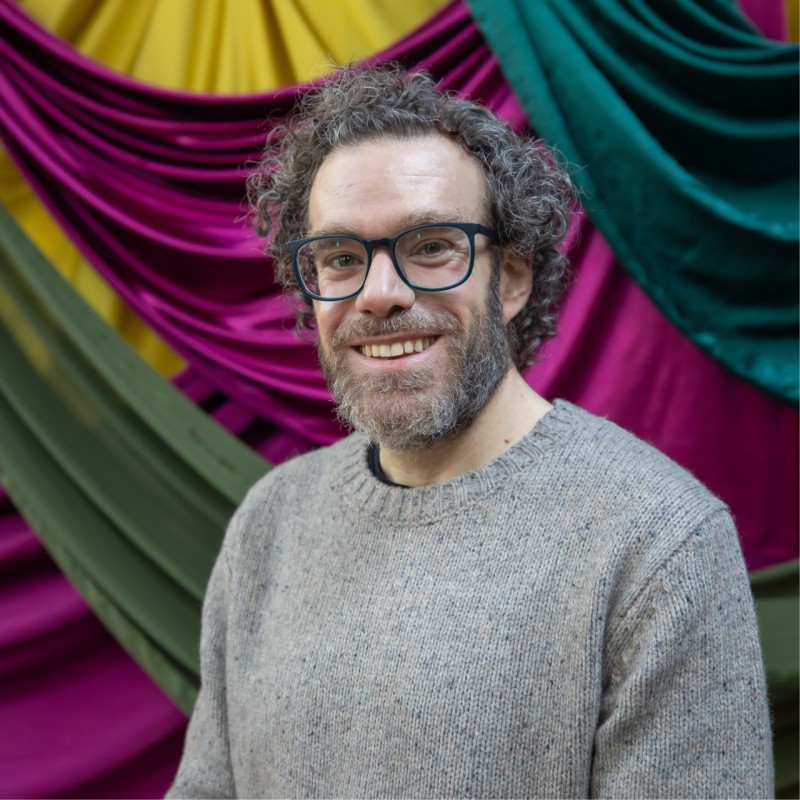
Ross Morales Rocketto is the Lead Organizer of White Dudes for Harris, which drew more than 200,000 participants from all 50 states while raising $4.5 million for the Harris Walz Campaign.
Ross is also the co-founder and outgoing co-executive director of Run for Something, a piece of Democratic infrastructure designed to recruit and support the next generation of young, diverse, and progressive political leaders. To date, Run for Something has worked with more than 150,000 individuals who are interested in running for office while making over 3,000 endorsements over the last seven years. RFS has helped elect more than 1000 new folks across the country. Before starting Run for Something, Ross spent 20 years in electoral politics, having worked for candidates from school board to President. He was previously a Principal at the Smoot Tewes Group (now Arc Initiatives), where he worked on a variety of advocacy and electoral campaigns. In 2016, Ross was an advisor with For Our Future, a multi-million dollar SuperPAC that did field and organizing work in swing states. Ross lives in Washington, DC with his partner Jess, his dog Nacho, and his cat Baby Kitty.