Apple Podcasts

 YouTube

 Spotify

 Amazon Music

 iHeartRadio

 TuneIn

 Goodpods

 Podchaser
 RSS Feed
A Father's Story of Mental Health, Loss, and Resilience
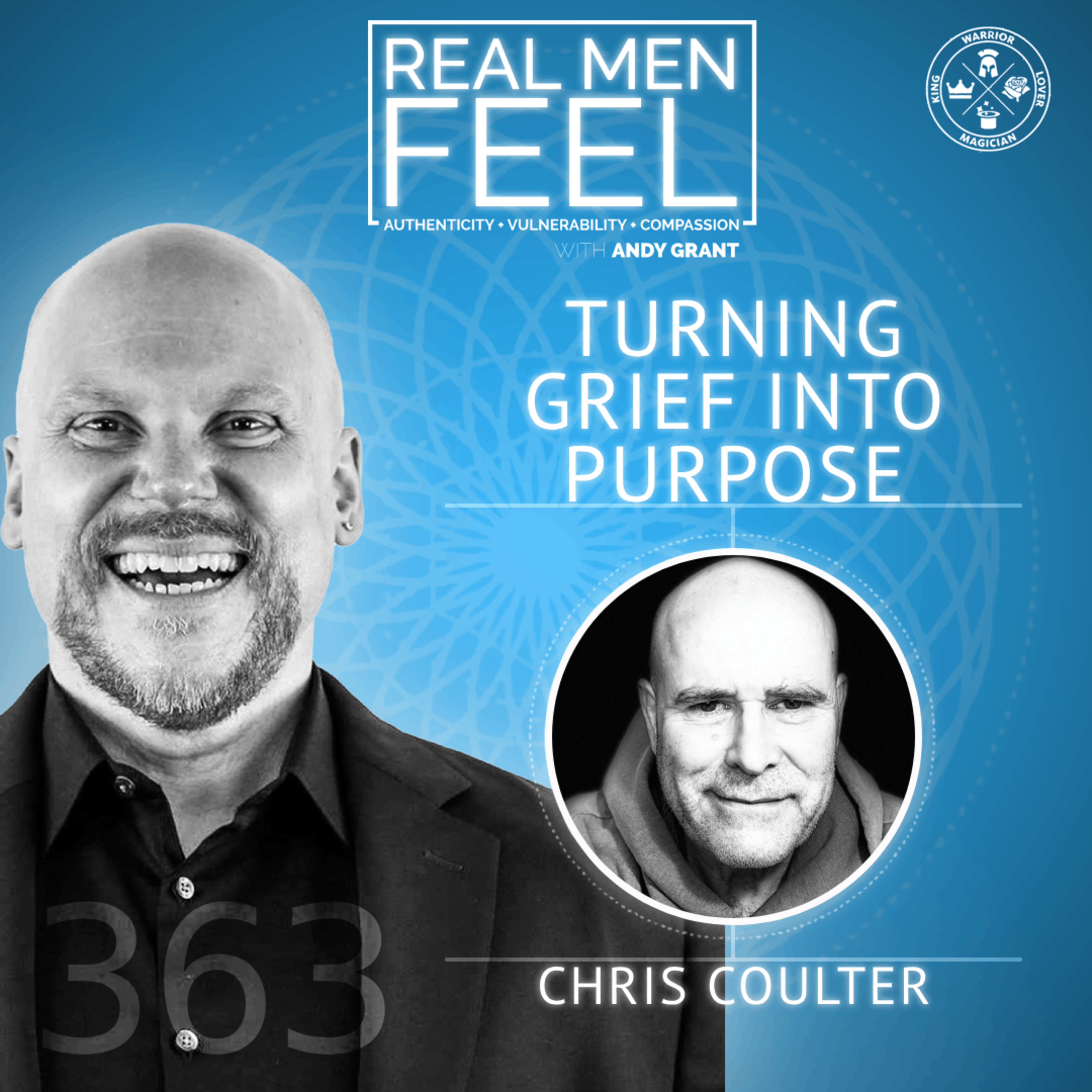
Chris Coulter shares his heartbreaking experience of losing his daughter Maddie to suicide and how he channeled his grief into creating the Mentor Well, an online mentoring service designed to provide emotional support to young people.
Transforming Tragedy into Purpose: Youth Mental Health and Mentorship
In this episode of Real Men Feel, host Andy Grant has a heartfelt and hopeful conversation with Chris Coulter, a father, entrepreneur, and advocate for youth mental health. Chris shares his personal journey of grief and transformation after losing his daughter Maddie to suicide. He discusses the impact of his loss on his life and the creation of The Mentor Well, an online mentoring service designed to support young people through life's challenges.
Chris emphasizes the importance of emotional intelligence, vulnerability, and the need for honest conversations to help teens navigate their struggles. He also offers insights into the importance of parental role and the misconceptions around youth mental health and suicide.
00:00 Introduction: Embracing Vulnerability
00:23 Meet Chris Coulter: A Journey of Grief and Action
00:59 The Impact of Loss: Maddie's Story
04:37 The Birth of Mentor Well
07:21 The Role of Mentorship in Youth Mental Health
13:01 Navigating Grief and Finding Purpose
20:33 The Importance of Emotional Intelligence
21:18 Challenges and Misconceptions in Youth Mental Health
22:58 How Mentor Well Works
28:14 Chris Coulter's Personal Growth and Advocacy
34:27 Conclusion: Real Men Feel Community
Connect with Chris
The Mentor Well -- https://www.thementorwell.com/
LinkedIn — https://www.linkedin.com/in/chriscoulterfinishline/
Connect with Andy and the Real Men Feel Podcast:
Instagram | @realmenfeelshow & @theandygrant
Andy Grant Website | https://theandygrant.com for coaching, healing, and book info!
Real Men Feel Website | http://realmenfeel.org
Authentic AF Community | http://realmenfeel.org/group
YouTube | https://youtube.com/realmenfeel
#RealMenFeel ep 363
0:00 Talking and expressing emoting is a strength, not a weakness, and that whole unmanly tag is bullshit. Hello and welcome to Real Men Feel, the show that explores what it means to be a man in today's world. I'm your host, Andy Gritt. Today's conversation is both heartbreaking and hopeful. I'm joined by Chris Coulter, father, entrepreneur and passionate advocate for youth mental health. After losing his daughter Maddie to suicide, Chris made a courageous decision to channel his grief into action, leading to all his conversations and creating real change in how we support young people. He's the founder of the Finish Line Group and the mentor well, encouraging meaningful conversations, vulnerability and support. This is a powerful and deeply human conversation you don't want to miss.
0:52 Let's do it. Hello Chris, and welcome to Real Men Feel. How you doing Andy? Great to be here. Thanks for joining us today. I really want to start with asking about your daughter Maddie. And I know he pretty much influenced everything that you're doing so. So tell me a bit about Maddie. So Maddie was my first, first born. She would have been 25 Tomorrow I'll I'll tell you from April through till the end of June. It's kind of my, that's my rough, that's my rough time of the year. Just because we lost her in April, then you got Father's Day, which is another tough, tough day for me. And then kind of culminating with her birthday on June 28th. So I'll be glad when we're through this little period of time and not, not you know what?
1:45 I'm, I'm very reflective and honor her in every way. I, I, I can. But, but getting back to your, to your point, Maddie, Maddie was my first three kids. I have two boys. And you know what we were, we're married. We faced challenges that a lot of, lot of couples face. Ultimately we decided I, I had a business that did really well for 20 years and we, and then the financial crisis at 2008 hit and all of a sudden kind of your stability of income, your nest egg as far as the asset that you built within the business. All that gets, all that goes away when you, when you, when you lose a, a business to bankruptcy and it impacts kind of what your, what your life is about. So your family, all the things that you participate in. So that happened in 2010 and 2011. We end up getting separated, which had a real impact on on Maddie.
2:52 And it was it, it was tough and we didn't do things perfectly. It got ugly. And unfortunately by X wanted to try to take the kids to Europe. And I said, screw that. You're not, you're not, you're not leaving. And it just became a situation where the only ones that win are the lawyers. And when you, when you, when you walk away from a business that was your primary asset and that doesn't exist anymore, We're kind of split nickels here. So we're not, we're not talking like there was a huge, a huge amount of of money to fight over. So at the end of the day, I, there's nothing I wouldn't do for my kids. And I know they wanted to be in Canada. Unfortunately, Maddie was kind of like the pawn that was was used to to leverage moving versus staying here. I think it was the single largest contributor to her depression, which ultimately we lost her when she was 14 years old to suicide.
4:01 And that has been and for the next, so that was April 11th, 2015. And for the next 5 years, I could barely do anything. But I I was forced to. I was, I started up another business. Yeah, which you're probably going all right. Who loses a business, goes through an ass and divorce and decides to start up another business only to have only to lose their daughter to suicide. So it's been a it's been a pretty shitty last 10 years, honestly. But the interesting thing about grief it if, if you allow it, allow the possibility reef can transform into something really, really powerful. And in in Maddie's case, I knew what the how the system failed us.
4:56 And I thought about ways that if we were to do it all over again, how would what would I want it? How would I want it to be done differently? And that's where this brainchild of the Mentor Well came into play. And the Mentor Well is an online mentoring service that we focus on kind of kids anywhere from 10 to 25 who are, there's not really anything broken with them. They're not like been mysterious, facing serious mental health challenges, but they could be lacking things like confidence. They don't know.
5:38 I don't know about you. When I came out of university, I think I was more confused than when I went in and I I didn't know what I wanted to do. There's a lot of kids right now that are going through that same stuff. But the other aspect of things, kids are dealing with a lot of a lot of stuff, whether it's divorce, whether it's if you're a Toronto Maple Leaf fan and they haven't won in 58 years and you're wondering, OK, do I have to go through this whole grieving process every single playoff run that falls well short of where they should be. Could be not getting into your university of choice. It could be getting fired from a job. Grief isn't just the loss of a person, it's the loss of stuff and how we process it and how we how we're able to move forward in spite of it.
6:28 And that's the mentor Well, is intended to be a safe space for kids to talk to adults who have been on a similar journey, who have been, have have ridden that that course, who understand what it's like to fail to understand what it's like to, to not be your best version of yourself. And that vulnerability. And that not, not to jump in from a place of trying to fix, but just trying to listen, trying to, trying to guide as opposed to steer. And kids need that because they're dealing with so much stuff that they, they don't, they don't know how to process it.
7:13 They don't have the emotional aptitude to be able to process a lot of stuff because they've never been taught. So that's how Mentor Well kind of came to be. We did a soft launch about 2 1/2 months ago and it's just been like a hockey stick momentum growth since then. So we are we're ramping up and having some really amazing conversations with a lot of really amazing people. And there's a ton of people who are struggling right now and they're recognizing that, you know what, this is such a unique service because what we, what we tried to say is we're that bridge between parenting and therapy.
8:00 And parents say that they, well, I'm, I'm a mentor to my kid. Well, no, you're not there. There is that hierarchical difference between parents and kids. And kids feel it even if parents don't, and especially when they actually control the punitive aspect of the relationship, right. And what happens if you you say, hey, mom, dad, this happened. I I tried pot and and then I really appreciate you sharing with me. But you know what? You're grounded for the next month. I'm going. OK, so where do you get rewarded for sharing and being honest?
8:42 So that's why creating that safe space for a kid is really important because parents will only be told what they want to hear. Kids will hold the rest of the stuff really close to their chest and, and, and, and so they're suppressing it and they're not dealing with it. And as a consequence, they're not able to process a lot of their grief, a lot of their confusion, a lot of their anger. And mentorship is a, is a great vehicle to help them do that. But the other distinguishing difference for us is we also want to teach them about the important elements of very, of varying elements of emotional intelligence. You know what, if we can fast track their emotional intelligence growth, it's going to just help them flourish down the road. Because if EQ is a, is a bigger determiner of success than IQ is.
9:37 And it's a, a learned skill, then you know what, there's absolutely no downside. And I, if we wait for the government and for the school systems to, to adapt and to incorporate some of this stuff into curriculum or into legislation, we're, we're going to be waiting an awfully long time. And we're in crisis mode. Our kids are in crisis mode and numbers have never been higher. This is a space that I think is is is safe and valuable and it's and it's something that kids really need today. Completely agree and I I didn't realize that the metro well was was this new. So Congrats on getting it up there and launching and and off to a quick success.
10:22 How did losing Maddie change your understanding of mental health, especially for young people? I went through with kind of the loss of my business, loss of my marriage. I, I was always comfortable. I shouldn't say always. I remember the first time I did a blog or I did a blog post or I did something that was emotionally vulnerable. I kind of, I told, shared my story about depression. And I think it's, it's relevant because when I first shared, it was back in 2012, there were not a lot of people who are sharing that kind of stuff. And I'd get a lot of personal direct messages from, from people that I shared my story with.
11:08 And they went and thank you for thank you for sharing that story. We're going through something very similar. And just it gives us comfort knowing that we're not alone in dealing with this. So with regards to Maddie, I recognized kids, kids don't want to be perceived as broken. And unfortunately, when things start to kind of go off the rails from a parenting standpoint, their first, their default setting is, oh, shit, let's let's get them into therapy. And kids are like, I don't want to go to a therapist. I just was just sharing something I'm going through.
11:48 And, and sometimes they just need, they just need someone to talk to. And often they'll refuse to go to a therapist. So what happens? Well, there's a bit of they come to an impasse. And so the kid is struggling or on the verge of struggling and yet they have no resources that they're willing to use. And the parents are kind of at, at, at at a loss. They don't know where to go. They just know that their kids not well. And So what we, what we offer is not an alternative to therapy because therapy absolutely has their place in, in, in, in our community where I think we're a great compliment. But before things go to that next level, mentorship can be a saving ground for a lot of these kids to help with their confidence, help with their direction, the resilience and just, you know what?
12:44 Get them to a place where they start feeling good about themselves. They start feeling confident. Because I think that's the challenge so many of our kids face today. They just, they don't have that confidence. They're getting by. Getting by is not is not flourishing. You mentioned it that for five years after loss of Maddie you would barely function. And grief is isolating and difficult for anybody, but I think especially for men. So how did you process your loss? What? What did help you get through it? It's interesting. It's kind of a 2 part, 2 part to it. Initially I, I, I was, I was self-employed.
13:27 So for me not getting out of bed wasn't an option. So I had to force myself every day to get out of bed. Things that I was able to to do that helped me to barely say function. Function was things like gratitude journals, but writing in particular was cathartic for me. It really helped me to talk about it. It also helped me to share what we went through and what a lot of other families are going through. So it it gave a resource to other families who didn't necessarily know where to go to. And the biggest question when someone was going through a mental health crisis is like, where do I go?
14:11 And there's the, it's not well documented. It's pretty straightforward. If you broke your leg, where do you go? But when you're navigating all this mental, this mental stuff, it's not always cut and dry. There's various diagnosis and where do you get the help? And there's a huge waiting list and there's a cost and a stigma associated with that. So that I think that helped by me talking about what we went through. I think it helped a lot of other people and helping other people helps you. So that was the first 555 years, 5-6 years. And then what happens on I'm going to share a bit of my grief journey with Andy, if you're OK with it. So after five years, the fog starts to lift a little bit. So all the brain fog that you're encountering, all the sadness, the anger, the overwhelm, it starts to lift. And you, you think, OK, you want, you want to change the world.
15:13 That was this is mine anyway, this is my journey. I want to change the world. So I had about 20 things and I wanted to do them all simultaneously. And what's the adage about focus on many you accomplish none. And that was my that was my scenario. I had all these great ideas and people were like, oh, look at this, Chris is being able to kind of help people, but they would Peter out really quick. And, and it was because from a strategy perspective, it was, it was important, but on an execution standpoint, it was really, really, really, really crappy. And the thing about grief that I've only recently come to this awareness is when you, when you are grieving, when you've gone through a traumatic loss, like a loss of a child, like I went through, you try to get back to that person that you were. And the and, and The thing is that person is dead. A person doesn't exist anymore.
16:19 You changed into morphed into this other person that is, is different. It, it, it kind of, it allows you that ability to be able to move forward and carry it forward with. So I ended up I, I stepped back a bit and when I, when I came to the realization, and I can't even remember what, when it was, but it was less than a year ago and I went, what is it that? And, and it was honestly, it was when I started to embrace the fact that I wasn't going back to the same person. This was the new Chris Coulter.
17:00 That's kind of when I, I, I embraced my new version of myself and that allowed me to kind of move forward and move forward in my new self. And, and that's where the mentor well, came to. And I, and I say this now, yeah, we've been working on it for about 6 months. But I've, I've never been more passionate about a project, about business in my life. I've got an amazing business partner who is, is, is committed a completely different life experience than me, but she is at a place where she's got two teenagers and she knows this is her world that's going to be unfolding in the next few years. And so we've, we're, we're very different in, in that regard, but we're very aligned in what, what the world needs right now. And the more people I talk to, the more encouragement I get that this is something that is so needed by our youth today, not only our youth, it's it's needed by families. So once I came to that, that realization that the old Chris Coulter is dead and this is the new Chris Coulter moving forward.
18:24 And it was kind of like that, that aha moment where you go, OK, I'm all right with this. I'll embrace this new version of myself because honestly, I like them better now anyway. Yeah, if, if everybody could like themselves more as they grew and had experiences that that'd be a a great outcome. Chris, I believe you mentioned that you shared your personal experiences with depression and that was before losing Maddie. So was there has there been a history of depression in in the family? Not necessarily at some I, I've got a maternal grandmother that's, that had some mental health challenges, but not, not really.
19:09 And, and I think the importance it's, it's not necessarily genetic. And in my case, it was situational. I think the realization that you this business, this nest egg that you had that no longer exists. And it's that kind of fork in the road where you have to say, OK, what am I going to do? At the time I was 45 years old, facing quite a bit of adversity. And it's like, do I start up, start my whole career up again? And if so, where do I start? And then on the heels of a divorce, all that stuff, it piles on top of one another. And as being males, we're not always the best communicators.
19:49 We, we tend to go in Word as opposed to it being expressive. So it was it it it out. It helped me. Kind of empathize with what Maddie was going going to go through eventually, but everyone's journey is different and the circumstances were different as well. And I had the emotional capacity to understand for the most part, what was going, what was going on, whereas she was emotionally immature just because she hadn't been taught about all these emotions. What do they mean?
20:30 How do you deal with them? How do you process them? And that's, that's honestly one of the reasons, Andy, that the emotional intelligence piece of our mentorship program is so important, because kids need those essential tools to be able to, to be able to handle life. Because when you hear about kids who they're failing, let's say they're fail, they fail a test and they're, and they're, they're thinking about killing themselves. I'm like, I'm screwed up as that. Like when you, when you look at the big picture, that is so that's so offside. It's so there's something, something in our system. If our kids believe that that that failing a test warrants an attempt on one's life, that's that's scary.
21:18 What are some of the biggest misconceptions you see around youth suicide and mental health? The biggest misconception are parents misinterpreting signs that they chalk it up to oh this is just teenager stuff. The other the other aspect that I see is parents put it all on the teenager when they are an equal culprit in the dysfunction of the relationship between the parent and the and the and the teen. Our kids have the ability to pay for the rough alert others and and you know what they know? They they know the buttons to push reaction that they that they expect.
22:08 So I think the parents role in in in our kids depression, but also just looking for looking for less obvious signs and not necessarily accepting what you're hearing as what they're feeling. Because the the old adage I'm fine is basically the modern day version of I'm helping, but I just don't. I I'm hurting but I don't want to talk about it. The best acronym I've ever heard from a fine is fucked up, insecure, neurotic, and emotional and that's the only time it's honest. We say I'm fine. If they mean that they usually answer it and honest. So I love how you describe mentorship as this, this bridge between parenting and therapy.
22:58 It it is the mentor experience. Is it all virtual? Is it in person? Is it is it a hybrid mix? How? How's? It work. It's it, it is, it is virtual for now. And what we try to do is we try to match mentors and mentees that, that have had similar life experiences that are going through or maybe a child that they may be trying to navigate their parents divorced and they're not sure how. So talking to someone that may have gone through that or someone that might have a, they, they might be confused from a sexual orientation perspective. Like, I don't know how you, how do you deal with that? It's not like a conversation. You can go to your parents, most parents and say, listen, this is what's going on.
23:42 So having that safe space, having that lived experience that they can draw upon. It could be from a business perspective, it could be from someone who is thinking about pursuing an athletic career or maybe they're looking at getting AD one scholarship and how do they navigate that? Or someone that might be saddled with an illness or an, or an injury facing this different adversity. There's comfort in, there's comfort in, in other people's stories. Knowing other people have gone through it gives, gives kids comfort knowing you know what they went through it, they endured, they persevered.
24:24 And they seem like they're pretty good right now. So maybe there's maybe this is like a good vehicle for me to try to help to get beyond what I'm experiencing right now. If this conversation and what you're offering is resonating with people, how can people go about becoming mentors and how to can younger people go about becoming a mentee? Mentors essentially, you don't have to have a PhD in psychology. We do have an emotional intelligence aptitude test because that's that's important. It's a listen first mentality. We're not looking for someone to jump in and try to fix them because you know what, if you want that, you just go talk to your parent and that goes really well. So from a mentor perspective, if someone was to get back, it's not a it this, at least for the time being, this is a for profit venture.
25:17 So we pay our mentors and in many, in many cases, they don't need the, the money. So what we're what we, our, our vision for this is I don't want this to be a have and have not service. I want this to be available for, for, for those who've got money and those who don't. So what we want to do is, is create a, a foundation to pay for orchids who otherwise wouldn't be able to afford it. So that, that's, that's, that's, that's a really important future piece of and that's honestly that's the piece Maddie, I know would absolutely insist upon because she was, she was very kind and very selfless. I that would be something that she would, she would have absolutely wanted.
26:08 So the mentor, well, is kind of Maddie personified and for any kid like Maddie. So, so people can apply for, to be a mentor on our website and as as well as a mentee, we have a, an intake onboarding process. We've got that, that EQ aptitude test. And then what we do is we want to see what people are comfortable talking about, what life experiences had they endured that's they are comfortable sharing with with someone else who might be experiencing something similarly. And mentees as well. Mentees are they're able to they can join our program. We're looking for a six month commitment, so every two weeks, so 13 sessions it it is something for sure that I think once we get some, some momentum, we're right now we're in Canada, but we wanted to work some of our platform operating issues just to make sure that we are are scaling properly. But as soon as I've, I've already had a ton of interests and expression of interest from mentees and mentors standpoint from the US, the UK and Australia. So it's, it's, it's a, it's a, it's definitely something that's needed.
27:35 And the beauty of our program, is it something that is completely scalable as well? So in in this moment of time, you're only dealing with Canadians. And that will likely be the case for the next month. There's a need and a request in the US We just want to make sure there's only one. You only get one chance to make a first impression, right. So we want to make sure that that we had an operating properly, we have the processes all ironed out. And then once we're comfortable with that, that's when the expansion is is going to happen. Chris, I wonder, has your perception of fatherhood changed through your loss and your advocacy?
28:23 Yeah. Absolutely. I think it's just how to pair my boys who are 23 and soon to be 20, how they how they navigate things, just how we communicate. Boys are obviously different than girls, but I I also learned a lot once we were going through the challenges with Maddie. You, when you realize that what you're doing wrong, like I was one of those classic, let me jump in and fix the problem. It it. And when you realize it doesn't work that way, that's a, that's a, that's a great way to shut your kid down. Once you come to that realization, you, you do it kind of deep dive into what's the best way to communicate with your kids.
29:09 So as a as a consequence, the way I communicate with my kids is much different than it used to be. And, and unfortunately, it took kind of going through what we did with Maddie in order for me to realize it. The challenge is so many parents are in the exact same situation and they their default setting is jump and jump in and try to fix as opposed to kind of shut up and listen. So that would probably be the single, single biggest change in how I have how I've, how I parent differently. And honestly, and that that's a big shift.
29:50 It's a big shift and it hit and it's not just my kids, it's it's my relationships, it's you name it, right? We're, we're not at least I was not an over talker. I would probably go in before I would actually be more expressive. So I think I'm able to have a more genuine, authentic relationship with people that mean something in my life. Chris, what's giving you hope these days? It's. Giving me hope that the encouragement I'm getting for what we're doing is, is has been widely embraced.
30:31 I've we've got people who are really championing what we're doing. They believe in us wholeheartedly. And then giving us unbridled kind of access to information to resources, That's when you kind of realize that you're onto something. Then when when there is that genuine following and genuine belief in what you're doing. I think being on this side of COVID and we've watched what, what it's done to a number of our kids, I think we, no one wants to go through that again, But what we're doing is we're repeating the same patterns. So we better change it. Otherwise we will whether there's a, a pandemic or something else, we've created this, we've created this, this culture where where kids don't openly talk, they're, they're more connected than they're more connected than ever, but they're probably never been more alone in, in history than now. So that just having these awkward conversations, having those difficult conversations, giving kids the freedom to be able to share openly without judgements. I, I, I know what we're going to do is going to save lives. I just hope we can save as many lives as we can. Yeah, Amen to that.
31:59 So Chris, what's the best way for people to learn more about Mentor Well and possibly get involved? Our website probably is the best place. It's the mentorwell.com. It's got some pretty cool interactive tools how to, how to have those difficult, emotionally intelligent conversations with your kids. I, I, I find this, this is something I, I kind of, I created it online and I've had, I've had like therapists say, Chris, I love this Teamspeak Teenspeak vehicle that you've created. I've referred my clients there and it's just, you know what? It's just making, allowing parents to have more real conversation with their kids.
32:48 And that, that gives me, that gives me hope. If we can, if we can start those communication, start the communication earlier and more often and in a less threatened environment, then I think that is that's, that's what we want to do. We want to we want to give access to people who otherwise wouldn't be able to be able to have it. I'm really excited about where we're where we're going with this. Chris, what's one thing that you wish more men knew? Probably share their vulnerability and acknowledge that that they're they're dealing with they're dealing with stuff. And if it's meaningful to them, it should be meaningful to others.
33:35 I think that talking and expressing emoting is a strength, not a weakness. And that whole unmanly tag is bullshit. You know what it's not? It's not stay strong, persevere. It's you know what, acknowledge what you're feeling. Share it if, if, if you need to and things will get better. And it doesn't need to start and end with ourselves. There's there's help out there and we we need to embrace it and we need to support one another too. Awesome. I really appreciate your vulnerability, your example, and I look forward to seeing the mentor well become a global force for good. Thanks so much for joining me.
34:26 Thanks, Andy. Appreciate it. Thank you for listening to this heartfelt episode of Real Manfield. I want to thank Chris Coulter for his vulnerability, wisdom, and dedication to transforming tragedy into purpose. We have a brand new Real Manfield community. It is called Authentic AF is a place for you to safely share whatever's going on for you. Get support. There'll be meditations, there'll be classes, there'll be all sorts of wonderful stuff. And if you get in early this summer as a founding member, you'll have the opportunity to guide what what shows up, how it best can serve you. So show up. It is a free community, it will always be free, and I invite you to come on in, visit realmenfield.org group and until next time, be good to yourself.
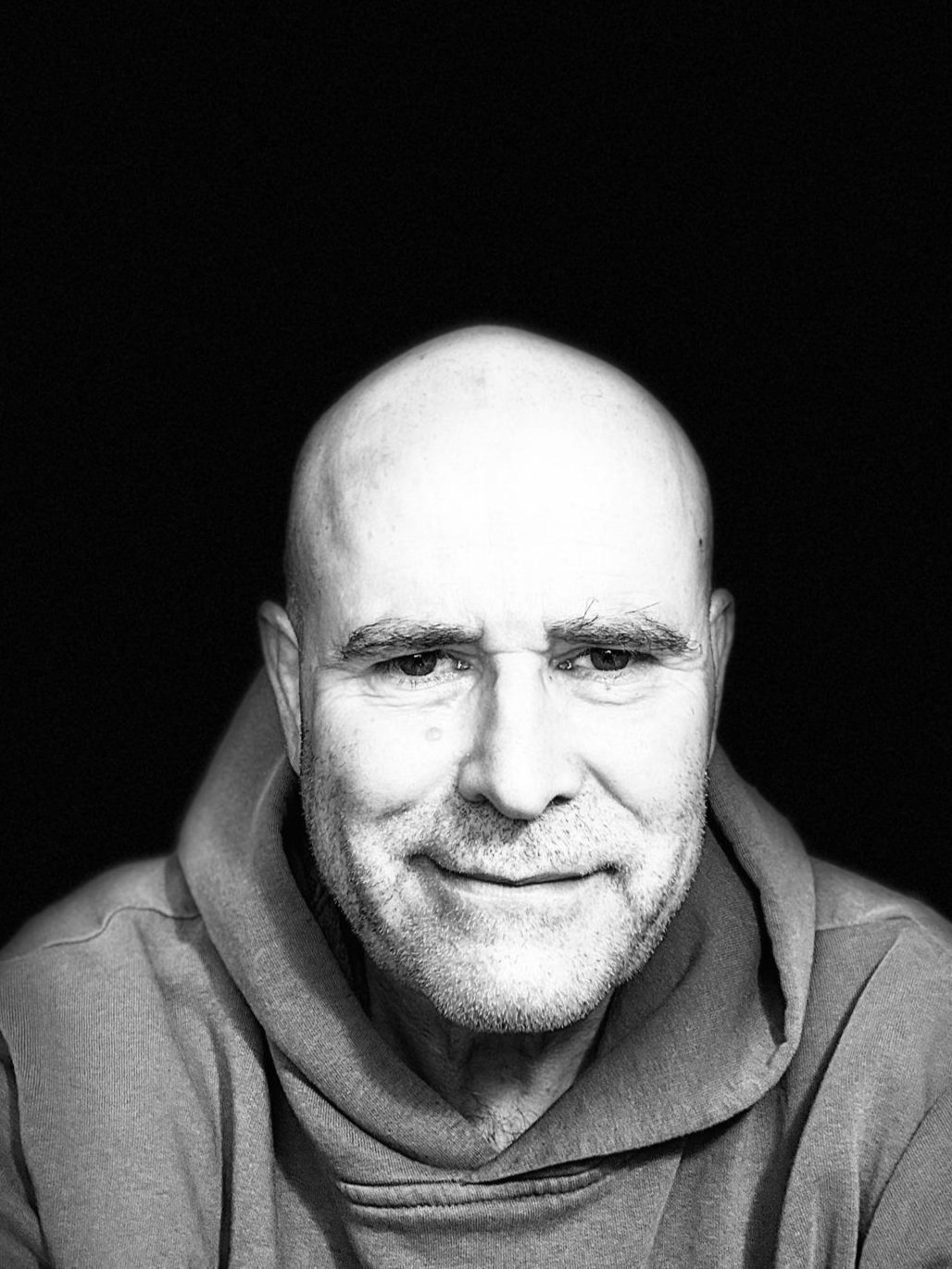
Father / Entrepreneur / Youth Mental Health Advocate
Chris Coulter is a father, entrepreneur, and advocate for youth mental health. After losing his daughter Maddie to suicide, he dedicated his life to creating change—supporting schools, families, and communities through honest conversations and accountability. He's the founder of The Finish Line Group and MentorWell, helping business owners build lasting legacies while mentoring the next generation. Chris leads with compassion, believes in second chances, and measures success by the lives he's helped lift.