Apple Podcasts

 YouTube

 Spotify

 Amazon Music

 iHeartRadio

 TuneIn

 Goodpods

 Podchaser
 RSS Feed
Betrayal Trauma Isn't Something You Just Get Over
Betrayal, Shame & Rebuilding Trust: The Therapy Brothers on Real Recovery
On Real Men Feel, host Andy Grant talks with licensed clinicians Brannon Patrick and Tyler Patrick (the Therapy Brothers) about betrayal, shame, trust, and recovery after relationship rupture. They share what drew them into trauma, addiction, infidelity, and betrayal work, why men often seek help only after disclosure or rock bottom, and how fear of rejection and “unlovability” drives hiding, overperforming, and defensiveness. They describe betrayal trauma as complex trauma with PTSD-like symptoms and explain that healing requires safety, validation, and time rather than pressure to “just get over it.”
They unpack “Mr. Nice Guy” patterns as fear-based manipulation, distinguish apology from accountability rooted in personal integrity, and emphasize rebuilding trust through authenticity, empathy, and consistent action. They outline shame resilience—awareness, self-compassion, and courageous disclosure—and discuss surrendering performance-based spirituality.
00:00 Shame and Hiding
00:32 Show Intro and Guests
01:29 Why They Became Therapists
05:33 Men and Rock Bottom
09:29 Betrayal Trauma Explained
11:53 Why Just Get Over It Fails
13:27 Mr Nice Guy Pattern
18:07 Authenticity and Self Trust
21:03 Roots of Betrayal and Addiction
22:12 Apology Versus Accountability
23:32 Integrity Apologies
24:18 Building Safety Trust
25:29 Shame Hiding Cycle
28:38 Shame Resilience Tools
30:03 Surrender Not Performance
33:05 Tyler Rock Bottom Story
36:40 Reclaim Your Heart
39:19 Connect With Brothers
40:16 What Men Need Know
42:36 Final Takeaways
Connect with Brannon and Tyler
Reclaim Your Heart — https://reclaimyourheart.org
Therapy Brothers — https://therapybrothers.org/
Instagram — https://instagram.com/therapy.brothers
YouTube — https://youtube.com/@therapy.brothers
Connect with Andy and the Real Men Feel Podcast:
Join other like-minded men in the
Authentic AF Community | https://www.realmenfeel.org/group
Instagram | @realmenfeelshow & @theandygrant
Andy Grant | https://theandygrant.com for coaching, healing, and book info!
Real Men Feel | http://realmenfeel.org
YouTube | https://youtube.com/realmenfeel
#RealMenFeel ep 399
0:00 Shame is the fear of abandonment or rejection. So shame tells you the lies that it tells you is to hide because you're not loved. Is to over perform because you're not loved, Is to fight back because you're not loved. So many of our us spend our lives trying to get love by keeping people at a distance. It never works, ever. And yet we stay trapped in it because we're scared that we might find out that we're not loved. So why would I turn around and be authentic? Hello and welcome to Real Men Field. I'm your host, Andy Grant. At Real Men Field, we drop the masks and have conversations that most men are not having anywhere else. Today we're talking about betrayal, shame, trust, and what real recovery looks like after a relationship rupture. My guests are Brandon Patrick and Tyler Patrick, better known as the Therapy Brothers.
0:53 They're licensed clinicians and brothers who help individuals and couples heal after infidelity, addiction, betrayal, trauma, and broken trust. Together they've spent decades in trauma and addiction work, and they host a long running call in show where real people work through their shame, trauma, betrayal, and recovery in real time. If you've ever wondered why men hide, why trust feels so hard to rebuild, and what true accountability actually sounds like, this conversation is for you. Let's do it. Hello guys, and welcome to Real Men. Feel you guys work around betrayal, addiction, shame, trauma. So what drew each of you into that work to begin with?
1:33 Well, I had an older brother who is awesome and started going into like therapy and becoming a therapist and I had no idea what I was doing with my life. I, I was just kind of floundering and trying to figure it out. He kind of pushed me to look into it a little bit and, and I just realized, wow, like a, a career where I, I could do something meaningful. And I, I actually found that I was kind of made for this. I, I, I'm actually decent at it. And so just one step led to another. And yeah, I've just been blessed to be able to work with Tyler and, and really dive in and help people with some of the most difficult issues. For me, Andy, it started when I was serving a service mission for my church and I was spending some time in the inner cities of Baltimore, MD, and ended up living next door to a group of like boys that lived in the same complex as us. And we did some service and we got to know them a little bit. And over the course of getting to know them, I came to realize that not a single one of those boys actually knew who their father was.
2:38 And something about that hit me so hard. And I knew I needed to work with families, I knew I needed to work with couples, and I knew I needed to work with men and boys. So that's what set me in motion to go into the realm of doing therapy work. And then of course, my own life problems got in the way of all of that too. And I, I had a whole bunch of my own recovery work that I needed to do with the very things that we work with, with some trauma, some betrayal, some shame. In the process of trying to climb out of my own holes in darkness, we kind of narrowed into a place where both Brandon and I crossed paths again. He decided to go get his degrees and become a therapist too. And then he was the one who actually said we should specialize in this thing.
3:23 And he didn't even know that I was climbing out of the hole of that thing. And so, and so we kind of ended up joining forces again and, and coming together that way. So that's the fast version of a much longer story. So, so Brandon, you got into this, less so from personal experience, and it just happened to coincide with your brothers. I mean, it's, it's a long story, but back, back in the day, because we're, I'm an old man now, there was a lot going on in terms of the Internet and pornography, sex addiction and at church. They were really beating the drum of like, porn's bad, stay away, stay away. And yet, like all of my friends and everyone I knew were getting involved with it or had been for a while.
4:08 So I was just looking at it like go like we got to do something about this that kind of led me into that path. And, but, but then it was like it led to other things of couples struggling with infidelity and broken trust and what addiction really is. And, and so as I got just more and more exposed to all of that stuff. That's what I mean, I found I was kind of built for it. I got, I, I tried to not do this. I tried to like, I'm an entrepreneur and I'm going to do this and I'm going to do that. And God was just like, Nope, you go back. Nope, Nope. And I was like, wow, I don't want to like I I'm not going to make enough money or this is burning me out.
4:52 And God was like, you go back. So one thing after another after another, I finally succumbed to like, yeah, this is what I do. And then at that time, Tyler and I like really started crossing paths. And one thing that was a God wink was him was was watching his work and what he was doing. And I just thought, man, I get to work with him and we can support each other through this. Maybe that's a another reason why I stay in this arena. So, so it's a long story, but, and there's a lot more to it than what I just said, but there's definitely a reason why I'm in it. It's more than just like, hey, I was trying to figure out what to do, you know? And in my experience, most guys don't reach out for help until they've hit rock bottom.
5:38 And is that your experience as well? What? Why do you think that is? Percent that's it's interesting, especially like my own personal life, for sure that's been the case. And then the, the typical process that we have when people come into our office and are wanting help and there's been a like, so let's say the, a man who's like struggling with whatever that is addiction or infidelity or something else. They typically are brought in after there's been some kind of a disclosure or a discovery or something and it kind of blows everything open again. And I, I think that that's kind of built into us because obviously nobody likes to be vulnerable and be and risk being judged or rejected or seen as weak or inadequate. And, and so most of us don't like to do the reaching out because of that.
6:30 Even with Brannon and I's story, I didn't tell Brannon what I was going through when I was in the depths of it. I, I started to tell him after I could see light at the end of the tunnel and knew that I was going to be OK and still lovable, right. And, and so I think there's that deep, deep fear of weakness and unlovability that if it gets exposed, that's that could be the most devastating thing to us. I might answer it a little like I, I agree with everything Tyler just said, but men, they reach out for help sometimes because they're compelled to, not because they've, they've hit a rock bottom. But men, men who are really ready to change are the ones who have hit that rock bottom. So like Tyler was saying, like sometimes a spouse will drag a man in and he's externally motivated. And then as we dive into this recovery work, like he just doesn't really have his heart in it. He doesn't really do it.
7:27 He doesn't because he hasn't hit that rock bottom. He just got busted. And so when they when they do hit that rock bottom, like I'm thinking a guy I'm working with right now, like he's so humble and he's so ready and he's so willing and his addiction has kicked his butt for years. And and like he, he's like an awesome client for us. I mean, because he's he's follow through, but but that's not always the case. In fact, it rarely is. Like a lot of times they're somewhere in the in between motivation wise, and sometimes that external motivation can turn into internal motivation and sometimes it doesn't so. It, it seems like women can see that things are going to get worse and they seek help and they'll, they'll drag their partner with them. But yeah, they said that the guy won't play full on unless like he's truly exhausted, that he can't do it himself, that really everything is, is, is about to fall apart or is falling apart. Tell her I love what you said that like I, I always know it's fear underneath all that, but fear of not being lovable. I I don't think I've heard it put that way. Yeah, I think that's at the core, that's the all of the human experience, right?
8:40 We're wired for a, for attachment, for connection. And I think especially sometimes when you're in a relationship and especially I think, I think men feel this a lot where they're supposed to be the strong, steady, stalwart one in a relationship. And if they show any form of insecurity or weakness, then that's that's really indicting to the overall sense of self, right? And that's not necessarily true. It's the lie that we sort of succumb to a lot of the time. And you would know this in the world, in the realm you live in here, that when men finally find a safe space to actually allow themselves to really be seen, it adds a whole depth of quality and richness to the to their lives, and it actually allows them to step more fully into their own real power. And I've seen you talk about betrayal as very similar to PTSD.
9:33 So what happens in like the the typical mind when when trust is destroyed? Well, it's all about safety, right? So like, we as humans are hard wired to, to try to feel safe in our life. And so if you're, if you think about why do we get in relationships? We get in relationships because deep, deep down we think it's good for our survival. It's what we naturally instinctually think it's good for our survival. So I get in a relationship because it's good for my survival and I'm feeling loved and connected to that starts kind of breaking down and then all of a sudden BAM, I get, you know, betrayed.
10:17 And that relationship goes from being an asset for me for my survival to a liability. Now it's a, it's a source of pain, a source of fear. And the betrayal trauma is complex trauma because it's, it's not just a one time event. There's a lot that goes on around it in terms of knowing whether you're safe or not. And so it is, it's complex trauma and it's, it's a very, very much the process of it is, is the same process as healing trauma. I'll say to that too. Just add to that that a lot of people think of betrayal or infidelity as just this one thing where there was an action in one realm of life, the sexual part of life or whatever else, emotional part of life, and they don't realize that it has threads into everything else.
11:08 And so a betrayed partner experiences the whole rug being pulled out from underneath them in terms of not just safety in the relationship emotionally, but it throws questions into what else don't I know? How could God have had me decide to marry this person in the 1st place? So there's a spiritual component. Who can I talk to? There's a social component. And so the whole world gets rocked. And so partners often experience the very symptoms that you see with PTSD, loss of sleep, flashbacks, intrusive images, hyper vigilance, needing to like, watch and look for everything, trying to control things because that's exactly what's happening on the internal Organism of the body is danger, danger, danger, right? What's?
11:54 The most understood aspect when people say oh just get over it. That's that you said the most understood. Yeah, I think we, this, this happens. Yeah, this is, I think this is part of it. This is, this is something that's really hard. So and there's almost a a rhythm that has to happen at or for the healing to take place. Because if you go to a professional or a church leader or a best friend or somebody and what they say is just get over it. What they're missing is that there is a whole process that goes into just getting over it, right.
12:35 And so when they come into therapy here, we actually have to establish safety, understanding and grounding with somebody so that they know they have a safe place, they know they have someone they can trust. They know they have someone who will listen to them and support them and can validate their experience. And then once they feel those things, then they're open to receiving some messaging that's saying, hey, how do we help you move forward? Because this is hurting you, right? But just get over it. That's what, that's what the first thing that comes out of the person who's done the betraying often says is, look, I've changed. It's been 3 weeks or it's been 2 weeks. Like we're different now. Like, why can't you just why are you bringing it up again? Like, and there's this pressure on the person who's been hurt to get better faster than it takes for a grieving process to take place because there's grief inside of the betrayal.
13:26 So we've already talked about fear and I, I think I've read that you guys have referred to, you know, being Mr. Nice Guy as, as fear and disguise. Can you expand on that? You bring up Mr. Nice Guy, we, we, we deal with Mr. Nice Guys all the time and think about like, why, why, why, if we, if we treat sex addiction, why do Tyler and I often come across Mr. Nice Guys? And it's, it's an interesting thing that not all sex addicts are Mr. Nice Guys, but many are. And the, if you understand a Mr. Nice Guy, you understand that when they go be nice, they're actually trying to consume a woman for their self worth. They're trying to please her so that he, he feels good about himself.
14:18 And if you think about sex addiction, it goes down those same lines. Oftentimes I want to consume a woman to feel good. I want to use sex in order to be OK. And Mr. Nice Guys, they masquerade as good guys who are constantly manipulating, seeking love, seeking validation in consuming their partner. And it makes the partner feel crazy. It's I, I don't feel safe. I don't feel connected. I don't want to connect to him and yet he's doing everything right. He's everyone thinks he's the best guy ever. Like I so why do I just get this gross feeling when I think about like really being vulnerable, really being intimate with him. And it's because there's not real honesty there. There's not real connection going on because that manipulation is happening.
15:17 Performing in order to keep you close to me but I'm doing it so that I can extract my value from you rather than offering my strength to you and by by the way like this we're talking about Mr. Nice Guys like you're looking at one right now Andy. Like it's like, Brandon, I can't tell you how many times Brandon has told me like, hey, Tyler, like stop being Mr. Nice Guy. Like knock it off, you know? So but yeah, that's so. So the partner then is left even further off the edge of the Cliff there because now everybody else around them is also going like, you're married to such an amazing guy. Like look at how he does this and this and this and this and this and, and in the background she's like, I know he's like amazing, but but also like if you only knew.
15:59 Like it. Like I feel like I'm being extracted from rather than offered to. So what are some signs that a man is performing Mr. Nice Guy versus it's real integrity of of being nice? He'll lack boundaries. He he won't like really understand his values and stand in those even when it's difficult, even when there's conflict around that. He he'll have a hard time with real empathy with his partner. It'll, it'll be fake empathy. So when, when she's like really triggered into something difficult and it, if it has to do with him, he'll do a really bad job at holding that space for her because because he's lacking the strength to sit in the discomfort. So the Mr. Nice Guy's always trying to make sure that it's comfortable, that it's good, that it's OK. I could go on and on.
16:55 There's, there's a lot of signs of Mr. Nice Guy. It's actually the more the more you understand it, the easier it is to see. But if you don't understand it, a lot of people don't see it. I think it's hard, Andy, because the, the behaviors will look the same whether it's Mr. Nice Guy or authentic sometimes, right? And so a hard part about that is you have to almost feel the energy with which those behaviors are taking place, right? So if my wife comes to me and she says, hey, Tyler, like I'm having a really hard time with this thing that went on the other day, we need to talk about it. And I hurry and jump up and I'm like, OK, well, let me hurry and fix it. And let's make sure that you're just not mad at me. If it's that energy, that's what Brandon's talking about. I'm not holding my shape.
17:43 Whereas if I go to her and I say, hey, I can tell you're you're really upset about something. And I really want to understand that. I'm not sure I'm going to fully agree with that, but I'm here. Let's talk about it. You can feel the energy of I'm for you, but I'm for you. Like I, I'm also going to be me. I'm not going to. I'm not going to sacrifice my values in order to placate you. Can I, can I just add to this? So I, I love what Tyler's saying. It's an energetic thing. And you're the king of authenticity. So like, let's talk about authenticity, like on a whole new level, right? Like if, if my wife said to me, hey, Brandon, I want to go here for dinner. What do you think about that?
18:27 Right. And I said, oh, I'm chill, whatever, like, yeah, that works for me. And so I go there. I might really be OK with it, might be good. I might try to be convincing myself that I'm OK with it. And so I go anyways. But then in the background, I got a little bit of resentment going on, a little bit of like, she always gets her way and I'm just smiling and going along with this. So where where does the authenticity breakdown here? The initial like, yeah, I'll do that. It breaks down because I don't know myself. And so like in that moment, my first thought is I want to please her. It's not let me check in with me. And what's my honest truth here?
19:15 And so if if I'm automatically acting in fear to please her, I might be telling myself I'm being authentic because I'm a loving, kind husband. BS. If you got that resentment on the back end. So you got to come back to do your own work to be able to say, like, do I know myself? Do I trust myself? And can I be honest in those moments? And if I harbor a ton of resentment, if I got back going on inside of myself, I can sit here and blame her and blame the other person forever and ever and ever. Or I can say what's breaking down in my honesty in my life, in my authenticity. I have that resentment because I've lacked that authenticity. Do you think that's the root cause of why men struggle to be authentic, that the lack of knowing themselves? Percent the lack of knowing themselves and, or I think there's a consciousness aspect to that for sure. And I also think the doubt that they have about themselves, they're they're afraid that if they do expose all of themselves, then that's when the rejection comes. So part of the work we do, really, honestly, the work that we do with most of the people we work with, they come in for one problem, which is this addiction or this betrayal or something else.
20:30 But really what it boils down to and what we really believe is that it becomes a quest to reclaim your heart through radical self acceptance. It's getting to know yourself and not only know yourself, but accept and love yourself as you are. Yeah, I I can agreement. I grew up with a lot of suicidal ideation and depression, made multiple attempts in my life and when I could finally like, why is this? It was a complete lack of self love that was the root cause for that for me. Right. So and and all your work around betrayal. Is there a most common root cause that that is there before a betrayal happens?
21:11 Yeah. I mean it's what it's what Tyler was just talking about. What you're talking about it's it's self rejection. It's what happens at a really young age for most people is you start to lose sense of, of who you are and then you start trying to get love. And, and so I've heard it said that some, you know, addiction is somebody's attempt to find God or addiction is somebody's attempt to find love. And what that shows is that there's been a breakdown in them knowing that they are loved as they are and who they are. And a lot of times that's because of neglect from parents or their parents addiction or the, and it can be little T trauma, it can be big T trauma, but all of us go through it. We all have our own forms of trauma. And so then we find something that soothes that. We find something that we think takes care of it, but then it actually drives home the shame and the cycle just it's a vicious cycle that goes on and on. So if there's been a betrayal in a relationship and the let's see, the betrayer is trying to reconcile, what's the difference and why does it matter between an apology and accountability? That's.
22:30 I love this question. Yeah. No, it's actually, it's actually a really good question. I, I think a good apology does include some accountability, but but often times here's here's the issue. It's back to that self acceptance piece again. A lot of the time is I apologize to you to get myself out of the doghouse, right? That's like an apology that's an empty apology is an apology for me in order to make things better for me. Whereas accountability with the apology is I see you, I'm trying to understand how I've damaged the things that I have and I'm going to take ownership for whatever I can, number one, to fix and which is hard with infidelity because you actually can't fully fix it.
23:15 And and then and then I'm going to surrender to the the pathway of becoming the best person I can be because that's the best way that we can actually help heal the relationship and the trust in the relationship if it's going to stay together again in any way. Accountability and apologies just to say what Tyler said in in a different way, but it's the same thing as it's about me being committed to my own personal integrity. It's not about the other person. It's if I, if I messed up, I need to clean that up because in my integrity, that's not the man that I am. And so I'm going to go own this. I'm going to go humbly own this.
23:57 And for somebody getting an apology from that place, if it's real, it feels real. Like wow, like versus what Tyler just said of like, well, I'm going to go own this because I don't want you to be upset with me. So I'm actually doing this for me. I'm not doing it for you. And you can feel that. So you both mentioned safety a few times. What helps create safety when hard conversations are needed? It's it's spelled out right on your shirt right there, Andy. It really is, man. Like learning to step into true authenticity, pairing that up with empathy when you're talking with someone that you really care about and you really value the relationship with, and then putting in consistent effort and action over time is what actually builds trust in relationships and where most of us go.
24:54 And this is what the world has taught us because of what Brown was saying earlier about our life experiences is, you know, my daughter shared a song with me called Costume party by Kyle Hume a few weeks ago. And it's he's singing about how they all show up at this place together and they're all in their own costume parties. Like trying to perform for each other, but never actually fully connecting. And and really learning to actually offer my authenticity to you and learn to trust that you can hold it even if you don't agree with me all of the time. And I can do the same for you. That's where depth and safety and trust really start to get re established. And how does shame keep men stuck and hiding?
25:35 You think about shame, if you think about it through the lens of the it's shame is the fear of abandonment or rejection. And so shame tells you the lies that it tells you is to hide because you're not loved, is to over perform because you're not loved, is to fight back because you're not loved. And so, so, so many of our, us spend our lives trying to get love by keeping people at a distance. It never works ever. And yet we stay trapped in it because we're scared that we might find out that we're not loved. So why would I turn around and be authentic? Why would I turn around and be honest? And yet through that, through that is where connection is possible, right?
26:25 And so it's a trap that just goes on and on and, and a lot of us are just unconscious of it. It's so automatic that we're shame screening all over the place. We're just trying to get love unconsciously. And so a lot of our people, Andy will, will, they'll come to us and they'll be like, I don't get why I'm getting the outcomes I'm getting in my life. I'm on my third marriage or I'm depressed all the time, right? I can't stop my addiction. I don't understand it. I don't understand it. And they'll start to look at their life and realize, oh, this is where, this is where authenticity's breaking down. This is where shame is ruling the day. But it takes some group work. It takes some like real, real, like deep, like searching in order to get conscious of that sometimes. And then it takes some opposite action to the shame to actually rewrite the stories and heal from the trauma that's caused the shame.
27:22 They we we get this all the time in our office where something has happened. There is the addiction or the betrayal or whatever the behavior is. And they come in and they're like, I just did this thing and I need to fix it or I need to. And then Brandon and I will actually pull out with them and be like, or we want to repair our relationship. That's a big one. We got to fix our marriage right now or our relationship right now after there's been broken trust. Now think about this. Is that shame. If you look at these just kind of, let's just put them in family words together, you got shame, secrecy, hiding, control, that's they're all in the same family together. And then you get authenticity, openness, honesty, accountability. You hear the difference in those two sets of words when when you come in and there's been betrayal and you want to fix this, the safety and trust, the pathway to safety and trust is through shame resiliency.
28:17 Because if you're in shame, you will not be empathetic, you will not be open, you will not be accountable. And you can't rebuild trust without those things. And so shame is actually the linchpin to complete full recovery when you're trying to climb out of a hole like that. You have to learn to be shame resilient. So what are some ways of being shame resilient? Yeah, as Brandon was talking about some of those things, it's learning to become conscious of your shame and how it works and how it operates and what fruits it's creating in your life, right? Because most of us are unconscious of that. It's like, I'm on my fifth marriage right now and I can't see that the common denominator is me, right? Like I've got, I've got to figure out how I've been coping with life and why I'm, why I'm in these five marriages in the 1st place, right?
29:07 I got to look at the fruits. I got to become conscious of what I'm producing in my life, which is scary and hard. And that's expanding perspective basically, and awareness, consciousness. And then I need to learn how to apply compassion to myself and others for the experience of being human, because we're all human. We all have shame. We all have, we all experience it. It's part of the human condition. I need to learn as a default to, to meet myself with curiosity and compassion. And then the hardest part, and this is what Brandon was alluding to a second ago, is courage. I have to have the courage to start sharing my story to the right people. And that's really, really scary.
29:49 That's really hard. That's like stepping into The Cave of, like, darkness that you don't know what's on the other side of, but trusting that there's a different way of living on the other side, which there absolutely is. 100%, yeah. Cool, so you both mentioned God a number of times. How can spirituality support healing without becoming bypassing or just another performance? That's a great question. We, we have our clients sometimes go through a process, we call it fire your God, which which sounds like, whoa, you get hit by lightning. This is blasphemy, right? Fire your God. But really, and, and we could call it born being born again or a saved or whatever we want to call it.
30:35 But what it is, is, is the process of going from this, this like performance based system in order to find God of like, I need to earn it. I need to somehow prove myself to, to get that to this process. You know, step three of the 12 steps in, in the dictionary, recovery is turn your will and your life over the care of God or a higher power. And, and in that, if you listen closely to that step, there's an element of, of surrender. There's an element of let go and let God is, I don't know all the answers. I, I, I'm not going to perform and control my way into God's love. I'm going to rest in God's arms and, and, and just fall in those arms and I don't know where I'm going to land. And that's real faith.
31:25 And so I forgot the the original question, but yes, like to rediscover a God that will show up for you when you practice that faith and through vulnerability is critical to the healing process. Yeah. So the question about how does it not become bypassing or performance, but you're saying by by letting go, by falling into God, not trying to act, I'll act like I know God. Yeah, I want to tee Tyler up here because in his story, and I'll let him tell it, but like, I think we were raised under this system of let me, let me perform for God, let me perform and Tyler can tell it. But God showed up in one of his darkest moments, right? So, Tyler, do you want to tell the story? If you're OK with me sharing, I'm happy to I I so relate to what Brandon was saying.
32:13 I was in that boat where I really believed in God. I saw myself as a Christian God fearing man and but but the way that I worship God was that I will be perfect and as soon as I'm perfect, God will love me. But every time I fall short, that means I'm unworthy or I'm unlovable or I'm not good enough. And we believe we believe in the concept. Andy to your question really quickly and I'll tell the story is we believe in the need for the wrestle with something bigger than ourselves. And the reason that's important is because that it's like, think about shame again. Shame puts us at the center of the universe. And if we're at the center of the universe and we're messed up and we can't control the outcomes, we're screwed. You know, whereas if something else is at the center of the universe, then I can surrender some of those things that are beyond my control or beyond my fixing to something bigger than myself.
33:04 And it shifted for me when when everything broke loose with with me and my wife, actually, she found out about all of my garbage and I knew she was going to leave me. And she did. And I remember the day she left me, we were driving to work and I was in the car next to her. She had my 2 little girls with their little pigtails in the back windows that I could see. And I was like just wrenched inside knowing that I'd ruined everything. And she passed me, went to leave. She went to stay with her parents for a while. And when I came home that night, I was so spent and I was still worshipping this God of like, how could a God love me when I've just ruined the most important people in my life?
33:46 I walked into my house, I fell on the front room floor. I couldn't even get to my bedroom. And I just in a different way than I'd ever had before, was just like, I don't know where else to go, God, like wherever you are, whoever you are, like, I don't know where else to go. And in the moment when I felt the least lovable and the most broken, I had this experience of being filled with warmth and love. And in my head I was like, how could this be possible? Like this isn't what I've been taught. This isn't what I've lived my whole life. The last thing I should be feeling is warmth and love right now. And yet it was that moment. And then in the years past, I remember when I was doing my practice.
34:32 Sorry, one more story then I'll, I'll, I'll keep it brief. But when I was doing my practice, I went home from work one day and my wife was like, hey, Tyler, do you ever tell our story to any of your clients? And I was like, no way. Of course not. I don't tell our story to my clients. And she's like, well, why not? Like that's, that's the best part of you. She's like, you're not that smart. Like, you know, the best thing you have is your story. And so I said, well, OK, I'll think about that. The next week, I went to a women's group that I was running. These were all women who had experienced the very betrayal that I had done to my wife. And I told them all my story. And I got in the car afterwards and I was shaking and I called my wife and I cried all the way home. Like I think I just ruined my career. I think it's over.
35:20 He's like, what you do? I said, I told I told my women's group our story. And she said, oh, that's awesome. I'm so proud of you. Like nice job. Like I bet you they love that. I'm like, I think, I think I'm not going to have any clients anymore. And the next week when I came back, there were like 15 ladies in the group and three of them were pretty upset with me. Like they had felt like, hey, how could you be doing this work without us knowing that you had that story behind you? The other twelve of them were like, that's the best group we've ever had. I trust you more. I want to work with you more. I want. I was like, what? Like my mind was being blown open and I was like, how could I be living a principle of needing to hide in order to get my value? When in reality, the authenticity is secret ingredient.
36:09 It is the thing that leads to connection. It is the thing that leads to power. It is the thing that actually allows for love, Deep, deep love. And since then, that's been something that I've tried to reinforce over and over again through those kind of shame resilient things we were talking about. Yep, Yep. That's that's what the world needs to to reconnect everybody. If we could, if we were all comfortable enough and loved ourselves enough and believed in something else outside of us enough to be ourselves, then yeah, that it changes everything. But you, you. You mentioned something earlier I want to get back to. So what does it really mean to reclaim your heart? What do you mean by that? We ask. I ask. People, what is recovery like when we talk about addiction, what is recovery?
36:51 And the, the, the normal answer, the quick answer I get is, is usually an answer around sobriety. Well, if I, if I'm clean enough, if I stop the behavior. And it's, it's very behavior based. And the, the reality is, is what you're actually recovering something. You're recovering an understanding of how much you're loved and who you truly are. And so when we talk about Reclaim Your Heart, we talk about your unique nature, your unique beauty and like seeing that, like fully realizing that. And so the only way to do it though, is, is through stepping over some thresholds is, is through practicing some courage and having some real cathartic, somatic, deep exponential healing experiences.
37:45 And so, I mean, we take it pretty far and we, we can get really preachy here, but we talk about a whitestone like God bestows a whitestone on you. And a whitestone is something that represents eternity and purity. And we all, I, I believe, are eternal and pure in, in our own beautiful way. And so when you when you get this metaphoric Whitestone, it's a, it's a knowing, it's an understanding of who you are. And when that happens, what happens, Andy, is all these messages around the shame, those actually, it's possible that those are lies now, like, oh, well, I felt something different.
38:31 I know something different now. So I'm not just going to live in this, under this lens of shame anymore. I know now who I am. And that starts to actually have an effect on everything in your life. So that's the, yeah, there's a full process, a whole hero's journey that we take people through to reclaim your heart. But it's, it's there for, for the taking, for anybody, I, I would say. And and like, if I could put it into like a single sentence, it's the process of uncovering the truth of who you really are and learning to accept it all again. Beautiful. And we do that through a series of different activities and like our curriculum includes some things, but the principles boil down to that. So what is the best way for people to connect with the therapy brothers Best best way is. Reclaimyourheart.org and that would also lead you to places where you can either contact us and we'd love to anyone listening and is like resonating with this. We'd love to have you either come on our show or or help you in any way that way.
39:36 But Reclaim yourheart.org is the best way to reach us. And so you mentioned your show. Tell me. About that, yeah, it's, it's the therapy. Brothers, we've been at it for a long time. We had like 530 episodes or something. We interview real life people going through real life stuff. And so it's an interactive podcast where people come share their stories and we we just help them see some things and work through some things. And then we also just talk about principles of recovery and betrayal, addiction, recovery, all kinds of things, healthy masculinity, femininity. So it's an awesome show. So finally. What is one thing each of you wish more men knew?
40:20 I think for me. What I see, and this is the tragedy in the world that I live in and it's the thing that I'm most I'm most passionate about is and excuse me for getting using a scriptural verse for a second, but it talks about the light that we have and whether we put it on a hill and shine for the world to see or we put it under a bushel and hide. And too many men believe that they're not worthy of shining the light that they actually have. And if you're a man listening right now, even if you have struggles, even if you have weakness, those struggles and those weaknesses, if you'll treat them with curiosity, compassion, love, courage, they will actually mold you into something where you can be a light on a hill.
41:11 And we need more men to step into an acceptance of their goodness, their power, their freedom, their love, and, and to spread that into the lives of those around them. And I would echo. What Tyler said. I I, I, I really quick. I had a girlfriend in in college and she's like, how come you hang out with like those, those guys like those? And, and she was kind of alluding to like the weird guys, right, the guys without friends and stuff. And, and I was like, I didn't, it didn't even hit me like what, what like there? I, I love that guy, you know, like, and, and it's true, like some of those guys didn't have friends and they didn't fit in this world very well. But like I something about the Patricks. We, we can see the goodness in all people and love them exactly where they're at and who they are. And we can't do that as good as God can. But I wish men knew that they're, they are uniquely made with value and purpose and they are loved. And I, I, I say to my clients a lot like, I wish you would see yourself the way that I see you because I. See.
42:26 I see. That you're, you are so incredible, so amazing. And so I wish men just just knew that well. I couldn't agree more. With with both those points and pretty much every point you've made on the show until now. And I want to thank you for being examples of good men and taking that initial risk to shine your light and be seen. And yeah, it's it's. What the world needs. More than anything is more healthy whole men because I men want to serve, they want to protect and provide. And we do that best by knowing ourselves, by being authentic, and by shining our light.
43:07 So thanks again Brandon and Tyler the Therapy Brothers, for sharing all of your insight and knowledge around betrayal, trauma, shame, masculinity and rebuilding trust and the need for more men to live authentically, to know themselves, and to shine their life. If this episode hit home for you, share it with somebody who needs it. And remember, healing starts when we stop hiding. If you want more than just listening, if you're looking for real connection with other like minded men, join us in authentic AF. Visit realmenfeel.org/group. And until next time, be good to yourself.
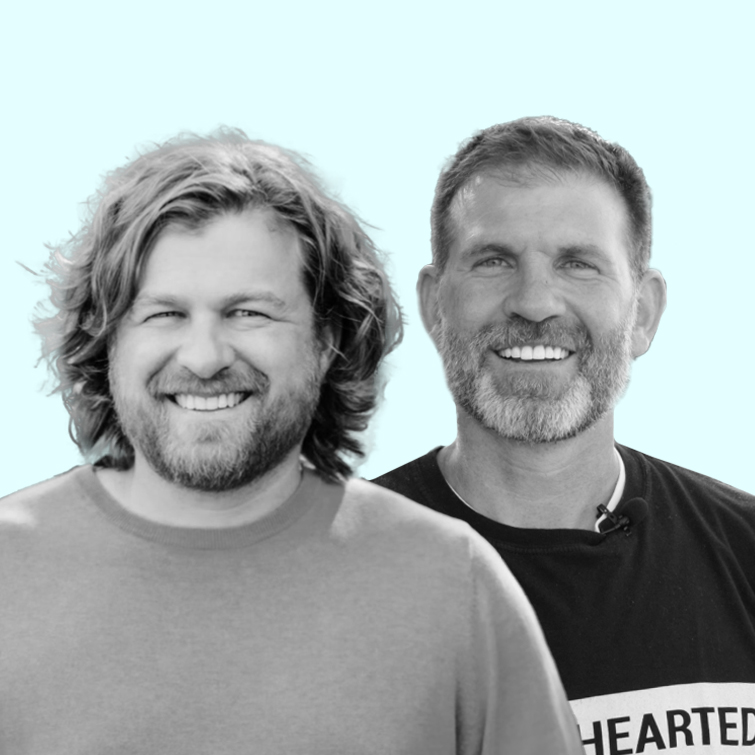
The Therapy Brothers
Brannon Patrick, LCSW, and Tyler Patrick, LMFT, are brothers and
licensed clinicians who help individuals and couples heal after infidelity, addiction, and the trust rupture that follows. With 20+ years each in addiction and trauma work, they bring both depth and straight talk, translating complex psychology into practical next steps people can use immediately.
Together, they host The Therapy Brothers, a weekly call-in show where real people work through betrayal, shame, trauma, and addiction in real time, with over 500 episodes and nearly 2 million downloads. Their approach centers on heart work: healing the underlying trauma and shame so couples can rebuild trust with honesty, accountability, empathy, and healthy strength.