Apple Podcasts

 YouTube

 Spotify

 Amazon Music

 iHeartRadio

 TuneIn

 Goodpods

 Podchaser
 RSS Feed
Confronting Suicide Myths, Realities, and Healing

Debunking Suicide Myths: A Conversation with Jen Ginty
If you're in crisis, reach out to the suicide crisis line in the US and Canada by calling or texting 988.
In this episode of Real Men Feel, hosted by Andy Grant, guest Jen Ginty, a single mom and entrepreneur with complex PTSD and major depressive disorder, joins to share her experiences and insights on mental health and suicide. They delve into common myths surrounding suicide, discuss Jen's innovative tool 'My Moody Monster,' and emphasize the importance of seeking help and talking openly about mental health struggles.
Highlighting their own journeys as suicide attempt survivors, Andy and Jen provide valuable advice and coping strategies for those in crisis. Key themes include the importance of communication, the misconception that suicide relates only to mental illness, and the power of small acts of kindness in preventing suicide.
00:00 Understanding Grief and Self-Compassion
00:47 Introduction to Real Men Feel
01:07 Meet Jennifer Ginty
01:48 Discussing Suicide Myths and Coping Strategies
02:17 Personal Stories and Reflections
03:03 The Importance of Talking About Suicide
06:36 Parenting and Breaking Generational Trauma
11:10 Common Suicide Myths Debunked
21:44 Building a Coping Skills Toolbox
22:40 Debunking Suicide Myths
25:34 Personal Experiences with Suicide Prevention
33:42 The Healing Journey and My Moody Monster
38:19 Launching a Podcast to Share Stories
42:18 Final Thoughts and Resources
Connect with Jen Ginty
Jen & My Moody Monster -- http://www.mymoodymonster.com
When Not Yet Becomes Right Now Podcast -- https://www.whennotyetbecomesrightnow.com/
YouTube -- http://www.youtube.com/@mymoodymonster
Instagram -- http://www.instagram.com/mymoodymonster
Facebook -- http://www.facebook.com/my-moody-monster
TikTok -- http://www.tiktok.com/@mymoodymonster
Linkedin -- https://www.linkedin.com/company/93141440
Resources
Real Men Feel: Suicide Risk Factors with Dr. Lulu -- https://realmenfeel.org/2019/10/15/ep-152-suicide-risk-factors-with-dr-lulu/
Still Here: How To Succeed At Life After Failing At Suicide, Andy Grant -- https://amzn.to/4ieFFmz
Entrepreneurship For All -- https://eforall.org/
Connect with Andy and the Real Men Feel Podcast:
If you don't know what you want, it is very hard to get there. Book a Clarity Call with Andy at https://theandygrant.com/talk
Instagram | @realmenfeelshow & @theandygrant
Personal Website | https://theandygrant.com for coaching, healing, and book info!
Podcast Website | http://realmenfeel.org for all things podcast-related!
RMF Facebook Group | http://realmenfeel.org/group
YouTube | https://youtube.com/realmenfeel
#RealMenFeel ep 345
0:00 You're not weak, You're not, you know, you're not in a deficit in some way because you're feeling this way. You're grieving, you're in pain, you're suffering. And it's the moment in that moment where you have to give yourself a little bit of comfort and not allow yourself to believe that you're a bad person. Because I think a lot of times with suicide, we get that toxic shame of, you know, I can't believe that I was going to do that. I'm such an awful person, you know, why would anybody want to be around me? Because I think these type of things, and I have tried these type of things before. You know, we're all human.
0:44 We all have the same emotions. Hello and welcome to Real Men Feel. This is your host, author, coach and healer Andy Grant. Visit theandygrant.com to learn more about me. Real Men Feel reminds men that they are human beings and they have the right to express and experience all of their emotions. We have conversations that most men are not having, but that all men and the women who love them can benefit from. My guest today is Jennifer Ginty. Jen is a single mom and entrepreneur who lives with Complex PTSD and Major Depressive Disorder from childhood trauma. Throughout her life, Jen has learned valuable coping skills has made it her mission to help others to better understand their own emotions. She has spent the last five years developing My Moody Monster, a pull apart plush toy that has helped children to get out their frustrations, and a Safeway and giving families a tool to talk about emotions and communication.
1:35 Jen is also the host of the mental health podcast When Not Yet Becomes Right Now, Jen and I are both suicide attempt survivors and know what life feels like at the bottom. We also know that every bottom eventually turns around. Today we discussed some common myths around suicide, things to include in your own coping toolbox, and explore some thoughts and beliefs we held at our lowest points and ways to get through them. If you are in crisis, do not hesitate to get help. Sometimes the bravest thing you can do is ask for help. The suicide crisis line in the US and Canada is 988 and people are there 24 hours a day.
2:16 Let's do it. Hello Jen, and welcome to Real Men Feel. Hi Andy, thank you so much for having me on. Yeah, I'm really looking forward to this talk. I was recently on your podcast, which is called When Not Yet Becomes Right Now, and I was talking about being suicidal from a young age and all my intents. But before I finally got that maybe I'm supposed to be here, which is the point of all those those stories. But we found there was a lot of similarities like. Yeah, there is. So we're both in Massachusetts, but again, we both grew up here. So we ended up in the same mental hospital even at very different times. But anyway, there was a great response to that and our conversation and openness. So I wanted you to come on here and talk about that.
2:56 And the kind of when I reached out to you, the, the, the title that was in my head was being suicidal doesn't mean you're crazy. And, and I believe that one of the best ways to prevent suicide is to talk about it. Absolutely all. Right, so we're going to talk about it and we might laugh about it. And to me, we're not making light if you feel when you're like, I know it is not funny when you're in it, but I also know I did a lot of like goofy, dumb things that I can laugh at now. And to me, that's that shot that shows healing and growth. But if you're not there, don't listen to this, right? Call the text 988. That's the suicide crisis lifeline in the US. And just get help. Don't torture yourself by listening to our tales that we have survived and overcome.
3:40 Even though I make light of myself, I do not make light of anyone feeling like they are better off dead. It's a horrible place to be. So again, that's who we are. Don't listen. Yeah, yeah. It's that that sounds about right. Back in October 2019, I did A Real Men Feel with Doctor Lulu, who was a pediatrician who focused on teens and she was on to talk about suicide risk factors and she was the first person to say we don't need to have a mental illness to be suicidal. And I was like, what? Especially coming from a doctor, I had never heard that. So I, I growing up, I thought so few people talked openly about suicide that the only place people did for me was in a mental hospital, which made it seem just more crazier than ever. So when I say that you don't need to have mental illness to be suicidal, how does that land for? You.
4:29 Oh, I wholeheartedly agree. You know, there are times in people's lives that they're low. They're very low. And they may not have depression. They may not have a mental illness like bipolar or PTSD or something like that. But it doesn't mean that they don't have the feeling, you know, that they don't want to wake up the next day. Yeah. Yeah, I have to say that that the thought, the feeling isn't. I don't want to say it's not dangerous. It's certainly it's it's not uncommon. And when it to me, when it crosses the danger line is when someone's in this in the stages of planning and they have means to harm themselves. That's when, all right, now, you know, now we really take action get.
5:16 Help, right? Like active suicidality? Yeah. Right. Yeah, there, There you go. You have your terminology down. Is there anything you know now that you wished your younger self knew when it comes to feeling this? Woo, that's a question. Yeah, I absolutely. I think I, as an adult, would tell younger Jen, little Jen, that this too shall pass, that it feels so extraordinarily catastrophic right now in this moment. But there's so much more ahead and things can change and you can make change in your life. Yeah, that's a good one.
6:00 I used to be afraid of responsibility 'cause I thought I meant blame. But that, yeah, you can change your life at any age like we would. We do have a level of empowerment. You know, it's Frankel's book, The Men in meaning, right? That that we always have control of our our brain and what we focus on. Sometimes there can be challenges to keep that focus, but we can decide to look at this thing, or decide to see this point of view, or decide to find something good in this this what could be a horrible moment. Wow. I mean, it's, it's really hard in the moment, I would say. And I think it's years and years of going through it constantly where I do see the other side of it. And also I think it comes with being a mother, is that I really wasn't allowed to stay in that particular place because I had two children that I had to take care of and one that also had a suicidal ideation and an attempt. So, you know, I, I feel as though I being a mother wasn't giving me the time to sit and Stew in it. So the responsibility for other lives gave your life some, some push, some meaning perhaps is that. Yeah, yeah.
7:19 You know, when I wanted to break generational trauma, I did not want my children to go through what I went through. I did not want them to feel the way I way I felt when I was a child with my abuser. Did feeling that badly when you were younger, did that give you any concerns about about having? Children, Yes. Yeah. I think it was up until I was married for a few years that I didn't want to have children. And my husband was OK with that. And there was a switch with me. And I think it was when my friends started having children and I was holding their little beings in my arms and I was like, I want one of these. Maybe this would be cool. Overall, was it cool?
8:00 It was hard. It was really hard because I grew up with an abuser. I did not learn how to parent really. I didn't have that person teaching me the proper way to parent a child. So in the beginning, it was really, really difficult. And at times, I was really triggered because my oldest, he showed signs of, you know, behavioral issues, particularly being very destructive at a very, very young age. And there were times where I felt that my child was abusing me. I was getting triggered. Is there anything you believe now that you didn't then?
8:43 I would say I had to go through it to learn how to work with my own feelings. And the other thing is, is that I really do wish that I had started my healing journey much, much sooner. But as you know, with my my, the title of my show when not yet becomes right now. I pushed it off for so long and I had myself believing that I had to in order to take care of the little beings in my life. Oh, so, so that sense of responsibility then it kind of, it kept you going, but it didn't you, it didn't get you into taking better care of yourself. Yeah, I, I mean, that is the one thing that I tell parents constantly is it's OK to start that journey. You're going to come out better for it and your children and come out better for it as well.
9:37 Yeah, yeah. There's there's never a wrong time to start healing yourself, right? Yeah. Is there anything that stands out that you believed like in your teen years that you realized as an adult wasn't true? Yeah. You know, even though I wanted my abuser out of my life, I felt as though I was being, you know, left behind in a sense. I was so happy when my father, who was my abuser, was taken from our home. But you know, there's also that feeling of what did I do wrong in it? How did I make this happen?
10:18 Because I think a lot of children feel that way when it comes to a parent who is an abuser. What did I do to get this? And is this going to be the rest of my life? Are people always going to treat me the way my abuser did? Those are all deep, heavy thoughts that can really take someone down the hole. When So when you were having those thoughts when you were younger, did you keep it all to yourself or was this someone you? Shared this all to myself. Yeah, I didn't trust a soul there. The trust issues were real with me. I didn't trust anyone in my life. I kept it all to myself and it wasn't me who came out with the abuse, my older brother told a trusted adult.
11:00 And that is when everything came out in our family. So I told you I had like a it's weird. We're just, we're doing a weird show. It's just gonna be weird. So I asked ChatGPT for some common suicide myth. And I thought, and I even looked at it. I cut and pasted it. I haven't read them either. So we'll both hear them for the first time. And I, we'll just have our honest reaction to those. But before I get to the list, and maybe it's on there, one thing that that's always bothered me, Suicide is often referred to as the easy way out. Did you ever find it easy to make attempts on your life? Never, No. I may have thought this was the right way to get out of how I felt, but at my age, I didn't think past me because that's what a teenager does, right?
11:52 They're only thinking of themselves. That's so, you know, like I was thinking, what's the best way for me to get out of this? What's the fastest? What's the, you know, thing that's going to make me feel better? And I didn't have that idea yet that other people wanted me around. Yeah, yeah. And, and I think it was on your show I talked about this, that. Yeah, one of one of the lies I told myself to make attempts easier was that everybody I love will be better off without me. Like, if I was gone, nobody would be, would be concerned about how bad am I going to get him, you know, is he in trouble and all those things. And I, I thought to me, I had no sense of religion or afterlife.
12:32 I thought dying was just like I moved. Nope, They don't see that guy anymore. He moved away that and that was the end of it. And I, you know, I thought people would get over it. You know, sure they'll be upset for a weekend and then, like the usual, kicks in pretty quick. Well, I mean to, to me that sounds like you didn't have, you know, you didn't see that your life was, you know, of importance to others. Yeah, right. Correct. Yeah. And and even if it was, if it wasn't important to me when anyone else thought about, it really didn't matter. Yeah, that makes sense. All right, so let's dig into them. Common myths. And again, neither of us have seen these number one people who talk about suicide are just seeking attention. What a gross.
13:19 It's gross. That gives me a yucky feeling. People that talk about suicide, in your experience or seeing others like what are they after? Finality, an end to pain, to suffering. Yeah, yeah, there's so many better ways, healthier ways or destructive ways to get attention, but. I think, you know, and, and I again trigger a warning. I think a lot of people who are just outside that suicidal ideation, they do things like cutting things like that, that are more of a not a cry for attention, a cry for help. Yeah, I, I, I call in, in my book, still here. I talk about it like every attempt. It's a cry for love, right?
14:11 That's why we're all, every human is longing for love. And, and I believe suicidal people are the first person not to love them is themselves. Yeah. So like, if, if you, if you can't have love for yourself, you can't have love for someone else, and you can't receive someone else's love, right? If, if we don't have it, we don't know what it is. You don't. You don't. You can't trade in that if you already have some, right? Myth #2 Suicides happen without warning. I mean, there are times where I have felt that flick of oh, why can't this just end or you know, we've talked about this on when we were on my show, is that driving on down the road and that feeling of I could just turn the wheel and hit the, you know, the off, you know, the ramp or whatever and flip over and be done.
15:02 So I don't think that it's something that you work up to. There are times where you can be just anywhere and be like, Gee, I freaking don't want to be doing this. Yeah, this feels a little overlap to the the first myth, but this against seeking a tape you mentioned cutting. So they were they were self-destructive actions that are cries for help, cries for love that are warning signs that that someone is is at risk for sure. But yeah, I don't, I don't, I've never met anybody that just like had a fine outstanding life one day. You know what, I think dying would be the best thing to do. Like there, there's maybe you don't see the warning signs, but certainly in hindsight, they they always seem to be.
15:43 Right. Would you agree with? Yeah, I agree. I I think there's, there's different ways of looking at suicidality and I think that's there are different methods that show up in our brains. We could be for weeks thinking on it and again, maybe being an active suicidality, but there are those times where I'm like I said, I'm driving on the road and something just clicks. I get triggered. My PTSD symptoms may be crazy. And I in that moment was like, yeah, I really just wish I could just do it. I just want to do it. Yeah, I think the the and and I certainly can't remember every time I've had a thought, but the one I can laugh at and point it was just, wait, I was just silly.
16:26 I was like, I was 1819 years old going to some shitty job in between high school and college when I finally went and I got a flat tire on the way this way. And I was just like, I'd, I'd really I'd I'm just a jump in traffic instead of changing the tire and I'm like, like, what is? And it seemed made sense, seemed logical in this moment. And but again, life is on our sides of a friend on the way to work pulls over behind me and changes my tire. Well, I'm just saying like, Nah, freaking out and like I'm like, like, you know, didn't realize for months until I really. Oh, again, another there. There was the evidence that everything works out and things are going in my favor.
17:06 But I, I like I, I didn't realize in the moment. Yeah, and I think there's that, that overwhelm that people who have suicidal ideation, it's when that feeling of I just can't do this anymore and something like changing a tire is that overwhelm. It's like this is the last straw. I just can't do this. Yeah, And it like, brought that up because, yeah, for me, the, the there's no real final straw. Like, well, there there is, but that's not the reason. Yeah. So even if I'm like, yeah, and I hate your God, blah, and I die that day. It had. It didn't have anything to do with that. It was all this underlying long, long percolating abuse to myself that that leads to to such a destructive act, you know?
17:50 All right, so the third most common myth regarding suicide. If someone wants to die, nothing can stop them. Oh, that's not true at all. You know, it, it, it could be a physical response. It could be a call from a friend in that moment. You just because you have suicidal thoughts doesn't mean that they can't be pushed off or stopped immediately in some way. And I think that's why it's so important to remember the 988 hotline is that there is somewhere that you can turn. It doesn't have to be the final moment. Growing up and being in it, I thought, oh, I want to die. I want to die.
18:35 I wish I was dead. Now looking back to realize I believed I wanted to. And to me, there's a big difference that puts that buffer like almost anything can stop him right? Asking how are you doing? I I I know, I know Kevin Hines. He's a a great suicide yeah, speaker and activist and he he's one of the few people to survive a jump from the Golden Gate Bridge. And he was walk he was walking the bridge saying and kick in. It's not the easy way out. The all, all of life force, all of everything about us and in every cell in the body is like live, right. So he's walking, he's suicidal. He's walking the Golden Gate Bridge and says I won't do it if some if if just one person smiles at me and nobody made eye contact with him. He said the only people that talked to him were some tourists that asked him to take a picture. They didn't even thank him.
19:23 They just took the camera and they no, no eye contact. So he was like, all right, well, then goodbye. So, and to prevent the death of someone, it doesn't really take a lot either. Like be present. How are you really and sit down and listen. Yeah, it there's there's so rarely an action you need to. Take, you know, what's really interesting is that, you know, I've had a few things going on in my life that have been very overwhelming and at some point my life probably would have pushed me into that, you know, active suicidal thought process. Today I randomly got a card from my best friend who moved away.
20:04 And it was just so beautiful. She's just like, I'm thinking of you, I love you, I miss being around you. Just one thing like that can change a person's idea of what their life looks like outside of the pain that they're feeling. That reminds me of something. So I have something like I it's a special dedicated journal. It's called Evidence of My Magnificence and it's and it's, it's clippings, it's, it's quotes, it's impacts I've made. And I never look at it except when I'm like, no, you know, I have no impact. I'm doing nothing positive. My other meaning was, oh, wait, what's all this evidence? And so I recommend that share that. And with a tool like that, I can prevent my own thinking. I want to doc right.
20:50 So as we confront ourselves with evidence that we matter, we have meaning, we're loved, we're lovable, all the all these things that, you know, in our worst times that that critic, that that inner just heartbeat that's just like you stuck. You can't do anything right. I don't know, you're overwhelmed by everything. Everything in the world seems like the final straw. So that there are ways, you know, reach out to tools you've made for yourself or reach out to friends. There's another practice I have from a positive psychology program I did and it's called a happiness jar. And each day, anytime, something you can do it daily if you're dedicated or just like, oh man, I got a nice card for my way. You just write this little note, throw it in the jar, and on your birthday or New Year's Eve you you dump it all out and you read all these happy things from the previous. Oh, I love that.
21:34 That's a great thing. Yeah, it can be a great family tradition just gonna help you. And you can you can break glass. The case of mercy. You don't have to wait a year. Like, oh, it really sucks, Larry, What's this Cheer me up jar? You know, challenge it and read those things and and see who you are. But yeah, you know, I, I always tell people that they need to build a, a toolbox for themselves, a coping skills toolbox. And I believe there should be a space in that toolbox for people who have had suicidal ideation throughout their lives, that there is that one thing that can bring you back from the brink. That sounds like a good one. Yeah, there there are a couple I took a year long program in positive psychology and and again I share a bunch of them and still here. But yeah, the happiness show is something I actually put to use the journal of my magnificence, the evidence of my magnificence. I think that was a self created thing that came from a meditation.
22:27 The idea, I don't, I don't remember, but that's something I tell clients to do often who don't, you know, they could be most people are high achieving compared to their own opinion of themselves. So again, you just need that proof, that evidence. So let's see myth number 40. We've we've already hit this one. So only people with mental illness attempt suicide? Nope. And again, it's yeah, that was the old genesis of our conversation. And thirdly, mental illness is a risk factor. But again, in signs of overwhelm, stress, feeling of hopelessness, helplessness, that thought of suicide, it can be the most logical thing in the moment. Yeah, it's, it's the again, I believe is the way out of the grief, the agony that we're feeling in the in the moment.
23:15 And while that thought is not abnormal, it we really need to realize we have the power to choose a better thought, right? Because again, it I, I, I, I invite everything one that's ever felt this way. I believe I want to die as opposed to I want to die and just put that little buffer that, oh, maybe this is just a maybe it is just a thought. One of my favorite teachers, Louise, Hey, it's just a thought. And a thought could be changed. Yeah, and I used, I used to journal that sentence over and over when I was really. This is more than a thought. It's real, you know, and and that isn't. That's why I used the the. This too shall pass. Myth #5 This is good too. Talking about suicide will plant the idea in someone's head. That's that's ridiculous.
24:04 That is probably the most egregious one I've heard yet. That, that just, that's like strengthening the shame and the wrongness about having this thought and it didn't. It's just a thought. Yep. That is toxic shame right there. Yikes. But this did, I mean what, when I was growing up, it did still again, do people didn't talk about it and they thought because yeah, that's if if often if, if someone in a if a teen, especially in a community attempt suicide, there can be a string of them. So they they think this copycat behavior is due to oh, they never, like I said, no one's no one's struck by lightning with the idea of yeah, dying. That's. The answer? This is not Heather's. Anytime someone dies by their own hand, it becomes the news people hear about it.
24:49 It does give every pained soul like, oh, I've held that thought again. Hmm, maybe maybe you know, so it it might be someone's quote UN quote final straw, but it's not the reason it's not like that seems like a great thing to do. It's not like the latest fad on TikTok dance or something. You know it just. Doesn't work. And that myth in particular is so disgusting to me because what do you need to do when you feel suicidal? You need to talk to someone about it. And if you feel as though you can't because Oh my God, I'm, I'm creating a suicide wave, you know, with others, that is that. That's a surefire way to make people feel even more suicidal.
25:34 Yeah. And aside from our list here, have you ever personally had an experience calling a help a suicide prevention hotline or text line or anything like that? No, I, you know, my mother always required me to be in therapy. Even like going off to college. She was like, I won't help you unless you're in therapy, which, you know, at the time I thought was really crazy. You know, like, Gee, thanks, mom. But I always did have that support. I had that person that I could reach out to when I was having those feelings. So I did utilize my therapists in that way. So one point in my life, I did call the hotline and, and it wasn't just that I could talk about, it was like I was at a low point.
26:15 I it's a, it's a time I was standing on a building trying to get give up the nerve and, and again, and I in hindsight, what I wanted was some aha moment again. And instead I, I called this, I called it all. And I'm like, what I'm doing. I know I don't want to do this, but here I am. And again, it's, it's just a safe place to say anything. It's not record. It's not held against you. Don't even, don't even they might have asked my first name to just have a conversation, but it, you know, it's, that's it. So I, I, because I've, I've heard from other people when I ask this question and they've had bad experiences. And so, so if you haven't, if somebody's like just hang up, call again. Right. Get a different person.
26:55 I've only heard positives about people who have reached out. Yeah, friends that I've known. I had a woman on my show, Hajj who she was in Ireland at the time and she was so suicidal and it was one thing that a a Co worker had said to her that made her call the hotline and it changed her life. You know, she was on the very brink of it in that moment, and it it saved her. Next myth number six. Once someone attempts suicide, they'll always be suicidal. Nope. Nope. Not, not a thing. Not real, not a thing.
27:37 And it just says, yeah, many attempt survivors going to live, live fulfilling lives, especially you with the right support and resources. So one thing I tell people, if you've ever seriously contemplated suicide, that option will always be there. All right? But it doesn't mean you're always suicidal, right? Right. Again, just means, oh, there can be. And it is. It's my default thought pattern just because it's the oldest one. It's it it is literally the deepest rut in my brain. And so that's why it takes effort to get out of that rut and choose a different thought. But do that enough and my my rut gets you know, it's not as sharp, it's getting filled in. It's, you know, it's. Yeah, you don't. It's barely there. I looked back at the times where I was at my worst and close to, you know, attempts or an attempt.
28:22 And I am so glad that I was able to pull myself out because I'm living a life that I love now. And you know, maybe later down the road, I, you know, I'm in therapy on my healing journey and I'm working through past, past trauma. I may one day feel that way again. I may feel suicidal again. But I know now as a 50 year old woman that I can get past it and live a beautiful life. So the 7th myths. Suicide is a selfish or cowardly act. So I hear that one a lot and it's I don't think that it's necessarily true at all.
29:09 And I think that's because when we're in so much pain, we can't see outside of that pain, a sight of the grief that we're feeling. And in that moment, we're not thinking, you know, I'm doing this for me. Like you said, you've said it before, people won't miss me. I'll do this. And you know, people will be better for it. When you're in such a deep depression or in so much pain, you're not thinking of what the other side of things, what's going to happen for everyone else in your life. In the mind, well, in the mind of this suicidal person, suicide was a a more of a selfless act.
29:50 Like I thought, I'm the problem in so many people's lives. I'll eliminate this problem and thereby I'm helping the world. Yeah, I I felt like a burden. I knew people worried about me and I thought well like, and I'm wasting all my time and energy on my demise. This must be distracting other people from living their best lives. I. So yeah, I've thought of. So much. Disorder. Oh, yeah. I've thought many times that my children would be better off without me. And I know for a fact that's not true. I mean, that my children would. I, I, I can't even get in how horrible that would be for them. But there have been times where I'm like, well, maybe they'll be better off without me than they can, you know, do the things in the world that they want to do.
30:33 And I'm not holding them back. All right, myth #8 only certain types of people die by suicide. That doesn't even make sense. Yeah, like I'm that's the first myth. I I don't even know what that means. I have not. Heard, I have no idea what that means, only certain type of people. So I think that goes back to the mental health side of things. You can only have a mental illness if you're suicidal. You have to have a mental health issue if you're suicidal. And I think that's what that kind of like reads to OK. Yeah. Is there any I'm trying to think of just over the course of my life or even in pop culture or something? Is there, I, I guess maybe like, you know, the notion of hysteria and women, this is like only women or right, isn't it? Women make more attempts, but men die by suicide more often. I don't know.
31:27 I don't know. I, you know, it's, I've always heard the, you know, the different ways that genders choose to, you know, be suicidal. Like, women take pills, they do things that don't hurt the body, you know? Like, you know, and men choose things like guns, stuff like that, whereas women choose something that's not violent. So that that's the end of the myth. Oh. Good. So those those were a sucky. Myth. All right, so is is there a myth around suicide or mental illness based on your lived experience that you see and want to dispel? There's no age to suicide, you know, ideation. And my son, when he was very little, he had suicidal thoughts and it was heartbreaking, absolutely heartbreaking. So it doesn't matter if you're 5 or 50, you're, you know, it doesn't matter what age you are, where you will feel, you know that you, you're so grieving and so in pain. Yeah, and even though a suicide attempt is a risk factor for more, even though I said once you contemplate suicide, it'll always be an option, it does get
32:57 easier. It does get better the the more you allow yourself to heal and and again, to step back and witness and realize, oh, they were just thoughts. They weren't because we talked about this on on your show. Like I I have two generations of death by suicide in my family. So I as a kid especially, I thought I have these thoughts because I'm supposed to act in them. They return because I'm supposed to do something about it. And true in a sense, but following those thoughts wasn't what I was supposed. To do right. And that comes down to that generational trauma thing. Again, it exists, It's real. Like, I don't know how better, but your example of understanding what generational trauma is, it's a perfect example.
33:42 Oh yeah. OK, so Moody is a true healing journey for me. It's like a love letter to my healing journey. I had to claim bankruptcy and close a boutique that I owned in town and I felt like I lost my identity. I, this, I was at an extreme low point. My brain was not working. My, you know, my body was feeling tired all the time. I wasn't communicating well with people and I was suicidal. And I knew that it was time for me to get my team together.
34:24 So I created my team. I had my individual therapist and then I also went into McLean Hospital. I went inpatient because I knew that I needed to work through things with safety around me, and I thought that was the most important part for me. Well, now I was in Group therapy there. I had been so frustrated with my PTSD symptoms that I said I wish I had a monster that I could RIP apart, throw across the room, burn brown kind of thing. And people were like, you should have that. And I was like, OK, well, let's see, what could I do with that? I went home and after, you know, being impatient and went home and I thought, how do I do this? I'm not a seamstress.
35:09 I'm, I'm, I'm not a tailor in any way. But I put together this ragtag plush doll and I made their arms, legs and head of Velcro. And I named this first monster PTSD Pete. He was my own little buddy that I could use to get through these, like, frustrations and symptoms and the things that were really bothering me. And after a while of using Pete, I realized this could be helpful to other people as well, you know, and particularly children, because I always used to call my kids little Cavemen when they were very little because they were born with all these emotions and these primal things and they had no idea how to get through them and had to be taught.
35:57 And so I went to the SBA and I talked to them and they were like, you should go to this place called, it's a, it's a nonprofit called Eferol and join their accelerator program. And this was right during COVID, COVID just hit. So I was able to spend all this time working through Moody and creating what I wanted to bring out into the world. And so Moody was born and I started testing them with families and therapists and teachers to see how they would work for kids when they were having these big frustrations. And it really, I, it warmed my heart so much.
36:39 I was just so happy because I heard that the communication between parents and kids and adults in general with kids was really important for this. And the great thing was ripping these dolls apart when you're really frustrated. But the best part about it was putting them back together again because you're putting back together for adults, it's like putting back a piece of yourself, right? And thinking through, well, what happened and what can I do to help myself through this? And for kids, it's like teaching them, you know, this happens. All emotions are valid.
37:19 It's just how we react to them and how we cope with them. So that is really how Moody was born. And they're they're taken off into the world. And I'm so happy. You know, it's been great for autistic kids. They just, I just started working with an ABA center and I gave them three dolls and they were like, we need three more like a week later. So I'm seeing that these are helping others to communicate with their children, especially parents like me who were not taught how to feel our emotions, especially not to show them. Very cool. Yeah. I like I've I've seen Moody in person and I was all like, wow, is he made for children or adults?
38:02 And so it's it's. It's both. It's from zero to 100 as far as I'm concerned. Yeah, right. I have friends and I have even my trademark lawyer. She has one and she's like, I use it during Zoom meetings all the time. Just under the, you know, underneath the camera. And and tell me about your podcast. Yes, so I had, you know, New England podcasters was probably the main reason why I did start my podcast is because I'd gone on so many mental health podcasts and parenting podcasts. And I was telling that story of the not yet to right now moment where I just kept pushing off this healing journey until, like I said, the, you know, the whole thing happened with the bankruptcy and my identity thing.
38:47 And as I was telling this, over time, I realized there are so many other people out there with these journeys and they have had those moments where they've pushed off a healing journey, a life journey, some kind of journey that they needed to get on. And So what was holding them back is the big question that I like to ask. What's holding you back from that moment? And what was that right now that said I got to do this, it's time. So yeah, I have had so many incredible guests on, including Andy and I. You know it. It's phenomenal. The people that I meet and the stories that I'm able to share with others have just been awesome.
39:32 Is there been a surprising lesson or like a most impactful guest from your own show on on you and your life? There's so many good stories. You know, there's this woman, Michelle Holdings Brooks, that she when she was a teenager, she got this awful virus that meant sent her into coma. And when she came out, she had no feeling. She couldn't move her body. She couldn't hear, she couldn't see. And she was laying in a bed in a hospital and had to learn how to sense.
40:13 People around her and what they were going to do to her at the time, she was learning with her senses how to, to handle life outside when she couldn't move, hear, see, speak, nothing. And it's such an incredible story that I I so moved every time I even think of Michelle, she's, she's incredible. And and and Jen, you know, before you wrap this up totally back to the original topic is, is there any technique advice, any, any last thing you want to share for for someone when, when they when they think they want to?
40:56 Die. Yeah, yeah. You know, like, like I've said, this too shall pass. But also, you know, you have to give yourself grace in these moments. You're not weak, You're not, you know, you're not in a deficit in some way because you're feeling this way. You're grieving, you're in pain, you're suffering. And it's the moment in that moment where you have to give yourself a little bit of comfort and not allow yourself to believe that you're a bad person. Because I think a lot of times with suicide, we get that toxic shame.
41:37 You know, I can't believe that I was going to do that. I'm such an awful person, you know, why would anybody want to be around me? Because I think these type of things, and I have tried these type of things before. You know, we're all human. We all have the same emotions. And the more we talk about them and talk about our own stories, we can help others as well. And I think there's that kind of, I don't know how you say it, by passing stories and talking to people about your feelings, it gives others the feeling that they can also speak their truth. Jen, what's the best way for people to find out all of all you could you're up to a lot.
42:23 Is there a single best source to find out everything you're up? To well, I mean, LinkedIn is a great way to so under Jennifer Ginty, but also you can go on my website. I have two websites. I mean, I have my Moody Monster. If you want to check out Moody, Not only can you order a Moody for yourself, I also have the donation page to donate a Moody if you don't need one for yourself, for someone, you know, because I'm giving these donations to 1st responders and social workers and treatment centers to help kids in trauma. So there's that. And yeah, always reach out to me. It's jen@mymoodymonster.com or Jen at not get to rightnow.com. I'm always so happy to talk to people about my experience and how I can help them.
43:13 Yeah. And would that be the the closing notion that there's always someone you can reach out to be be it be it 988, be it a podcast you heard, be it a book, a resource or your your evidence of your magnificence clergy best friend, There's really no. There really isn't. And again, if you do are feeling that way, please reach out to me. I'm always available to talk people you know to them about my own experiences and how I've learned to cope through those painful moments. So again, thanks Jen for sharing, for being so open and hopefully this hopefully the myths resonated with you as opposed to some of the the bad times we we talked about and.
43:57 Shared Those myths are terrible. Yeah. So, yeah, be be willing to be your own mythbuster. And yeah, know that Yeah, you. I firmly believe, and I surely didn't as a kid, that life is meant to be magnificent. We are all worthy of that. Nobody is broken and there was always hope. Always hope. All right, thanks everyone for joining us. Please visit realmenfield.org. We'll have a blog post for this episode. We'll have all of your links and resources that we discussed. Wherever you're discovering Real Men Feel, please subscribe, follow, like share the supposed with somebody, post a review or a comment. And if you're not yet in the Real Men Feel Facebook group, maybe you didn't even know it existed.
44:38 But you can visit realmenfield.org/group to have deeper conversations. Say our tips and secrets into upcoming shows and past shows notes, What the good things there. You can always reach out to me at realmenfeel@gmail.com. And until next time, be good to yourself.
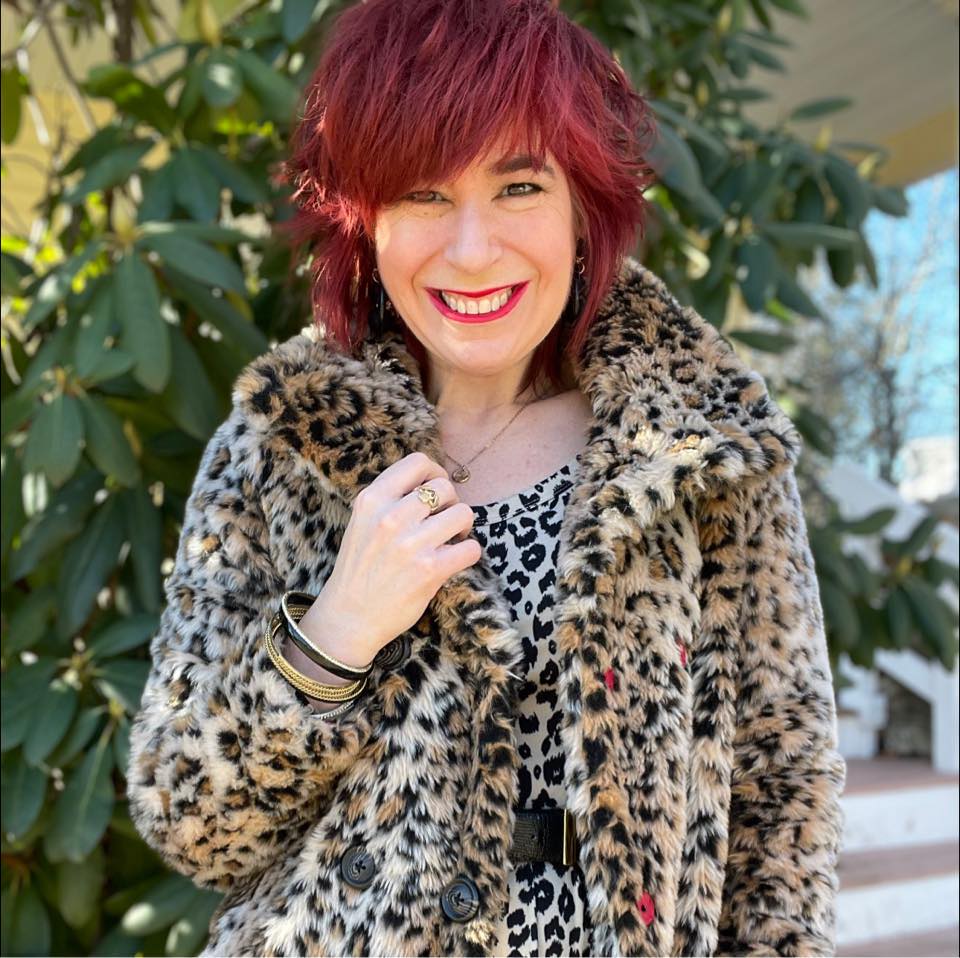
Jen is a single mom and entrepreneur who lives with Complex PTSD and Major Depressive Disorder from childhood trauma. Throughout her life, Jen has learned valuable coping skills and has made it her mission to help others to better understand their own emotions.
Jen has faced obstacles in her healing journey - from becoming a mother without a healthy parental model of her own to overcoming her inner saboteur while coping with the symptoms of CPTSD and Depression. She has spent the last 5 years developing My Moody Monster - a pull apart plush toy that has helped children to get out their frustrations in a safe way and giving families a tool to talk about emotions and communication.
Jen believes by sharing her own story she can help others to know they are not alone. Her YouTube channel features her Moody Talks focusing on an emotion each month and teaching coping skills that have helped her with her own mental health.