

 Apple Podcasts

 YouTube

 Spotify

 Amazon Music

 iHeartRadio

 TuneIn

 Goodpods

 Podchaser
 RSS Feed
Connecting Through Trauma | Life-Changing Stories
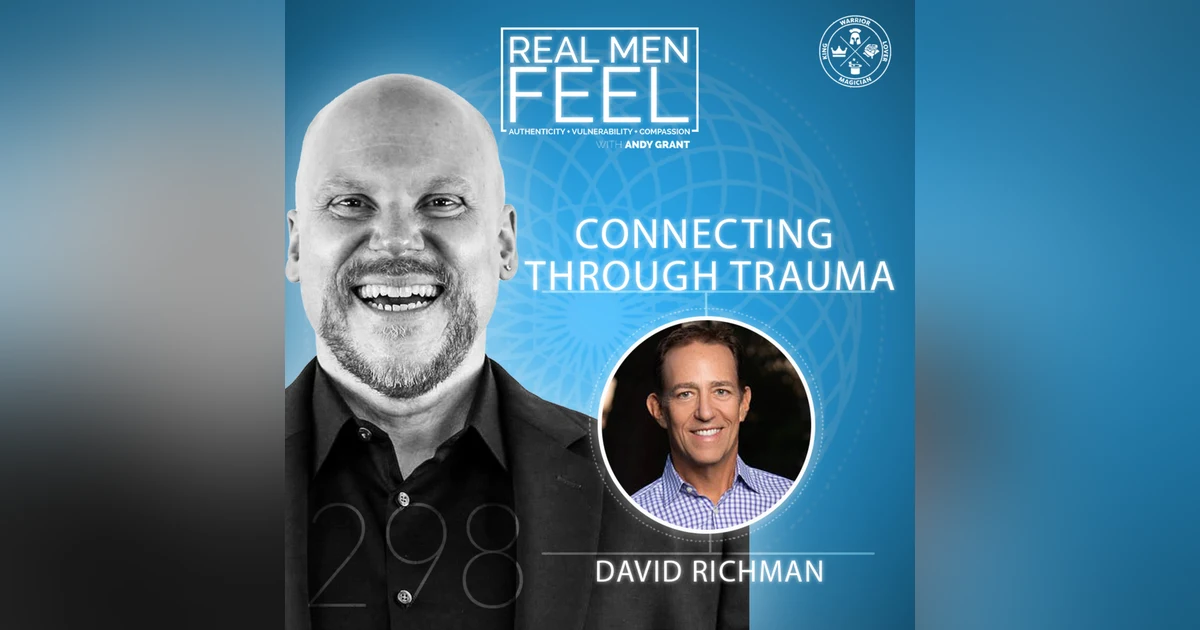

When life gets hard, a lot of men withdraw. They talk less. In the face of a health challenge for yourself or a loved one, you might be much more willing to discuss logistics and tasks than the emotional impact.
My guest today is not most men. He believes in having hard conversations with people going through trauma.
David Richman is an author, public speaker, and endurance athlete whose mission is to form more meaningful human connections through storytelling. With his most recent book, Cycle of Lives, David shares stories of people overcoming trauma and delves deeply into their emotional journeys with cancer.
He interviewed fifteen people who were profoundly affected by cancer - either as a caregiver, patient, or loved one - and explored the dynamic of why it's so hard to discuss the emotional aspects of the journey. These evocative stories give the reader a few tools to take away and use in their own lives when encountering the difficulties of talking to others about the emotional aspects of trauma.
We discuss getting past assumptions, beginning the hard conversations, and being open to the negative and positive aspects of traumatic experiences. To connect with the people we care about, we must be willing to be uncomfortable. There is more behind anyone's story than we know.
Don't worry about what's "proper." Let someone know you care authentically.
Topics and Questions
- 1:13: - What prompted you to want to write a book dealing with cancer?
- 1:13: - What prompted you to want to write a book dealing with cancer?
- 4:44 - Did each participant have a positive side to their experience?
- 7:12 - How did you decide on these 15 stories?
- 9:46 - Did you come across any common themes amongst the participants?
- 13:52 - Did you see that prior trauma led to more or less resilience regarding cancer?
- 18:27 - Fear of abandonment during trauma.
- 19:49 - The lie of not wanting to upset someone further.
- 21:09 - Is it scarier that people might not care or that they would care?
- 22:48 - Did everyone want the same sort of support?
- 25:44 - How did you get people to open up to you on such a personal and profound level?
- 27:21 - Is the advice the same for friends and family who are not trying to write books?
- 28:44 - What do you hope the reader takes away from reading your book?
- 29:47 - How do you think the participants' lives were affected by your deep interactions with them?
- 35:24 - What's the best way for people to learn more about what you are up to?
- 35:32 - Anything you are looking forward to?
- 36:16 - Did this prompt participants to write or share more of their stories?
"People are so fearful of saying the wrong thing, while the person going thru the trauma is wondering why nobody will talk to them." - David Richman
Links
Instagram -- instagram.com/davidrichman_cycleoflives/
David Ricman -- CycleofLives.org
See Cycle of Lives on Amazon, https://amzn.to/3GK6zlF
Connect with Andy and the Real Men Feel Podcast:
Interested in a Clarity Call with Andy? - visit theandygrant.com/talk
Instagram | @realmenfeelshow & @theandygrant
Personal Website | theandygrant.com for coaching, healing, and book info!
Podcast Website | realmenfeel.org for all things podcast-related!
RMF Facebook Group | realmenfeel.org/group
YouTube | https://youtube.com/realmenfeel
#RealMenFeel
0:01 Greetings, and welcome to real men. Feel, this is your host author coach and healer and he Grant please visit v&e Grant.com to learn more about me. Real man. Feels mission is to remind men that they are human beings and they have the right to experience and express all of their emotions. We have conversations that most men are not having but that all men can benefit from. I believe the only definition of masculinity that matters is yours. You know, when life gets hard, a lot of men withdraw They talked even less than normal in the face of a Health Challenge to yourself or a loved one. You might be more willing to talk about the logistics and tasks as opposed to the emotional impact. Luckily, my guest today is not most men, he believes in having hard conversations with people going through. Trauma.
0:48 David Richmond is an author public speaker and endurance athlete whose mission is to form more meaningful, human connections through storytelling with his most recent book cycle of lives, David shares stories. Stories of people overcoming trauma and delves deeply into their emotional Journeys with cancer. Welcome to Rio and feel David. Thank you, Andy, very excited to talk to you. Cool. You know, I got to say to me the obvious place to start is with, you know, what would prompt you to want to write a book dealing with cancer? Yeah, so it wasn't just cancer. I wanted to deal with it was, it was more trauma because like, what you said in the, in the open, right? We tell people tend to talk about, Tasks related to issues rather than the emotions related to issues and long story. But I was at a point when I was at a transition point in my life, going down a path that was a brand new path for me that I could see a huge long exciting future, right. I hit that later in life.
1:49 At the same time, my sister was diagnosed with terminal brain, cancer her journey. And I was very close to her. Her journey was was very short and the Life journey and I noticed that it didn't matter and if it was a doctor or friends, close family, caregivers, you know, nurses not everybody was equipped to talk about the emotional side of what she was going through. And I noticed that this was a recurring theme and over the couple of years subsequent. I was doing a lot of fundraisers, a lot of events, and I just noticed that that was a to the certain degree. I thought that resonated And with every single person I came through at different degrees but it certainly resonate with all of them like how do we start the hard conversations around the emotional side of trauma? And I didn't think that I was qualified for finding the answers.
2:44 I just wanted to shed some light on why so that people could understand a little bit more about what people are going through, what they have gone through and then they can be more empowered to start those hard conversations. So is the emotional journey of any health challenge or any trauma? Is it more than just horrible sadness? Is it, is it more than just why me, you know, it is there more layers to it? Yeah, absolutely. And when I interviewed each person and not not everybody, any was able to get super deep with right? Some people. You just don't bond with. I wasn't a proper listener or they weren't a proper talker. We just weren't able to get there but the way that we framed It and I found this very early on and talking to people was I assumed that there was a very narrow range of emotion when it motional responses when it came to such traumas. As, you know, suicide death of a parent, death of a spouse, getting a cancer.
3:41 Diagnosis, the kind of, kind of capital T traumas. I thought there was a very narrow range of emotional responses, but I was wrong, there's a very wide range of emotional responses and so, it really allowed me to We'll find out why like why could you have gratitude? Why could you have relief? How could you feel loneliness? Desperation fear, some of these things? I could understand but some of them I couldn't. So I framed each each person's story around both the greatest negative emotion that they their experience provided to them, but also the greatest positive emotion, that their experience gave to them. And because Shockingly.
4:28 A lot of times the trauma that people go through, when they're able to reconcile, it ends up to be an empowering positive thing, you know, a platform for the for therefore, to launch them to their better future. So that was the framing of all the different discussions that I had and did each participant have a positive side to this? Oh, most definitely and that is what it's really kind of fascinating because I know before I embarked on this project that I was guilty of not with everyone and not to the nth degree, but I was guilty of going. Oh man, they got bad news. They're probably feeling this. I better like not say anything stupid, I better like I'm going to exit, right?
5:12 Because I don't want to, I don't want to gauge in The Wrong conversation because they got to be feeling like crap or they got to be so negative or what. Absolutely, not the assumptions that we have about what people are going through, are not founded in what they're going. Going through their founded in our dumb assumptions, about what we think they might be going through and we really have no idea. And so, yes, the long answer to your question, they were very positive aspects of people's Journeys even if they were dealing with very difficult things, there was a positive side to it. Like could you imagine this? And again, I'm going to ask you to reach here because you imagine being told that you have brain cancer and it I'll probably end up killing you in surgery, if it doesn't.
6:00 It's certainly going to end up killing you very shortly after. And could you imagine looking at the spouse that told you that and saying thank God. Thank God is cancer. Could you imagine the grass? What? It's not possible, it's not possible. You could think that and there's no way I could think that too, but, but in this story, this person's life, they were absolutely grateful and relieved to hear that they were diagnosed with cancer because they thought they were going crazy. They thought they were, they were their anger, and their frustration in life and the end, the change in their personality, with their spouse, and with their beautiful kids, and with their Friends was due to a fact of they were going crazy and over a couple of year period. That's what they that's what she lived with is. I'm literally going to have to turn myself into an institution because I am going crazy when she found out, it was cancer, what a relief, what it wasn't her, it wasn't that. Well, do you never know?
7:01 There could be a positive spin to everybody's Journey, but if you can find out what what, what, what? They're going through on an emotional, level, it allows you to connect with them in a deeper and more. Fanta Quay. So you talked to 15 people for the book. I talked to many more but 15 made the book and those 15. I spoke to, for up to maybe two, two and a half years to really dive deep. I mean, hundreds, dozens and hundreds of hours on some of them to really be get deep into their stories. So yeah, I talked to more but we weren't able to uncover everything we needed to uncover to I think give the reader a good enough for you into you know that lay it out, bear reveal it To the, you know, the deepest deepest levels of our Consciousness and subconsciousness and awareness and what we hide inside because we're all hiding stuff inside.
7:48 We could reveal that in a way that it would help the reader. So but 15 made the made the cut. How did you choose who to talk to, to begin with haha? So what I wanted to do and he was to hit all different age ranges, they had cancer one time or they were apologists who dealt with cancer their whole life. They have cancer five times. It was severe, it was not severe that. It's just every kind of cancer. It's just I wanted this 360 View and then I said, well, if when they encounter cancer was point a Everything that happened before .8, all of the young adult, trauma, the Adolescent, trauma, the childhood trauma, the stuff that I maybe could have a understanding about, you know, drug addiction or suicide of a parent or abandonment or abuse or being bullied or something like that.
8:42 How did those traumas when point a came along cancer? How do those traumas affect their emotional journey to point B? Which is today. So, how I found people was to say, okay, I've got two wheels, we love all the different types of cancer, ages experiences, whatever. Now let me frame that around what I think are pretty interesting, and relatable, and moving traumas, because we all know we've all been through stuff. Nobody knows what we been through, right? But I wanted to shine a light on really interesting stories so that I could get to kind of the heart of the matter. So, when a friend says now, I like I'm fine. I don't need anything. The really find that they really not need anything.
9:25 When they say, Say like when, you know, when they're leaning on you for something, are you the last person that they try? So you can't tell. I mean, there's so much behind what you know, what's going on with them. That I really wanted to bring stories that I thought would be a wide range of topics and emotions that we might be able to relate to So amongst all these people and searching for varied experiences and and diagnoses were their common themes amongst everybody. Yes. So some of the common themes were one. Everybody said pretty much. I don't know why we're talking my life is not that interesting, right?
10:11 Which is shocking to me because I didn't talk to one person whose life wasn't absolutely stunningly. Amazingly inspiring Lee, fantastic. Right? Like so like powerful and they're just living their lives. They're like, yeah, you know, like whatever. But when you uncover the story, so each one felt that their story was not that interesting, which I found fast. I still find fascinating, so that was a commonality, and I'd say it at different levels, but certainly consistent with everybody's experience with trauma, especially as it relates to cancer, as either a patient or doctor. Whatever did matter was, some amount of isolation answers just a little Weirder like that.
10:59 Like we just don't like to talk about it and we might be able to wrap our brains around an accident. There, we can wrap our brains around diabetes or we can we can wrap our brains around a lot of things cancer seems to be a little bit kind of voodoo-like scary otherworldly and it causes people to be abandoned or self isolate because they don't want to bring people down or nobody really understands what they're going through or it's not a death sentence but they we think it is or vice versa and It's just a really weird area. So I think that there was a certain amount of isolation and abandonment that came with with this type of trauma specifically. So that makes me think of the assumption that you discovered. As kind of the, the others, the the nobody I don't believe. Anyone has had becomes an adult without trauma at some level, but the people not the, not the participants of your book, but their friends and family, make assumptions about not wanting to obsess.
11:58 Them but it sounds like they all make their own assumptions to about not wanting to upset him nose and choosing self-isolation we're all every parties making assumptions about the others. Yeah no no questions. Absolutely true and I'm going to tell you there's not a person listening that won't relate to this. I was recently talking to a woman she said, listen, I had a dad who was the kind of dad that was like, man. You don't show weakness like he's like, the man of the family, he's got the responsibility, he takes that responsibility. Bility. It's not a burden. It's who he is. It's the way men are. It's the way the family is a table, right? And I could totally relate to, I can have a picture of her dad, right? Then, her dad gets stomach, cancer. Gets very, very sick, he's eventually on hospice and really there's nobody else around by her, okay? And she's kind of got to take care of him. You know, take the feeding tube in and out. I mean really really, really take care of him. And you can imagine how uncomfortable that was for both of them because that's not the Namek, he doesn't get help. He doesn't, you don't ask him if he needs help, right? Who can't relate to that.
13:04 So he ended up passing away and I asked her, I said, you know, geez, how is that experience? Just goes on the one side, it was kind of positive because I got at least to show my dad that I cared and I would do things for him, and that wasn't a burden to help him. I got some positive, I go, what's the -? And she said, you know, I just never had the guts to ask him, how he felt. How he felt about what he was going through was just like, I didn't want to put him in an uncomfortable position to say. Geez, dad, what does it feel like to die? Like, how are you doing, emotionally? Like she goes. I just couldn't go there with him and I thought to myself, man. Oh man, is that an opportunity missed? And I totally get it. I totally understand it. And she was like, man, you know, like if I could go do it again, I would make myself comfortable and ask those questions and, and that's what I'm trying to do with the book.
13:53 Anecdotally. Did you notice anything for people that had a lot or a little trauma before the cancer did they were they more or less resilient? Did they handle it in different ways with it? Was there any sort of correlation you could come up with now? I think that the only Common Thread throughout was that some people had reconciled some of that trauma. And they could have some perspective around reconciling it and usually if they were able to come to terms with some of that earlier life trauma, then the relationships that they were able to form or the depth of the connection, they were able to form while they were going through cancer or a loved one was going through cancer.
14:39 They it helped them so let me give an example. Okay, so the one of the people in the book is Doc is dr. Myers. She's an oncologist Then why you have been on a college for 40 years? When I spoke to her and her story was kind of to folded one of it was that her father had abandoned her when she was a child and then add the family when she was a child. And that was that was a lot of trauma to go through right and early in her career as an oncologist and he she kind of psyched took patients. And if they wanted to do things, she didn't agree with. If they didn't take her advice, she kind of Let It Go. Okay, I'm a doctor there.
15:19 There won't be people whatever, but then, like, 30 years later, she's had a beautiful marriage. She's raised a daughter. She's had this wonderful family like that. She never got to enjoy as a child and that desperation. She felt that people would take her advice because she was such a good oncologist. And now she had the perspective to understand if you don't take my advice, if you don't follow what I'm telling you do, you might possibly lose out like I know. Know what a good life. You guy know how order great mother. You could be. I know what a great daughter you could be like you, please don't take a chance or not taking my advice. Take my man. Yeah. So that was she reconcile that trauma and used it to her benefit to really connect and really go after her patients to say, listen, man.
16:07 I know what you can miss out on, right. I know what you can make and please please, please, you don't like, let me care for you in that way. And if people didn't really jump on On board with her program. She said I can't handle it. I can't. I can't see you as a patient because you're possibly going to lose what I could. Maybe help you get right? And so that was a very big positive for her. Yeah, that's amazing. So it says, as she healed and discovered, how magnificent her life could be perhaps better than she ever imagined, she became much more adamant and encouraging other people to do their hardest work to live. Yes, so Were definitely back to your original point is, you know, kind of what, you know, what was the theme there is that if they had come to terms with some of that young adult trauma or had understood it. Like, I talked to another guy who wonderful man. He's just a, he's literally a gem of the world and we kind of talked about something that became very, very uncomfortable for him to talk about because he hadn't talked to anybody about it.
17:13 And that was it when he was six, he walked in on his mom. I'm taking Her on life and it was just absolutely tragic. And it took a while for us to develop the trust to be able to talk about that he could imagine how just in a thousand different ways that could affect somebody in a negative way and throughout his cancer experience. As a young male, a young Latino male, no possible way he would ever let anybody in to give him any help because the underlying issue was they were going to abandon him, they were going to leave him. And you feel for that. And so he was able to eventually reconcile that eventually get to peace with it eventually, accept the trauma that he had gone through and try to frame it and move past it and that allowed him in his life, in many other areas to start, to open up, to start, to trust people to start, to be able to lean on people, knowing that they weren't going to leave him, but he had to be, he had to get in touch with himself. He had to have to reconcile those. Those emotions in that, trauma, in order to get to that place. One was very fresh.
18:18 One was very in those two stories. One was over several decades. So, you know, that's kind of some of the common themes that we talked about. And you've mentioned fear of Abandonment, a number of times already both from because of having cancer and also from prior traumas could creating that fear. So, it was that kind of was that the most common. Let's see, fear that people are at least aware of. Yeah, at different levels. And again, I don't want to make any Assumption Andy. But I'll bet you that there is every single person listening has somebody in their life that they know is going through something really, really difficult or they can picture a time in their life. When somebody in the life was going through something difficult. And you are like man, I was going to call them last week but I didn't know it's been two weeks. I don't know what the hell to say. I better not call because I don't know how bad it is. How do I call and say?
19:07 How are you doing? Because I'm such an idiot because I didn't call a month ago and now and then you just kind of Arm and keep your distance and hope that y'all can figure the way to deal with it on it. You know, I got the phone and call people that there's, you know what I'm saying. I mean, people people get avoided because they their people, their circle of people don't want to say the wrong thing. They don't want to do the wrong thing. They don't want to encroach and the people that are going through, the trauma are going. Why is everybody afraid to talk to me? Why is everybody afraid to? Encroach on my feelings. Yeah.
19:48 And I think in my experience I find that that I don't want to upset them. Further is a lie. I'll tell myself it really is. I don't want to, I don't want to feel the discomfort. I don't want to be depressed by having a call with somebody. So I'll assume that, that's how they already are. And I can't help. But yep. And even when I was not here that, I mean, it feels me sad. Yeah. And it's art. Well, that's why. If we can all If we can all choose to assume the truth about what really avoiding yeah, just make that you even if say your something is right and someone feels horrible and they want to be isolated. Worst thing that happens is they don't answer your call or you discovered that you were wrong and they're glad to hear from you.
20:31 Like there's, truly is no downside beyond what we create in our mind about it. Yep. But, in terms of other trauma as well, like, I was suicidal and made multiple Multiple attempts on my life in my teens and 20s. And I can remember, Believing that if anybody knew how bad I really felt inside like they would run. So I, I would not risk that fear of Abandonment. Like I lie self abandoned iself isolated, and I don't have to worry about anybody else but so, it does show up in every sort of type of trauma. As, as you have already shared and Andy, I gotta ask you, it's a probably equal question, is it scarier that people might not care or is it scarier that people would care? Do you know, like You could answer that both ways, right? If people really leaned into you, opening up to them. Isn't that potentially just as scary as if they ran away, when you told them, right?
21:28 And so if you don't know how to connect with people, they either answer could work, right? And so the question is is I believe if we're fortunate enough to get to the end of our Lives, we really only have two sides of a coin. One side of the coin says, did I maximize the relationships that were close to me? Did I Tentacley in a meaningful way. Did my life matter to even one person? Make it matter to several but didn't matter to even when personality maximize those connections and the other side of the coin was, what regrets do I have that? I didn't do those things, right? I didn't connect with people on a tentacle a, I didn't I didn't live my true self. I didn't allow people to Love Me Like These are or they I didn't I didn't show them that, I love them. So the Gratitude and the regret.
22:14 And so I think that when you can An sometimes I might hurt because you might open up and somebody might abandon you, but that's just as bad as not opening up and not giving a person a chance to embrace you in my opinion. And I find on the other side. Once you go through any so-called negative emotion, there's there's relief. There's joy it lessons and even if even if two people are horrible and miserable but together that almost that should experience makes a light come out of that even as well. I agree. I agree and I wanted to ask if everybody, you talk to what was interested in the same level of support, but from already from the stories you've shared, they answer is no, but yeah, no, absolutely not some people were were 100% in charge of their own Journey, you know, they journaled, they made the decisions, they saw the doctors, they pressed. They they, you know, kept it all in stride. I mean, some people were were Masters at at driving the bus other people.
23:17 We're like I don't even know what the hell bus to get on, right and so no judgment that all it. We're all we're all capable and or incapable depending on you know what number of factors. So it just is what it is and I don't I'm not trying to find the answers. I'm just trying to shine a light on it so we know how better to talk to people. We know how better to interact with them so yeah, absolutely, some people took it in stride and didn't ever look back and some people only ever look back, right? And and and both are okay. So, none of the people that you interviewed were people that you knew already is that correct? I know a couple of them. Yeah, I known a couple of them, but I didn't really know them.
24:00 Right. I didn't know they're not true stories, you know? Yeah, I could tell you one super quick. I mean, she was a, she was a physician OBGYN, had non-cancerous tumors on her brain, and they forced her to retire early. Really crazy had horrible migraines. I won't get into the whole story, but just it's a terrible life for several years. Young young kids husband, we were great friends and I knew the struggles that she was going through with regards to that, but when I asked her, hey, would you talk to me and tell me, you know, a little bit more about your life in frame about the stuff. The things that I uncovered about her were just shocking.
24:44 She was on one of the last boats to leave Vietnam. The fall of Saigon came to America as a young child with a family, had experienced just absolutely heart-wrenching discrimination. Had you know, forcibly you know, I can't get at the horrible childhood grow up to be this beautiful caring. Wonderful doctor who wanted nothing more than to to help people build families and take care of them and and that was stripped away from Her. And I knew it was stripped away from her, but I didn't know how much it meant to her. And so, so just the fact that people a few people that I knew gave me a space to uncover all the hidden things I didn't know about them that you and I don't have for 10 years. I've known her husband for ten years before that. I didn't know those things, but when people want to get people really want to help others, it's shocking. The link still go to to help them. So, what did you do to get people to open up and share so deeply that often tell you things that they hadn't told anybody else?
25:52 Well, you do this too, right? I mean you just by interviewing as you give people a safe space, you active. Listen and I wasn't able to bond with everyone and neither, were they able to bond with me? But the people that, that we were able to do that? It just, it was safety. It was, it was being a safe place, I'm not judging, I'm not Coming up with a solution. I'm not preaching. I'm not waiting for you to preach to me all we're trying to do is examine because look, I mean, I can't imagine just from the very little you told me and be there is or has been a hell of a lot of unpacking going on with issues that you've gone through in your life, right? I mean I have a friend who says to me David, you know what every day.
26:37 I just with the hardest thing for me to realize is that today's not the day, I'm going to put a gun to my head and I'm like, man, he goes, oh, that's kind of lesser level of depression. I have. But at least I know it. He goes, I don't think I'll ever get there again. I'm like, dude, you have so much crap to unpack. It's unbelievably goes. Yeah, he goes out. I don't know if I ever will, but I right. So we talked about it, you just, you just never know. So, so I think that, what, what was a blessing for me? Was that I found people who said, oh, if I reveal like everything that might help someone. Okay. Okay, let's, let's try and sometimes we were able to go there. Sometimes we weren't, but when we were able to go, there was pretty magical and would it be the same advice for people? Writing books, but wanting to connect deeply to the people dealing with trauma in their lives. Yeah, it's don't be afraid to ask the hard questions right now again, not everybody can talk.
27:35 Maybe you're not able to talk to everyone. But when people are going through difficult times, especially when it comes to, you know, those big major traumas, I think really actively listening, actively probing like take away the guilt of I should probably not be asking you this because it's gonna take away all the guilt, you know, all the BS and just give it a shot. I really think more times than not. I would say, honestly, if I did offend anybody with the depth of the question, with the probing type of personal stuff that I had asked, even if they didn't make the book, If I had offended and I didn't know, right?
28:21 Because I'm going to assume that I didn't. It's just sometimes we were able to go there. Sometimes we weren't, but nobody ever said the hell you doing. You can't ask me that. That's none of your business. I'm not going to tell you that not never one time in years of talking to dozens and dozens and dozens. People. So it really made me II want to guess that going into it. What do you hope readers take away from the book. Well, I have got a lot of feedback about what readers have taken away from the book and I just hope more do that. Because what I want them to take away is a little bit more of an understanding that there's possibly more behind Andy story. The, and I know that there's possibly more that he's gone through or that he's going through that, I just haven't been a party to, he hasn't opened up. We haven't had that kind of relationship. It hasn't the need to unpack that stuff hasn't arisen. And whatever.
29:21 But if you're having a really difficult day or a difficult time or I'm having a difficult day or difficult time and we have an opportunity connect. Maybe I'm like, oh man. Yeah, like I, it's okay. I can ask that question. I can probe, I could I could risk. I could risk it. I could ask for help, I could offer help in a real difficult way. You know what uncomforta, that uncomfortable way that you talked about early on. Yeah, yeah, though. How did participants? Perhaps it was after 20 years of interviewing perhaps it was a the book was out but how did they respond? Like what was the what I meant? I'm sure there was a benefit for them for since they were sharing things, I hadn't shared its. Yeah unpacked.
30:02 So what do they shared? Was there some of their outcomes from being part of this book. Yeah so there was two two camps so one Camp was, all right I got the project I'm going to give you the free pass. Let's let's figure out what kind of rides we go on. Okay, now the sets, let's exit the parking. I can go and get in our cars and go home. Okay. That was one Camp. It's like, okay, they were there for the experience. It was cathartic for either. Both of us, we told the stories and authentic deed reviewing way. Now, let's move on the other Camp was we were really able to have an impact on each other and really talk about things that gave people at some level a safe space to to examine to self-examine to At reveal all to themselves. Because, you know, listen, that inside voice is way different than the outside voice, and we keep so much hidden when we talk to ourselves.
31:01 And I dropped a 30-pound weight, I was working out in January, in my garage, I dropped a 30-pound weight on my foot, right? And I screamed bloody hell for 20 minutes, and I fell down on the ground. And I might have called myself a blanking idiot like 500 times in the first half. Half hour. And then, I said to myself, you know what? That was your best friend that had done, that would you call them effing idiot? 500 times. Of course, not like dude, things happen. Like it was an accident. It's not your fault. Stop telling yourself that you're at that, you're an idiot. So our inside voice is so not kind and I think that hearing bear outside voice about things that they had had a - inside voice on for years.
31:46 Or decades was a really helpful thing about say that the, you know, that that judging voice that - ego is loud and our intuition, our higher self. That those little Hunters are much softer and quieter. So if we, if we take action on the littlest voice that loud, one dissipates and and one thing I'm really hearing from you and I imagine this is big take away from the book when that thought, when that person crosses your mind because they're healthy or ill or going through anything, or do you have no idea what they're going through. Just that's the time to reach out anytime any caught like Reach Out stay in touch with with the people. You consider your friends and be willing to make new friends or even people that aren't your friends that, you know, because I'm gonna tell you, they're probably feeling abandoned they're probably feeling a little bit isolated, you know.
32:39 And I just It's hard, man. It's hard, it's hard and bade, people space, their private lives and, you know, somebody's going through something, but you don't really want to ask and is it proper? It's not always but most of the time it is I hate a vast majority of the time. It is proper to let somebody know that you care and authentic way you know, don't tell me. Sorry don't be sympathetic don't you know try to make it better. Just call just reach. Reach out and call somehow. Hey, I was thinking about you, you must be going through a lot. Is there a chance you want to talk about it? I'm here, listen. That's hard to do for him but I'm telling you if you really pay off. Yeah.
33:22 And I find that, you know, I don't say it's hard to do anymore, but because I've done it enough, so sure get over that hurdle. Like it's a skill like anything, you know, the more practice you have, you can be, you can be that that, that saves space, that caring ear, that, that presence, that helps people could again. It's not, you're not there to fix something. You just ate a be with somebody. Yeah, you know, I do these cold dip Sandy every And I do a 5-minute cold dip, and and I put a timer of five minutes and 13 seconds because I got to have 13 seconds, put down my towel, to start the timer and to get up the courage to jump into the pool because it's so freaking cold. And I say to myself in the last two or three seconds, I want to tell myself.
34:06 No, I probably do a thousand times internally at rapid speed in the last two seconds. Like don't do it. Don't do it. I hate this. I do and I do it and that's like you. Anvil is tough thing and then I get out and I always feel better, but it doesn't lessen. The resistance, I'm going to feel tomorrow, right? And so no matter how hard it is, no matter how uncomfortable you're going to feel for a second. You really going to be glad you did it. It doesn't get any easier in my, in my book, it doesn't get any easier to start those hard conversations, but almost every time I do it, I feel better after awesome. It's like love lives. Available everywhere. Might people might search for it or yeah, everywhere. We're in the good thing is, is each one of the participants pick the charity, Andy that they, that they felt an affinity towards.
34:53 And so, we're putting 100% of the proceeds that come in to split up between those Charities that are listed in the book, they're listed on the website, but most books are sold on Amazon, I sell signed copies, and why do speaking gigs? You know, I sell them or give them away or signed or whatever, but yeah, most books are on Amazon. I have a great audible. The audible is 15 different actors. I do each one of the 15. He's, which is awesome and, and it's available electronic or regular book form to cool. And what's the best way for people to learn more? About what you're up to David cycle of lives? Dot-org? Lots going on there. Awesome. Is there anything you're looking forward to a new book idea or another version of this? Like what?
35:37 I got a lots of books going fiction. Nonfiction all the time. It's really a passion of mine. I also do expressive writing workshops. So I kind of help Empower people with some tools to reframe that internal conversation and give them, give an opportunity to learn how to change the narrative that self narrative to themselves. So I do a lot of those mostly to Trauma Centers, cancer centers, that type of stuff, and I'm still doing endurance Athletics. So, in fact, I don't know when this is coming out, but yeah, this for five days and I'm doing another half Ironman so, you know, I'm staying active cool, did anyone's In cycle of lives, prompt them to want to write more and share, more of their story or anything like that, you know. Yes.
36:27 Some of them are not in touch with, okay, but a couple of them. Well, actually the most of them were pretty active in the community already but some they were rien powered or extra empowered, but I don't think anybody's done. I don't think anybody's published anything from From from us talking it was more of a yeah I'll do this because it's going to help others kind of thing. Rather than them wanting to read their own story. You know, reading your own story is a little weird, right? Think thankfully I was able to get everybody to sign off on the story to say. Yeah it's accurate and you've caught me correctly because they're not Anonymous the real people real names real times or whatever. So yeah I think I think this was kind of a one-off chapter for them so to speak.
37:17 Well, I'm glad it's not for you. David, I really appreciate admire all the work you're doing all the healing through storytelling that that people have available to themselves for to dealing with trauma and disease and catastrophes. Yeah. So, thanks again for joining us. Thanks again for listening, please visit real men, feel that already to be a blog post for this episode. They'll be plenty of links to all the various versions of the book. More information about David as well, wherever you're discovering real men, feel, please give a like a follow. Ian do whatever the things you can do on the platform that you're finding us on. You can always write me at real men, feel at gmail.com. And if you're not part of the real men, feel private Facebook group. You can visit real men, feel dot org, slash group and that'll take you right there.
38:00 Until next time, be good to yourself and break through that resistance to have the hard conversation because the breaking through the resistance is the hardest part of that. Our conversation be well. Ian do whatever the things you can do on the platform that you're finding us on. You can always write me at real men, feel at gmail.com. And if you're not part of the real men, feel private Facebook group. You can visit real men, feel dot org, slash group and that'll take you right there. Until next time, be good to yourself and break through that resistance to have the hard conversation because the breaking through the resistance is the hardest part of that. Our conversation be well.