Apple Podcasts

 YouTube

 Spotify

 Amazon Music

 iHeartRadio

 TuneIn

 Goodpods

 Podchaser
 RSS Feed
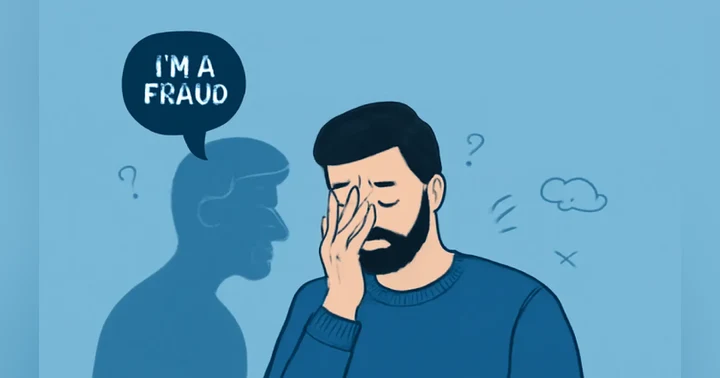
Conquering Imposter Thoughts: Vulnerability as Strategy For Men

Embracing Vulnerability and Overcoming Imposter Syndrome with Kendra Dahlstrom
In this episode of Real Men Feel, Andy Grant welcomes executive coach and speaker Kendra Dahlstrom to discuss the challenges of imposter syndrome and its impact on high achievers, especially men. Kendra shares her experiences with imposter thoughts and highlights the importance of vulnerability, emotional intelligence, and authenticity in leadership.
Together, they explore the significance of integrating personal worth beyond achievements and the role of humility in effective leadership. The conversation covers practical strategies to handle self-doubt and the cultural shift needed to redefine success and leadership in the modern age. Key takeaways include recognizing vulnerability as a strategy, questioning the validity of imposter thoughts, and promoting emotional intelligence as a learnable and crucial skill for leaders.
00:00 Introduction and Host Welcome
00:22 Guest Introduction: Kendra Dahlstrom
01:02 Discussing Imposter Syndrome
06:04 Imposter Syndrome in High Achievers
15:43 The Role of Humility in Leadership
19:35 Kendra's Personal Journey and Podcast
34:04 Concluding Thoughts and Contact Information
Connect with Kendra
Kendra Dahlstrom -- https://kendradahlstrom.com/
LinkedIn -- https://www.linkedin.com/in/kendradahlstrom
Instagram -- https://www.instagram.com/kendra.dahlstrom/
The Unworthy Leader Podcast -- https://open.spotify.com/show/4yXxXkHjoY35KaSKykVSsW?si=ce68c134df504de3
Connect with Andy and the Real Men Feel Podcast:
Book a Clarity Call with Andy and get clear on your goals, what's in your way, and what you can do about it at https://theandygrant.com/talk
Instagram | @realmenfeelshow & @theandygrant
Andy Grant Website | https://theandygrant.com for coaching, healing, and book info!
Real Men Feel Website | http://realmenfeel.org
RMF Facebook Group | http://realmenfeel.org/group
YouTube | https://youtube.com/realmenfeel
#RealMenFeel ep 358
0:00 Which leads me to say that if you are questioning if you're an imposter, that's a really good sign. It means most likely you're not. You're just really caring about the work you're doing and you're aware. Hello and welcome to Real Men Field. This is your host, author, coach and healer, Andy Grant. Visit theandygrant.com to learn more about me. We have conversations that most men are not having, but that all men and the women who love them can benefit from. My guest today is Kendra Dahlstrom. Kendra is an executive coach, keynote speaker, and host of the Unworthy Leader Podcast. She helps high achieving leaders ditch 0 sum leadership and embody authentic authority because success is not based solely on performance. She shares that imperfection is the new normal, the importance of humility, and the fact that vulnerability is not a weakness but a strategy. Looks like I picked the right shirt to wear today. Let's do it.
0:52 Hello Kendra, and welcome to Real Men Feel. Thank you so much for having me, Andy. I've been looking forward to this conversation and spending time with you. Oh, me too. So let's just jump right in. And can you share a moment when imposter syndrome hit you hard? And what did it teach you? Yeah, so I'll answer that in two parts. I I think I've had several moments in my life when it's with me. One when when I was younger and I didn't know that that's what it was. I just need the feelings. I need the sensations and how it impacted my body and my mindset. So I'll share one when I was a little old group, like when I actually thought, oh, is that what I'm experiencing? And I was actually in the workplace. I was in my 20s and I was always a high achiever. And that's part of my story is just high achievements and always looking for external validation through success and achievements coming from a trauma informed life. And as part of that process, I started to notice a cognitive dissonance with the effort and the value that I thought I was providing Andy and what I felt was being received right from management, middle management, higher management on the other side.
1:59 And I thought, wow, this is really fascinating. I know my ideas are are good. I know I'm not arrogant, but at the same time, I feel like there is this real mismatch. And so immediately, because of my trauma informed childhood, I thought, oh, I must be doing something wrong. I must change something about me in order for them to better understand what it is I'm trying to communicate instead of it maybe just being, maybe they're not interested, maybe it didn't land, you know, all the other options. But because of my background, it was really the first moment where I felt like, Oh my gosh, maybe I'm not good enough. Maybe I, my ideas aren't as good as I think they are. Maybe I'm not fit for this job. And so I started doing the thing that most people do and I started looking for a new job.
2:47 And then I noticed that pattern, you know, about every two years kind of repeating itself for a while until I got into my early 30s. And then that's when I really started getting deeper into this work and realizing that that wasn't helping the problem. It was just moving the deck tears around the deck, you know. So that is sort of when I, I first experienced it. The second answer I want to give you is that pop culture has named in foster syndrome, which I think really makes it much more complex and complicated for us to move through and work with because it a syndrome is something essentially that right we have for the rest of our life. It's not curable. It's an endemic of sorts. And the reality is, is that it's not. It's something we can choose to listen to. We can choose to believe.
3:35 We can question its validity and learn and grow from that through gratitude. And and so I know we're going to get deeper into that, but I did just want to address that at the beginning episode is that I like to reframe it as imposter thoughts. So it gives us more agency versus imposter syndrome. And it's no fault by you or any of the listeners for referring to it as that, because that's what pop culture is thought of. And that's a great differentiation. I really appreciate that because yeah, it, it they are just our thoughts. Like I I I was realizing earlier in preparing for this that I've often consider myself as a fraud and and felt that those imposter thoughts, but I've never watched someone else and decided they're being an imposter. So is this something that's just normally a label we put in ourselves as opposed to others?
4:23 Yes. And so for those of us that are emotionally intelligent and consciously aware, the answer is yes. We don't usually ever think anybody is, even if it's a new CEO that's like first time CEO and you're at the company, you most likely allow them Grace, right, Andy, you would say, oh wow, you know, they're really good and they bring this expertise, but it's going to take them a while to get used to this job. It's a new job. They're learning, they're growing. We find competence in their ability to grow and be resilient. We're not finding competence in everything they know. And that's the disconnect is when we're holding ourselves accountable and we think we're an imposter. We're holding ourselves accountable for what we need to know or what we think we need to know, not our ability to be resilient and to grow and adapt. So we give other people much more grace than we give ourselves.
5:17 So that's the first part. The second part is around this unique thing that if somebody is truly an imposter, like think through maybe catch Me if you can right with with Leonardo DiCaprio about that real story about the guy. He was clearly an imposter and pretending to be a doctor and all these things. They actually never question. They are. They don't have that social aptitude or emotional intelligence, at least through my own research. Again, I'm not a psycho psychologist or psychotherapist. However, in my own research and my own lived experience, I found that those people never question if they're an imposter. Which leads me to say that if you are questioning if you're an imposter, that's a really good sign. It means most likely you're not.
6:01 You're just really caring about the work you're doing and you're aware. So I know you've worked with with multiple Fortune 10 companies. How common is it for you to find business leaders that that have these thoughts about being a fraud it? It's fairly common, I would say over 90% even though many would not admit it. So again, you know, like the work you do. Indeed, we often will see signs and symptoms, but we have to meet the client where they're at. So we won't call it out unless we feel like they're really ready to to hear that. The interesting part about this is it's highly contextual. So a great example is that I can work with a very high functioning C-Suite leader, engineer or sales or marketing expert who knows their domain very well.
6:45 As soon as they move to a new domain and or activity like keynote speaking, suddenly it's a change in dynamic. So suddenly they, they realize, Oh my gosh, I thought that because I'm so competent over here, I would be equally competent over here. And so they're holding themselves to a really high standard. And what they realize is that it doesn't always transfer. It's not as smooth. There's going to, you know, and especially if it's outside of our comfort zone to speak on stages to 10s of thousands of people. There's a learning curve there. And so often times I'll deal with leaders that are very confident in their day job, but they start to get some imposter thoughts and a lot of self doubt nerves when it comes to speaking on stage.
7:31 But if you put them back in the container that they're familiar with, you're fine. So it's in, in the first example, this, this isn't something that only newbies face, but any new task, any new goal, any new project, any new action can bring this up even if you've been experiencing something else for, you know, and very successful at it. Absolutely. And I mean, case in point, if you don't mind me putting you on the spot and I'll share my stories. When you first started a podcast, even though you're a very outgoing, easy person to talk to, did you ever have moments where you thought like, well, gosh, maybe I'm not ready or what am I doing? Oh, sure, I wouldn't have described myself as easy to talk to and outgoing, you know, So yeah, I mean, yeah, my astrological sign is a Cancer. I'm like, yeah, I'm withdrawn.
8:12 I'm, I'm, I'm shocked at how good I've become at engaging people in conversation, but that skill wasn't there on on episode 1. Right, right. So you had to learn and grow. And it's the same for me, even though I would be considered a social extrovert and I've done keynote speaking and I'm comfortable facilitating workshops and trainings and whatnot. At the same time, this is a whole new thing, right? A whole new task or project. So as soon as I started doing this, I just stayed in the joy of it and that was fine. But then as soon as I stepped out of the joy and started looking at it like a business and all the tasks and all the things that have to be done on the back end, I immediately was like, oh gosh, maybe I'm not good enough to be doing this.
8:53 So it's it's very normal. And so that's one goal of the Unworthy Reader podcast is to just help normalize these conversations and feelings because we have them several times a day, all of us in different contexts. And the more that we can actually start creating community on shows like yours and talking about the things that you talk about vulnerability and all these types of things and, and embrace those as actual leadership qualities, the more that I believe we have a chance to actually not just change the culture we're in, Andy, but corporate culture, the corporate culture that's like, Oh no, that's a weakness. And I have to pretend like I know all the answers and I'm not scared. So you mentioned dealing with clients that have the the symptoms of imposter thoughts, but they struggle to admit it.
9:39 So why do you think so many high achievers, especially men, are kind of the last people to to to open up and recognize that this is an issue for them? Yeah, such a good question. I've been thinking about it a lot before we met, given your discreet audience. And so I think one thing is gender neutral, but that men and women both experience for women who are also listening, we often get wrapped up with our identity in what we do, not who we are. And so that gets really intertwined with our our career because we spent so much of our time in work in our career, in our title and our job.
10:21 And we even if we think we're doing a good job of keeping it mutually exclusive from who we are and our own innate and intrinsic value, it's really hard. And so I feel like because of how things have evolved, if you need to think back to the beginning of time when men were, you know, doing a lot of the protecting and, and depending on the tribe, they were the ones doing the hunting, although I know that can can vary, but the point is that they were sort of the ones out there doing the work and the women were, you know, doing the, the more nurturing activity, right? And the food and with the children and whatnot. And so as we think about how that evolved into where we are today, I think it's harder for men.
11:05 It's hard for women too, but I think it's a lot harder for men. It's my observation to decouple what they do from who they are, which is why I think the work you're doing is so important. Andy And then I the next layer to that that I'll just add here is that many people don't often realize that success and shame can coexist. I think many times we think like, oh, if I am successful, then I cannot show that I am still healing or, you know, dealing with being from trauma informed life or whatever it may be. And So what that leads to, as you would know of anyone else is there, is there the stuffing down of the shame and then the the feeling of the success bucket to feel better about ourselves, to contradict that fame?
11:59 Right. Yeah, we can't. At least I can't. I have not been successful at being so successful that I can bury my shame or her or I can love something enough that if I don't love myself, I somehow am balancing that out. And yeah, I I find it just not a possibility. Yeah. And so I, I mean, I would love to hear from men who are listening to this and your listeners on, you know, if my observations are true. But that's when I run into leaders who are male that are very high functional. They often have these symptoms of shame beneath the surface, but they're not ready to acknowledge it or admit it. Because again, you have to think about how we branded the workplace. We don't deal with emotions.
12:39 We don't deal with feelings. We stick with facts and so that what that does is it just creates emotional bypassing, which is further stuff. How does someone tell the difference between healthy self-awareness and, you know, sabotaging self doubt? That's a great question. So I'll just answer how I've done it and then I'd love to hear what you what works for you because I think between the two of us, your listeners, you probably can answer it. And, and the reason I hesitate to give a prescription is because again, I'm not a psychologist or a therapist. So I want to be real thoughtful about the listeners hearing and what they glean from it. But for me, I, I realized that peace is the end all be all form.
13:20 So when I'm making a decision or when I'm evaluating something, I always ask myself, does this would bring me closer to peace or further away from peace? And, and the one clarity on that is that it doesn't always mean that it's something that feels good, but you just know in your heart and soul that it's going to bring you closer to peace. Like, oh, this is something I'll have to go through. This is something I'll need to learn. But I know, I know lifting this weight is going to get me to the goal that I want of having these really nice biceps doesn't always feel good what you're going through, right? So I found that question is my lighthouse, so to speak, in terms of really helping me evaluate as I'm looking at data, for instance, and say, Oh my gosh, I am sabotaging myself. I don't think I'm going to do good at this, this speech or workshop or keynote.
14:20 I have to stop and say, are these thoughts bringing me closer to peace or further away? Well, answer from me is further away now. Is there truth in something I could do different? Yeah. I think you need to block two more hours of rehearsal on your calendar and you need to go through the outline about two times to make sure it's really tight and articulating the message that you want them to walk away, away and do those things bring me closer to peace? Yes. Are they maybe going to be task driven and take some time and mental power? Yes. Is that helpful? Yeah, no, I I agree. And in my experience, I find that the stricter a negative thought is that's the that's the the sabotaging self doubt.
15:04 Whereas if it's gentleness, oh, I need like you're saying I need to practice it a little more. If it if those those more subtle things are the are the healthy awareness. Yes, yes, I absolutely think so. And, and, and where I think it gets conflated is that often times there could be a glimmer of truth in the stricter thought. But when we think through, you know, how God and light operates it, it's gentle, right? It usually it doesn't come at you like that. That's dark energy, right? Or Satan or whatever you want to call it, right? So that's dark energy. And so we need to be careful which energy we're attaching our our truth to. Yeah. Cool. Kendra, I've heard you say that the real impact of a leader is based on humility. Can you expand on that?
15:49 Yeah, I think we're all tired of smoke and mirrors. Culturally, I think we're at a third. I'm sure not just what's going on globally, but if we just look at leaders and even look at company and monopolies and things going on around the world, the corporate scale as well as, you know, global and government scale, I think we're really wanting humility. We don't expect someone to be perfect, but we just want to know that we're getting true. And I think post pandemic, I think just because all of things that transpired, I think people are just, you know, doubtful.
16:30 And now unfortunately, we're living in this world that's very divided, like, oh, you're here or here. And you and I both understand the power of oneness. And so that makes it hard, right? It's like, oh, OK, we can just, we just have to start being the light and being positive and all those things. So I think as we look through the next generations of leaders, I think humility and authenticity, Andy, are something that have been a requirement for a long time. Like even if you think back to tribal people and population, indigenous cultures and how they operate. And we lost it along the way as we scaled into quote, UN quote corporate business and what we expect of people. If you look a politician, like what we expected them like no one's ever going to be perfect. Like that's kind of, that's really real ridiculous that we ever thought someone was going to be perfect, you know, in order to be an exposition.
17:19 And so I, I think we're hopefully dialing more towards an era where humility and authenticity and the, the willingness to be vulnerable and share true, accept mistakes, not be ego driven is going to be even more important. And then layered on top of it, we have Jen AI. So what is going to differentiate leaders from what Jen AI can do, which is just, you know, tasks. Here's how I'm going to delegate. Here's our the ideas, here's the strategic plan. I mean, at some point, Jen AI, it's already pretty close to being able to do that. But what will differentiate a per leader is their EQ, right? Is their ability to lean in and say, oh, Andy, great job on the work, but how are you feeling?
18:06 What can I do to help support you and your career growth? Those kinds of conversations that many leaders are still not having. Is emotional intelligence something that is an innate scale or isn't? Or is it something that's learnable for everybody? So there's different schools of thought on it. I'm at the school of thought that it is something that's learnable. I believe we're all born with it. It's innate. It's just how much you were brained and programmed to turn it off as a child, right? I, I mean, if you look at a baby, they're very emotionally intelligent. They're very aware of their thoughts and feelings, and then they take action based on that and what they want to do. Now one would say that if you look at the composites of EQ that their impulse control is probably very low because they think something, feel it, and then they do it right away.
18:53 But those things come with lived experience. So the one thing I really like about the psychometric assessment for EQ that is untrue or any other psychometric assessment is that you can actually work on a composite or a a certain quality like empathy or impulse control or stress tolerance and you can actually see it move. You can actually change your test results. Whereas a lot of the other psychometric assessments are behavior based. And they'll say, oh, Andy, you're an ENTJ and you're always going to be. And so I think that that is very empowering for leaders and, and, and people to be able to understand that it's a snapshot in time. That's the result. And that this is the skill that if I choose to lean into and grow, I. So Kendra, you mentioned your podcast earlier, The Unworthy Leader.
19:39 What inspired you to create that and how do people react to Unworthy being in the title? So I, I unworthiness has been my story for a long time. I think it's something again from, you know, trauma informed background all through childhood and then just further patterned and, and reinforced through 20s and somewhat into my 30s. And then it got better. But then it would show up in pockets and I just got better at hiding it. Even though I was really successful in my day job inside, I still just felt like I was in a lot of inks. And so Fast forward till. I don't know. Last summer I'd already had this idea of doing a podcast and I had kind of played around with the name, and I've been advised against it because most podcasts you want to name the positive, right?
20:31 If you think of duality, you don't want to name it the thing people don't want to be. You want to name it the thing to be. You know what they are because they're whole and complete or the thing may aspire to be. And so I had branding experts and marketing experts say, oh, I don't know that you should do that. You should call it the confident leader or something else. But you know, to the point of knowing our truth. I meditated on it. I sat with her for a long time. I journaled and I said, no, this is the title. This is the title. About a month later, I ended up with strechacopterous pneumonia, turned to septic shock. It was in respiratory failure at the beginning of liver and heart failure and was really sick, obviously almost died, Had this sort of NDE type experience in the hospital and three or four days later come out. And it was that experience where I realized two things. One was that I was so stubborn that I had your test how worthy I am to be here and try to leave. And God said, no, you're, you're here. And I thought, wow, I can't believe I've been so stubborn to my whole life that I had to go through something that crazy to actually now believe I'm worthy of being here and that I have a purpose.
21:55 If I'm not here by chance, I'm here on purpose. And so I said I absolutely have to launch this podcast because I want to share this message and I want to normalize this because I feel like so many people can relate to this on different levels, whether it's past or present or contextual or or omnipresent, whatever it is. And so I felt like I that whole experience, the purpose of it was to call me to do this. And people have written me back that I've asked to be on the show and they say, well, tell me what you mean by the Unworthy leader, because I think they're nervous about it identifying their brand with it. And I get that. And so I acknowledged that and I said, yeah, this isn't for you.
22:35 That's fine. However, I will tell you that the people that have come on have been the people who are more open and willing to say, you know what? Yeah, I felt these things. And those are the exact guests I want. I I don't really want someone who's going to come on and share platitudes of yeah, I felt doubt, but not really be willing to share the whole truth. That's what I'm trying to get away from. Yeah, and in in case people aren't familiar with NDE that's near death experience and you seeing how that you know you you put yourself through that to prove your worthiness very much aligns with with my history of suicide attempts and I keep after let's just check one more time.
23:18 Let me try to get out of here, make sure I'm supposed to be here and you know that that's I'm well, I said it was was did you need to test your worthiness just the one time? Well, I had contemplated suicide when I was younger on two different occasions. Nothing as significant as yours, thank goodness, where I actually, you know, went through with the act or whatnot. The first one, I was about 10 years old and I, I was going through a significant time with bullying, but it was also a time when my dad was threatening for full custody and there was a lot of abuse going on in that household. So it was just really rough for me. And I think I just felt completely alienated by some of her personal.
24:04 I guess people call them norms, but they're, they're, they're not very compassionate tactics going on in the cliques. And so I remember, you know, holding a knife to my wrist in the kitchen and I was putting some pressure. It was starting to get red, but it wasn't bloody. And then my mom walked out of her room. Obviously I hadn't thought through this very well and thank goodness. And I pulled it away. And then, you know, and then I, I, I think, you know, if I think back on that moment, I think it was just sort of this larger knowing voice came in that said, don't just just don't do that. So I feel very grateful that, that, you know, I felt like it was divine intervention on both instances. The the later one when was when I was undergoing a sexual harassment lawsuit, which was just awful and rough.
24:49 And I had happened to also go through ACL surgery that was not recovering well. And now what I know about somatics and everything else I said, well, my right knee, I mean, all this like this makes total sense, right? The mask, go inside everything. You know, knees are about movement going forward and life and everything. And so I was also on, you know, the medication they give you and I don't think I was reacting very well to it, but I didn't feel that. And so I was just like, and luckily at that time a friend called me and knew something was wrong. And luckily I was honest and I said, OK, you need to come pick up this bottle. And so they came and got it. So nothing, you know, as extreme as, as what you've been through, Andy.
25:32 But I think there were two other terms where I felt like I tested it. And when I look back in hindsight, God wanted to keep me here for some reason. Now I know why. Yeah, I just want to throw something there and suicidal thoughts, attempts. It's not a competition. I, I, I don't want to be considered. Oh, I'm better at that than anyone. Like that is not the thing. So having the thought once in your life, it can be a horrible, horrible experience. I'm glad you saw the truth and, and listen to those voices and, and saw your worthiness because you know, this goes back to kind of the discussion about thoughts of, of fraud. I find that only the worthiest people question their worth. That's right.
26:16 Yeah. It's right because we have such I, you know, I would say consciousness, social awareness, I need to help. I need to actually have purpose. And it means a lot to us that we're actually self actualized. And if we're not, we feel like a broad, right? So I'm going to change the tone a little bit. I I recently came across a 20 year old journal and it was from the first time I worked with a coach and he had me describe and draw a picture of of my gremlin of my darkest voice and it looked like Danny DeVito as the Penguin. So I want that made me think about this. So if imposter syndrome had a voice, what would it sound like?
27:01 Well, it, I'll say this, it doesn't know compassion, it doesn't know love. It doesn't have your highest good or interest of heart and it doesn't hold grace. And so I can tell you what you know what it doesn't have. Now in terms of what it does have, it can, it can, it's usually always just, it's very critical. It, it always assumes the worst possible scenario. And it it, it's judgment. If I was to put it into one word, it's pure judgment from a place of mockery, belittlement, and disempowerment. Now, what the boys actually sounds like depends on each individual.
27:47 Some people, when you really do the work, it's like, oh, that's my mother, that's my father, that's my grandmother. That's my stepmother. That's that teacher I had in second grade. That's my best friend that I had in high school. So it can, it can vary on terms of like sound, but in terms of its vibration and tone and energetic blueprint, I'll call it, it's never of and for the highest good of you, it's, it's right. I always like to call it. It's like the wedge of Satan. It's the wedge of darkness that finds a little spot to get in there. And then that's when it starts to do its work. Does anything stand out for you as a ridiculous thing you told yourself in the past that now you can laugh at? Oh jeez, there's so many.
28:29 I mean, one that may not seem relative, but it comes up actually quite a bit is I always loved animals and I'd always thought about being a vet, but because I didn't always have the healthiest mindset, I never thought I was going to be smart enough to get into that school. So I didn't even try. So here I am about 25 and then high tech working, and I was at this point in my life where I was kind of starting to question like, am I doing what I love and you know what's going on? That's how I thought about going back to that school. And so I got my diploma for my Bachelor of Science from where I went to college. I got all the paperwork ready and I was starting to apply. And then I heard this voice in my head say, Andra, you're so dumb.
29:19 Why would you want to try to go back to school now? You're 25. You wouldn't even be out of school and be able to become a vet until you're probably almost 30. By then you're going to be so old. Like, what are you even thinking? And I laugh at that now because now I understand, you know, here I am 50 and I'm like, that was a blip in time, you know, like, but here was this voice trying to sabotage and, and, and convince me that I was not adequate to go after this dream of caring for animals. Enter Is there a practice or a program or a book that has really helped you that you would like to share? Oh my gosh, I there's so many Andy.
29:59 And I think like many of us, we kind of find a hybrid that like a little bit of everything that works for us. The one thing that I think has worked the most for me is somatic is being able to really pause and quiet and and start to feel into like your body and what is going on. Not just the thought, but the thought is usually connected to something in your body. And even if it is only up here starting to get curious and ask it questions about, OK, what color are you? And if you were to have it be a shape, what shape are you and what is you know, what is the red furball want to tell me? Because when you start to dissociate it like that, it becomes easier to not only hear what's going on, but not be as emotionally impacted by it.
30:51 And I found so many raw fruit and just impeccable wisdom come to me through those those conversations and relief has been on the other side of it. So I would say from like a trauma informed and foster thought model, that would really be what I would say would help me the most. But obviously there's meditation, there's generally a lot of times you, but even like you can do inner child journaling with the adult, you know, self, you can do the same with imposter, right? So your right hand is your, your higher self and you're, you know, you're God born, you know, self. And then your left hand would be OK, these imposter thoughts. And then you allow them to have an exchange and, and sometimes what you'll find is that imposter thought is just a defiant child that wants attention. So they're tipping the chair, they're throwing the food, and they're angry because of whatever they've experienced as their child.
31:58 And I'll offer that it's right, Right. And so they're angry. And because we're taught to suppress all these things and not give it attention, then the older we get there, we start to say, oh, I feel still thinking about when I was 4, like, why can't I just get over that? But if you really give it some time to do it and the journaling is a great way to do it, you just start to realize that them tossed their thought is often just, you know, this 4 year old kid that just wants a little attention. So it's throwing ice cream across the road. So. What is one thing that you wish more men knew? Well, I think I started by saying that the worth isn't always tied to productivity, performance, and the pressure to hold it all together.
32:41 I am that that your value isn't what in what you do. Although you can talk about self actualization and Maslow's, Maslow's hierarchy, that's a different conversation, but it's more about who you are like as is human being who you are. And, and I think a lot of, like I said, men find themselves defining who they are by what they do. And that's an easy thing to do, especially because we want to be the change we want to see. And so when you start getting those kinds of idioms and whatnot, it, it makes it really complex. But I, I, I would say that that's number one. And then the next thing is that vulnerability is not a weakness, it's a strategy.
33:23 It's not to be overused, right? It's supposed to be used with deliberateness and precision, and it's not to be manipulated. But when used appropriately within context, it has so much power to open up relationships and conversations in a room. And if you're really after influence and leadership and building deep relationships, whether it be with your team or family, that's where it starts because that's when fight safety kicks in. And then actually people are open to sharing thoughts and ideas. And that's how we become a better people, a better culture. And that's where innovation lives in the technology realm.
34:05 Kendra, what's the best way for people to connect with you? Well, they can certainly find me on my website, which is Kendra dahlstrom.com. There's a contact button there with a variety of ways to contact me whether or not if you want to talk about me facilitating a workshop, you want one-on-one coaching, you want team coaching, you want a keynote, it's all there. You can also find me on Spotify. You can listen to our podcast there and it's also published on YouTube under the Unworthy Leader Podcast. And I also have presents on Instagram and LinkedIn. But I would say that the main ways to get a hold of me are probably my website with the contact button or LinkedIn.
34:47 Awesome, Kendra, I'm so glad. So I was recently guest on your podcast. I'm glad we connected and have been have been having continuing this conversation on both of our platforms because as you said, it's a very needed one. And let's say it's a worthy discussion to talk about worthiness. Right. Yeah. Well, I mean, and your shirt says it all, right? And I know you're the king of vulnerability. So I love that we were able to connect on this because I think the world needs more people like you that are willing to stand up and say that, you know, vulnerability and masculinity don't have to be mutually exclusive. This is something worth telling ourselves and it's not helping us as a people or an individual. Yeah, that's why I love, you know, you're saying vulnerability is not a weakness but a strategy.
35:30 And I often say that vulnerability and authenticity are superpowers that men, too many men, ignore and have been taught otherwise. So yeah, keep making a lot of noise. Yeah, Thank you taking. That tree of unworthiness and see who drops out. Yeah, exactly. And I think between the two of us, we can change the culture to go move away from zero sum thinking like, like I have to be a leader, but it has to be the cost or myself and my humanness, which is vulnerability, which is authentic. Thanks so much. Thanks for joining us, everyone. Please visit realmenfeel.org and see the blog post for this episode. We'll have all the various links and resources discussed.
36:10 Wherever you're discovering Real Men Feel, please subscribe, follow, like, share this episode with someone, post a review or comment. If you don't know where you want to go, it is impossible to get there. If that's the case for you, I invite you to book a free Clarity call with me. Visit theandygrant.com/talk. We'll explore what you want, what's in your way, and what you can do about it. Until next time, be good to yourself.

Coach / Podcaster
Kendra Dahlstrom helps high-achieving leaders face what they usually hide: self-doubt, burnout, and the quiet fear of not being enough.
She's led executive coaching for some of the world's top brands—including leaders inside Fortune 10 companies—guiding them through the pressure of visibility, perfectionism, and imposter syndrome. Her work blends emotional intelligence, honest storytelling, and real-world strategy to help leaders lead with more presence, less proving.
Kendra is also the host of The Unworthy Leader Podcast, a growing platform that pulls back the curtain on what leadership really looks like when we stop pretending we have it all together. Through raw conversations and hard-won lessons, she invites people to see self-doubt not as a flaw, but as a doorway to deeper wisdom.
Her message is simple: you don't have to feel worthy to lead—you just have to show up and be willing to find the answers and support.