Apple Podcasts

 YouTube

 Spotify

 Amazon Music

 iHeartRadio

 TuneIn

 Goodpods

 Podchaser
 RSS Feed
Finding Freedom: Healing After Incarceration
Overcoming Life's Inner Prisons
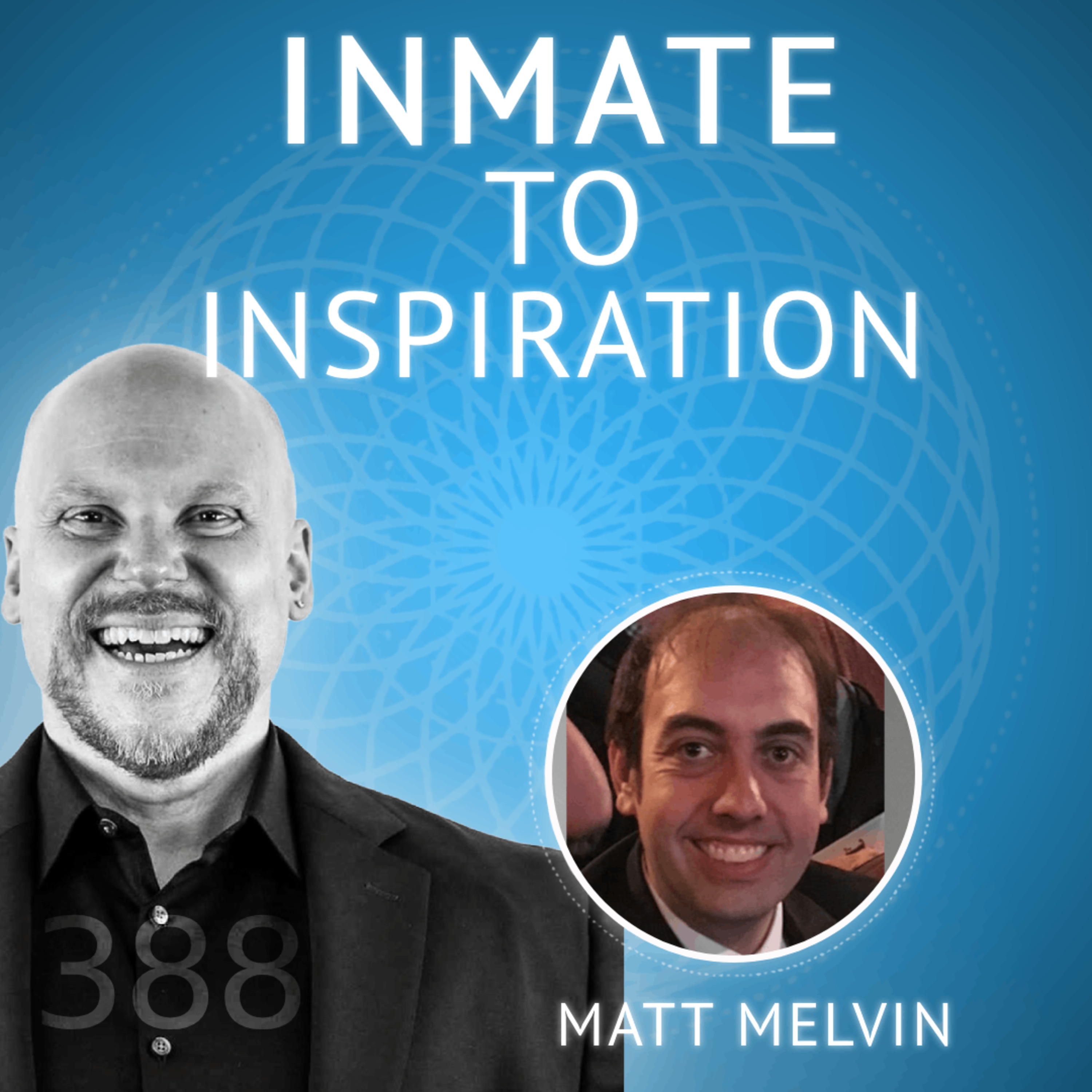
In this compelling episode of Real Men Feel, host Andy Grant interviews Matt Melvin, author of 'Bullied Behind Bars.' Matt shares his harrowing experiences of incarceration, bullying, and isolation, focusing on the mental prison of blame and anger that lingered long after his physical release. The conversation delves into the challenges many men face, such as shame, fear, and past trauma, and discusses the importance of emotional survival, men's groups, and what it truly means to feel free inside.
Matt talks about his journey to self-love and forgiveness and his plans to create a supportive community for men. This episode provides a powerful reminder that freedom is more about inner connection and honesty rather than external conditions.
00:00 Introduction to Forgiveness and Accountability
00:13 Welcome to Real Men Feel
00:34 Meet Matt Melvin: Author and Survivor
02:01 Matt's Journey Through Incarceration
05:31 Life After Prison: Challenges and Growth
13:11 The Importance of Men's Work and Vulnerability
19:23 Matt's Vision for the Future
27:45 Final Thoughts and Contact Information
Connect with Matt
Matt Melvin — https://www.bulliedbehindbars.com/
Facebook — https://www.facebook.com/matthew.melvin.5621
X — https://x.com/barsbullied
Resources
Bullied Behind Bars: A Gay Christian Trump Supporter Goes to Prison by Matt Melvin — https://amzn.to/4r2mSi8
Connect with Andy and the Real Men Feel Podcast:
Join me and connect with other like-minded men in the
Authentic AF Community | http://realmenfeel.org/group
Instagram | @realmenfeelshow & @theandygrant
Andy Grant | https://theandygrant.com for coaching, healing, and book info!
Real Men Feel | http://realmenfeel.org
YouTube | https://youtube.com/realmenfeel
#RealMenFeel ep 388
0:00 Forgiveness is not the same as forgetting, but for for when we don't forgive another person, they are living rent free in our head. Can you hold people accountable and forgive them? Yes, absolutely. Hello and welcome to Real Men Feel. I'm your host, Andy Grant. You can learn more about me at the andygrant.com. Real Men Feel, as we remind men, that they're allowed to be human, encourage them to drop the mask, the bravado, all the nonsense. Today's conversation is powerful because it's about prison, not just the kind with bars and locked doors. My guest today is Matt Melvin, author of Bullied Behind Bars. Matt survived incarceration, bullying, and isolation, but what really stayed with him was the mental prison of blame and anger that followed him long after he was physically free.
0:48 What makes Matt's story so relatable is that you don't have to go to prison to understand it. Many men are trapped by shame, fear, past trauma, or the belief that they don't belong anywhere. Today we talk about bullying, masculinity, emotional survival, men's groups, belonging, and what it really takes to feel free inside. Let's do it. Hello Matt, and welcome to REAL Men Feel. Thank you very much for having me on the show. Matt, for people that don't know you yet, how do you usually describe yourself today? I would describe myself as energetic, fun, outgoing, somebody that is willing to go above and beyond what other men may not want to do. In other words, I make myself available 24/7, 365 to my friends.
1:40 And is are those characteristics you've always had? They have, but I it hasn't. It's taken me time to get there because for a long time I didn't love myself and so I had to work on myself and love myself before I could help other men. No, you've written a book called Bullied Behind Bars. You're energetic, helping, self, loving and self. Did that man exist before your experience behind bars? No, I would say I was angry, resentful, blamed other people.
2:25 Was that your experience as as a as a as a man prior to any legal issues? Yes, and I allowed other people's bad energy to affect me. And I have learned to not allow what other people think of me to consume me. What other people think of me is none of my business. Great. What was life like and what got you in behind bars? What got you in prison? I grew up in Tyngsboro, MA. I had a best friend that was behind lived behind me and then the the school bully lived next to our house. So that was an interesting dichotomy.
3:08 However, in 1988, my father got a job at Franklin County Home Health, and he transplanted us all up into Vermont. And that was the biggest mistake my parents could have made. Vermont is a very isolating state. It's very hard to find and make friends. And I've always felt that I was different. I wasn't diagnosed with autism until I was 35. I wrote my book the second time I went to prison. The first time I worked at a car dealership. They didn't pay me my Commission, so I impulsively sold one of their vehicles, got caught. Instead of going through the mental health court, which I should have been allowed to do, Judge Jeffrey Crawford and Bob Wolford both decided I didn't meet the criteria.
3:58 If I had been allowed to go through the mental health court, I may not have a record today. We may not even be chatting at this point. However, I came out, had a record, couldn't find a job. In 2009, I used other people's information to pass a background check, got caught. The government pursued me for six years, got a grand jury indictment in 2016, I was indicted for identity theft, Went to 10 different institutions. That's where I started writing my story and I was putting a target on my back. So. Because you don't talk about other inmates, you don't talk about guards. You do your own time.
4:42 You, you keep your head down. The guards and the, and the inmates, a lot of time would gang up against me and I wanted to hold them accountable. I was held accountable through the criminal justice system and it's time for these folks to be held accountable for their actions. So while in prison, other inmates and guards knew you were writing about your experiences there. Yes, one of the institutions I was at in Dover, NH, they, the guards, actually confiscated my journal entries. And when I confronted them about it, they told me they disappear, they don't know where they are. Of course they knew what that was going on. So in, in Hinds it sounds like you use the experience and you you, you got a lot of growth out of it. I would not be the faithful man I am today without going to prison.
5:37 I was for most of my life up until August 2015 when I had a near death experience driving on 495 where I was almost killed by an out of control driver. That was the moment I stopped lying, being dishonest and started living a more godly lifestyle and put God first and allow God to take my life and take charge. So while while in prison, were were you being bullied because of of your writing, of your plans, what you're. Going to do because I was also gay, I wasn't using drugs. I was different and the guards knew that I was different, so I was targeted.
6:22 So I, I have not been in prison. So I only know from, you know, probably bad movies and TV shows. But is is everybody bullied? People that are different are bullied. So how did you How long were you imprisoned? I was in prison for 16 months and then I did about a month and a half to two months in a halfway house. Every person who goes through is goes through the federal judicial system has to do time in a halfway house, and that is all based on how much the sentences. So the longer the sentence in federal prison, the longer the stint in a federal halfway house will be in a in a halfway house. For those viewers who probably have never heard of it, it's simply a house in a community.
7:15 Mine was in Albany, New New York. It's a house, but you can't leave. So there's cameras in that entire house. It's surrounded by a fence and everybody in the neighborhood knows it's a halfway house and the only way you can leave is out on a pass, and all the passes have to be approved by the director. The director didn't like me, was a difficult individual. I wasn't going to be there for long. She wouldn't allow me to get a job, look for volunteer opportunities because of the short time that I was going to be there. Most of the men that came through the halfway house, we're going to be there for years. And again, I help them accountable. I wrote grievances and you know, you're just supposed to do your time and keep keep your mouth shut. And I refuse to do that.
8:07 My whole entire life. I've always held people accountable. So it so it sounds like that drive to hold people accountable like made your experiences there tougher. Like it It would have been an easier experience if you had just shut your mouth and and gone about business. Perhaps I I'm not sure that that would have worked though. So is was the the bullying? Was this physical intimidation? And emotional. I was raped at one of the facilities, MDC Brooklyn, by an Aryan Brotherhood member as an initiation to get into the the Cult Brotherhood gang, whatever you want to call it.
8:48 So did you become a member? Was I? No, no. A member raped me as an initiation to get into the gang. In order to get in a gang, you have to complete a violent act. What? If you can possibly distinguish, like what, what elements had the biggest effect on you? Was it emotional, spiritual. Physical. All of them, all of them. But I spent a lot of time in solitary confinement and that's really where I started journaling, getting into my Bible, praying. And that's the discipline I have today. I, I find a lot of men have an issue getting that discipline. I was able to hone that discipline behind bars, where there's a lot of less distractions than there are in the outside world.
9:43 So what are some coping mechanisms that you utilize that got you through? Was it just the the the the the Bible and and self reflection or the word There are the? Praying. Getting into the Word, journaling, writing my story, sharing it with the world. And I know not everybody's going to agree with me. Not everybody's going to like what I have to say, but it's my truth and the truth will set you free. There are a lot of people, Andy, who told me rename the people don't identify their, you know, first and last name because I was identifying judges, lawyers, cops, and I was putting myself as a target. But I don't, I won't back down to anyone and I refuse to allow other people to intimidate me.
10:35 I was never intimidated. And has have you suffered backlash for for releasing for publishing the book? I've received some backlash in terms of the neighbors. The neighbors don't talk to me. I was followed around a lot by the Shelburne police. When I got out, I was Aaron Noble, who was I believe, the chief instrument to why I was targeted so bad in March of 2022, actually got a $200,000 payout from the town of Shelburne to just go away. So when he laughed, a lot less targeting happened to me. But I still don't trust the Shelburne police, and that is also another reason I wanted to write my book was to expose the corruption in a small state like Vermont.
11:29 Corruption just doesn't occur in the major cities like New York or Chicago. They happen right here in Vermont. My case was the only case I've ever heard of where I was prosecuted, and the judge was the same in the state and federal case, Judge Jeffrey Crawford. Crawford, excuse me, was the judge in both my state case in 2004 and my federal case in 2016. When you were sentenced, how did your expectations of what prison might be like compared to what your experience was? It was far worse than I could have ever imagined. I went to 10 different institutions that kept passing me around because I kept writing grievances and holding them accountable and they didn't know what to do with me. I was a giant pain in the rear end as far as they were concerned and.
12:23 That was that your goal? My goal was to hold them accountable for their actions. I was a held accountable for my actions and it's time for other people to be held accountable for their actions. And just as I thought, as soon as I got out of prison and wrote to the Bureau of Prisons, they told me we don't know who this guy is. None of this happened, even though I have documentation to that says the other the other way and. Particularly what the the rape happening or something else? Was there a particular point that you realized this is more than like a physical survival? There was, you know, an emotional survival, a psychological survival.
13:08 Absolutely, it was all of them and I think all of them paid a toll on me, but it wasn't until I started doing men's work in February 2022 and release that anger and hostility I had towards the people that had wronged me. What are your heroes? Louis Zampinelli Zamperini, excuse me, has had a much worse experience. He was a soldier in World War 2 and he was beaten by a man named the Bird when he was at on one of the Japanese controlled islands. And he tried to forgive the Bird many years later, but the bird would not take his wouldn't meet with him. And this is a man that had made a vow to God that he was going to as soon as he was on that boat. And he he reached out to God and said, God, if you bring me to land and keep me safe, I'll start serving you. But he had forgotten that and it wasn't until he went to a sermon when his marriage was on the brink. And the man that was pastoring Billy Graham, it wasn't until he started surrendering to God that he was able to release that anger.
14:40 And he, he almost strangled his wife because he was so angry. And until he started serving God and, and forgiving his captors, it wasn't, it wasn't until that point that he was, he was able to sleep soundly and finally have a, a marriage that wasn't based on anger and hostility towards his captors. And I don't believe that if he had gone to he had not gone to see Billy Graham, that he would have been, had the ability to forgive his captors. And we have to, we have to forgive our captors. Forgiveness is not the same as forgetting, but for for when we don't forgive another person, they are living rent free in our head.
15:31 Can you hold people accountable and forgive them? Yes, absolutely. OK. Is is that perhaps one of the biggest lessons you you got out of this whole experience? Absolutely yes, and if it wasn't for my men's work that I started doing in 2022, I don't think I'd be the man I am today. So you've been physically free for a while, but I believe I've heard you say that you talked about still feeling imprisoned somehow. It's hard for me to meet people that are willing to be vulnerable and open up and release what's going on with them. I feel like a lot of men use sports weather as a safe mechanism and I want to get to know my friends on a deep, intimate level where they can feel like they can open up and talk to me about anything.
16:27 Now, is this something that you've discovered you liked doing men's work or was it prior to that they wanted that? It was through doing my own men's work that I wanted to start serving other people. Because until you've been through the fire, until you've experienced a lot of heartache, you can't help another person. And it all starts with being able to forgive other people and loving yourself. If you don't love yourself, you can't love another person. You can't help anybody. So all your experience, so it's not that you've been in lots of different men's groups and organizations, I have. And what the common theme is that a lot of guys use sports weather as a distraction.
17:16 It's a lot safer to talk about sports and weather than it is to go deep and talk about those six emotions. How do you go about day-to-day inviting people into deeper conversations more, not just dealing with surface level stuff? It's challenging. Some guys are able to do it and other guys aren't able to do it, but I try to lay out what I'm looking for in a friendship and if that person is not there with me, I just move on because I don't. That's what works for me and I realize, you know, I'm not for everyone. There's a song by Brothers Osborne called Not for Everyone, and that's fine. We all come to the world a little bit differently. Some guys, that's all they want to have is a surface level relationship.
18:07 And do you find that men that seek out men's work and men's groups and organizations that are those guys willing to go below the surface or even or even many of those guys just staying at that, that surface level conversation? Some are and some aren't. It's always easier to look at somebody else's faults than it is to look at our own faults. What I find in even staffing a lot of men's weekends is that a lot of the guys should actually be participating because a lot of the guys, they show up at a weekend and then they go right back to the same person they are. Oh, so so people just kind of put on an act like they're doing the work, OK. A lot of people wear masks, Andy. It's a it's a safe mechanism.
18:54 There's no risk or hurt that will happen. Have there been particular spaces or groups where you really felt like, OK, I belong here? No. Do you think there's a lot of challenges? A lot of men's groups are guys that are married and have kids, and so there's always that element that I won't fit in because what I bring to the world is different than what other guys have. So my journey right now is to start a single man's group. Hopefully. My dream has always been in Alaska. Alaska actually has a very high suicide rate among the Aborigines.
19:39 Men are five times more likely to commit suicide than on the lower 48. And it's because of that it's dark. It's dark a lot, lot of a lot of times during the year. And so a lot of guys use alcohol, and even among the dry communities in Alaska, it's very, very challenging. So you talked about learning to love yourself. Were there specific techniques or strategies that really made it concrete for you? Staying I love you in the mirror 10 times. Telling myself I'm no longer going to surround myself with negative people. Being upfront with all my friends that I have autism and I'm on the Asperger's spectrum.
20:29 Laying out what I'm looking for in a friendship early on. How has your relationship with yourself changed? I no longer allow other people's negativity to affect me. I no longer allow people that are negative in my space because we are who we surround ourselves to be. So if I surround myself with negative people, I will turn negative. If I surround myself with positive people, I will be positive. And we all have a choice. Every day I, I wake up, I have a choice. I can either be very negative, I can, I can be very positive or I can be somewhere in the middle.
21:10 I also try to surround myself with people who don't use curse words, and that's very, very challenging because people that use curse words, in my opinion, lack better language. There's always a better way to say something than using a curse word. And to me, when you're having a conversation, I want to envision that you have your grandmother is in the room. How would she feel about hearing that word? So you but your your desire to create a singles men's groups in some place where it's really challenging, such as Alaska, but with with the sober men and with people with men that aren't cursing.
21:56 They have to be sober. You can't help somebody that's under the influence of any drug, whether it's marijuana. And to me, the levels of the states to decriminalize marijuana use is is terrible because marijuana is a gateway drug to other drugs. And whether you agree with it or whether you agree with me or not, and being under the influence of marijuana causes somebody's depth perception to be in pair. So if they're driving on the road, they're going to think that my, if I'm driving right up, if I'm driving along the road, they're going to think that I'm farther away than I really AM.
22:40 And I'm going to, that's going to cause me to slam on my brake and hopefully I'm not distracted. That's going to cause them to get short tempered with me when I just ask them a simple question. So everything that we put in our body hasn't has a side effect. I don't care what it is, whether it's a medication, whether it's a drug, whether it's alcohol, anything that we put in our body has an effect. There is no such thing as putting a drug in our body that has no no effect. If the version of you your past self in your first couple weeks of being behind bars could see you today, what do you think would surprise that version of you the most?
23:31 And he's been able to release that anger, hatred, hostility towards all the people who had done it wrong. And are there any emotions that you still have challenges expressing or acknowledging with with yourself? Sadness would be #1 I think a lot of men are taught to stuff emotions, to bury them and being surrounded by a family full of stoics, we are taught to hot to hide, repress and deny that sadness that men don't get sad. So you are truly raised to believe that that sadness was wrong and you didn't if if you felt it, it was not something to be shared.
24:19 Right. And men don't cry. Suck it up, buttercup. So what do you tell men today? That every emotion is is OK to feel. Men that cry are actually healthier. How do you make meaning out of your prison experience without letting it be the the one thing that defines you? By not allowing my past to, in fact, who I am today, that we all have gone through some amount of trauma that I can relate to anybody's trauma. But I think through my past.
25:03 I'm a much better listener. We have two ears and one mouth for a reason. I listen a lot more than I talk, and I can talk till you're blue in the face, but I can't help another person if I'm not allowing that person to talk. And then I ask questions to probe, to get really to the bottom of things because a lot of people, you really need to have a thick knife to get to the bottom of the fat because a lot of people are going to give you surface level problems. But it's my job to get to the root of the problem. So you mentioned that you shared that sadness was still a challenge to to deal with. I wonder, are there any beliefs that you still have about yourself that you're working to unlearn? Absolutely.
25:52 I'm not good enough. I'm not worthy just thinking about starting a community. I'm not proficient enough in the Bible to start a men's ministry in Alaska, but when will I bet? When will I get there? What will be the point? Who's going to tell me that I I have? I'm ready. The only person who's going to be able to tell me that is me. So Are you ready? Oh, I'm ready. So do you actually have plans like how I. Don't have plans. I'm still it's still in the works, but it's something I've always wanted to do. If you meet a man or there's a man listening today that you know, feel stuck, feels, feels imprisoned by circumstances, what's one small step you would recommend to to get more in touch with themselves and to make positive changes? The first step is loving yourself. If you can't love yourself, then nobody. You can't love another person reaching out, talking about it. We as men are taught to isolate and that is the worst thing you can do.
27:06 Don't disguise emotions by outside distractions. In other words, gaming, football, whatever that distraction is, get in a group of guys that are if you're a guy, a guy. If you're women, you're women. But you can't rely on your spouse to be your only support mechanism. When you have if you have periods of of doubt and darkness, what gives you hope? Jesus's word, being in my Bible, praying, talking to other people who may be experiencing similar things that I'm experiencing.
27:46 So Matt, what's, what's 1 of the biggest lessons from your book that people that you hope people take away from it? Did not get stuck or frozen where you are to get out of that me only space and start helping and serving others. And Matt, what's the best way for people to connect with you, follow up with you? Are you are you active on these specific social media platforms? I'm on Instagram bullied behind bars X bars bullied Facebook Matthew dot Melvin .5621 You can buy my book. It's available on Amazon. Bully behind bars dot com is my website andyoucanemailmebullybehindbars@gmail.com I'd love to hear from you.
28:31 If you are listening and you feel like you can't talk to anybody or you don't have anybody reach out to me, I'd love to talk to you. And Matt, finally, what's one thing that you wish more men knew? That our past doesn't doesn't define who we are and we need to start talking and listening more and get out of stock frozen freeze mode. Well, thanks, Matt. Thanks for sharing. Thanks for sharing your experience in your book. Thanks for your sharing yourself with all the different men's groups you're part of. And I wish you nothing but success in in following through on your dreams and desires to create that that community for for men that don't feel part of any other community that's out there right now. Thanks so much for having me on the show. That story is a powerful reminder that freedom isn't just about where you are, it's about how you relate to yourself. Even the bars are gone.
29:30 The inner prison can linger, and the way out isn't toughness or silence. It's honesty, connection, and being willing to be seen. If this conversation resonated with you, I invite you to join Authentic AF, my free men's community where guys are dropping the masks, having real conversations, and realizing they are not alone. You can join us at Realmenfeel Org Group and until next time, be good to yourself.

When Matthew Melvin started working at a car dealership in South Burlington, Vermont, he never thought that one mistake would lead to a life-changing stint in prison. Feeling he wasn’t being paid his full commissions on car sales, he made an impulsive decision to get what he felt he was owed. He hatched a badly-thought out plot to steal a car, sell it as his own and keep the profits. However, a basic reference and background check quickly revealed that the vehicle’s title was not in his name, but still belonged to the dealership. He was arrested and sentenced to prison.
While Matthew has taken responsibility for his poor life choices, he believes he has been treated unfairly due to his sexual orientation, religious and political affiliations, and his adult diagnosis of autism. While he and his lawyer argued that his punishment would be best served in a mental health facility, Matt was unfortunately sentenced to 18 months in prison to be served in general population.
Terrified and alone, Matthew began his prison term with the best of intentions—to keep his head down and serve his time as uneventfully as possible. But being a gay, Christian, Trump supporter brought him unwanted and negative attention. He was bullied by cellmates, targeted by gangs and even raped in one facility. The months he was imprisoned felt like decades and there were times he doubted he would make it out alive.
Bullied Behind Bars chronicles Matthew Melvin’s life feeling like an outcast, enduring a lonely and friendless childhood, and being punished for a crime that began wit… Read More