Apple Podcasts

 YouTube

 Spotify

 Amazon Music

 iHeartRadio

 TuneIn

 Goodpods

 Podchaser
 RSS Feed
From Busy Brain to Loving Heart: Confessions of a Problem Seeker

From Busy Brain to Loving Heart: Howard Steinberg on Trauma, Achievement, and Authentic Masculinity
Host Andy Grant interviews Howard Steinberg, author of Confessions of a Problem Seeker, about how compulsive hyperthinking and achievement masked inherited trauma from being raised by Holocaust survivors, plus the fear and isolation shaped by a childhood type 1 diabetes diagnosis and a likely undiagnosed ADHD. Steinberg describes building an outwardly successful identity as an entrepreneur while living in survival mode, then facing a midlife unraveling marked by business losses, divorce, and shifting family roles that forced surrender and deeper emotional work.
Howard shares how meditation, breathwork, somatic awareness, spiritual therapy, and psychedelic-assisted healing helped him move from mind-based control to heart-based truth, reframing masculinity as love and vulnerability. Key takeaways include: “I wish I had the courage to live an authentic life,” “The mind operates in fear… the heart operates in love,” and “You’re good enough… nothing to prove.”
00:00 Top Regret of the Dying
00:23 Meet Howard Steinberg
01:18 What Is a Problem Seeker
03:04 Survival Mode Origins
06:50 Hiding Vulnerability
08:01 Authenticity and Psychedelics
09:11 Midlife Unraveling
11:58 Ambition as Survival
14:03 Advice for Life Collapse
19:05 Tools That Opened the Heart
22:54 Somatics Get Out of Your Head
24:47 Trauma Family and Community
26:17 Forgiving and Reframing Parents
27:33 Fatherhood Grandfatherhood Love
28:25 Authentic Masculinity Is Love
29:20 Where to Find the Book
29:46 You’re Good Enough
30:42 Closing Reflections and Community
Connect with Howard
Howard Steinberg — https://howardsteinberg.com/
Confessions of a Problem Seeker: My Lifetime Journey From Busy Brain To Loving Heart — https://amzn.to/3PS3ffX
Connect with Andy:
Join other like-minded men in the Authentic AF Community | https://www.realmenfeel.org/group
Instagram | @realmenfeelshow & @theandygrant
Andy Grant | https://theandygrant.com for coaching, healing, and book info!
Real Men Feel | https://realmenfeel.org
YouTube | https://youtube.com/realmenfeel
#RealMenFeel ep 405
0:00 There was a study done in palliative care about the greatest regrets of the dying. And you know what was number one? It wasn't that I wish I spent more time with friends and family, or I wish I didn't work, spent so much time at work. It was, I wish I had the courage to live an authentic life because people grow a lot when they're faced with mortality. And that it was. That was so resonant for me. Hello and welcome to Real Men Field. I'm your host, Andy Grin. Today I'm joined by Howard Steinberg, author of Confessions of a Problem Seeker, My lifetime journey from busy brain to Loving heart. Howard is a New York City based entrepreneur, writer, mentor, and advocate. He's the son of Holocaust survivors, was diagnosed with type 1 diabetes at age 10, and went on to become the solo founder of three companies. From the outside, Howard had all the markers of success, but underneath the achievement were inherited trauma, chronic illness, emotional armor, and a lifelong drive to control outcomes and solve every problem. Insight.
1:00 Today we'll talk about integrational trauma, achievement driven masculinity, midlife collapse, plant medicine, and what it takes for a man to stop performing success and start living his truth. Let's do it. Hello Howard, and welcome to Real Midfield. Hey, Andy, great to be here. Thank you. So, Howard, your memoir is called Confessions of a Problem Seeker. What is a problem seeker and how did you realize you were one? Well, I guess a problem seeker is someone who is compulsively, obsessively staying in their mind. And I've The title kind of just worked for me as I started to investigate who I truly AM and I realized that hyperthinking was a way for me not to feel things that I buried long, long ago that I needed to feel.
1:53 The subtitle is My Lifetime journey from busy brain to Loving heart. What does a busy brain try to protect us from? I think from feeling things that are we don't want to feel and that we never even get close to. I think in my case and in many other people, we start to build these protective systems at a very young age, and I certainly did. It all felt kind of normal for me to survive the world that way. Although I had recognition for it as I grew, I never really understood it and thus couldn't start the healing work until I I dug in and realized I wasn't living an authentic life.
2:44 I was living a life based in fear and and in survival mode, and it looked good on the outside. I constructed a life and an identity that society lauded, and it looked like the American dream, but it was built on a very shaky foundation. Know that you were raised by Holocaust survivors. So did that survival mode. Is that part of? Is that where it really was rooted in? Well, there was a familiarity with just marching forward, that's for sure. That's what you know, in in that sense, that was a gift that my parents gave me unintentionally, but their traumas seeped through and became, you know, incredibly had incredible impact, particularly when I got sick as a kid and got diagnosed with type 1 diabetes when I was 10 years old and they were shut down. They they couldn't show up for that. They didn't know how they weren't in touch with their issues and completely understandable. But I soon realized as a child and this was all unconscious that I had to self parent I and there was a lot of scary stuff going on.
4:01 And even before I was diagnosed, my mother was the only survivor from her family. So would be natural to understand that she had some very deep traumas. You know, I had a sense, this vague sense, I was there to ease her pain. So when I got sick, what I the last thing I wanted was to cause them more pain. And boy, you know, now I can trace the steps of how what it what it established in me as as a way to cope through life and try to find some sense of safety. But yeah, so strength, perseverance, resilience was the mode. And I, I took pride in that.
4:43 And guess what? Those weren't things. They, you know, these are masculine traits that society celebrates in men and in people in general. But I don't think it's very masculine. I think it's, you know, it's, it's really, I was wounded and it's they're, they're fearful traits, concern about always work, worried about what could happen to me. And now as my heart open and that long journey, they say the longest journey is from mind to heart. That long journey resulted in someone who can be his true authentic self as I started to get connected with who I am. Understand your parents encourage you not to share the diabetes. They thought they were doing doing the right thing. You know, I remember the conversation so vividly because my parents never like approached me to talk. We didn't get hugs.
5:40 I love you. There was, there was only concern for my physical well-being and, and not my emotional well-being. And yeah, they sat me down the kitchen on the eve of going to a new middle school, starting middle school with new friends and the scary disease. And they said, you know, you don't have to tell anyone, it's nobody's business. And that was actually good news for me because I already had a fragile psyche and didn't want to look different or feel different. But from then on, what I it it's almost as if I2 operating systems, the outward one that looked normal and then always, you know, negotiating with myself and with with life just to feel safe. And that and that was a secret I kept it had such profound but perverse over overtones.
6:34 The thought of being discovered would was overwhelming. I could not, could not go there well into adulthood and finally made peace with that and that that acceptance and but it's, it's still a thing. What else did you learn to hide as a boy? I I hid just a felt sense of connection with others like it was very hard. I felt alone in a crowd and seeking safety and connection, turning to relationship as a way to soothe my trauma. So when I left for college, the first kind woman that crossed my path, I grabbed her and eventually married.
7:20 We moved in together before I was 18. Just I the thought of being out there and partying and it felt like a very threatening rule to me because things bad things could happen to me. I could have a low blood sugar and pass out and, and as a kid, you know, the consequences of keeping that a secret. I did have, you know, episodes, really scary episodes and hospitalizations because because I didn't share. So, yeah, I, I didn't want to feel vulnerability and so I didn't. But it's, it's not like it, it has any place to go. It's it, it was there working at me.
8:01 I I, I start the book with a a quote about there was a study done in palliative care about the greatest regrets of the dying. And you know what was number one? It wasn't that I wish I spent more time with friends and family or I wish I didn't work, spend so much time at work. It was I wish I had the courage to live an authentic life because people grow a lot when they're faced with mortality. And that it was that was so resonant for me. So go wow. Yeah, of course. Of course, we don't realize these things until. Is it too late? Yeah. You know, we get this clarity. So I said no, I want it now. I want it now.
8:42 And that led me to psychedelics as a therapeutic approach, which is actually relate, relates to that sense when you're facing mortality. The ego can relax, the defenses can drop. And that's really the benefit of psychedelic therapeutic work too. You can get in there. You can get under the hood because the defenses and the ego resistance relaxes. There's a lot amid Unpacked. What? Was there a particular moment or was it an unfolding of events that had you realize I'm not living my authentic self? It was definitely a a slow unfolding over many, many years, but like, you know, just a whisper that there's got to be more and I'm not comfortable in the world.
9:31 It can't seem to be still or present to the moment and kind of, you know, and what we do, what we do, we keep going forward. We keep going forward and the and that scar tissue gets thicker and thicker as as one ages. So yeah, there, there were symptoms all the time. And I would do, you know, talk therapy, I'd go on retreats and, and, you know, I'd start to get some glimpses, but it became more unbearable later in life, like late midlife, where certain terms of events forced me to really look harder as this whisper got louder and louder. I was, you know, I've been an entrepreneur most of my life.
10:12 And my second start up got real challenging and I got played out of the company by the investors. And it was really ugly and very disturbing. My long marriage to my, my partner finally fatigued. And we had to recognize that divorce was, was our future and my kids grew up and didn't need me like they did before. So it was who am I if I'm not an entrepreneur, husband and the same father role that I once had? It started to get really loud and I was busy trying to start something else and it, and I couldn't do it. Like it just felt it, it didn't have the urgency and, and the authenticity that it had for me historically. And, you know, a friend said, well, what do you want to do? What is your intuition Till he said, I, I have no idea. It's so noisy up there.
11:08 Like I, I don't have that sense. So I finally I learned and meditation. The the other factor in my crazy brew of, of, of issues is I clearly had ADHD as a child, but it wasn't diagnosed back then. So it was always hard for me to focus and, and perform in school and, and, and and process work. So, so learning to meditate wasn't easy, but I started with Transcendental Meditation and I started to get some glimpses, some some quiet, and just then one step in front of the other. Post divorce, I moved from the suburbs back to New York City, and I leaned in to do to to the work.
11:52 One thing led to another led to another. Dots connecting, layers peeling, peeling away. You think that many successful men are actually running survival programming and calling it ambition? Yeah, and being, getting so much reinforcement, you know, I, I, I challenge some men who have very successful guys who have lots of money. And look, I, I am grateful for my business success and thus having the money and thus the privilege to do this kind of healing work. It's not necessarily available to everyone. It takes time and it does take some money and it takes intention. So, but I'd ask them, you know, why are you still working? You know, like well into retirement age or whatever that age is.
12:42 And I, you know, I love it. I love it, I love it. Listen, how do you know you want to love something else? Like, I don't think getting off the hamster wheel feels like an option to a lot of people. And because it's not a conscious fear, but it is fear. It, it, it's the fear of the unknown. I was so frightened to be out in the world alone. You move into the fear and you find that it's not, it's not what you think it is. And you start to, when you awaken, there's not great language for this really. You know, this awakening and the spirituality and all that. But when you start to connect and understand there's something bigger and you're connected to something bigger, you recognize that.
13:23 Boy, I was just, I was running, running so fast for so long. I could never, I could never touch that. So, yeah, I think a lot of men take refuge in accomplishment and it's all, they're all in their way, addictive behaviours. But then they look, they look healthy. I even think, you know, hyperthinking is was my addiction. It still is. I still have to manage it. It's still there. I have all the issues I always had. I'm just friends with them, you know? And I can, I can process things slower. I can respond to the world versus just reacting to it in a primal way. If there's a man listening now in the middle of some degree of of life collapse, be it career change, relationships ending, health issues, what do you wish they understood most about that moment?
14:18 One, that they are good. They are because I think we beat ourselves up so much and the recognition, the self love and self kindness for self is so important for particularly for men to recognize about themselves that they're good, that they're good. Whatever the world, whatever parents, whatever happened to you, whatever you've been told you're, you're, you're a divine human. You're a divine creature here on earth and and accept that, accept that. Don't don't be afraid to look to look within. Don't be afraid it there.
15:00 There's so many reasons not to. We create, we create stories. We create a narrative from a young age of who we are. It's, it's not, it's not about what happened to us. It's not even, I mean it clearly, it's clearly a very important thing. It's not important what we're doing and where we are. It's what we believe. And that belief system are just stories and stories that get codified over the years. And my story was I, you know, bad shit happened to me as as a child and I'm tough and I powered through it all and and that sustained me. But but the recognition that I couldn't solve my issues with my mind. I tried that it the the work was of the heart. It was it was the opposite of thinking. It was the opposite of doing.
15:53 I was so addicted to productivity and achievement and doing. I, I it it, it wasn't, it wasn't conscious. The opposite of that is just surrender. It's just be, you know, just be as you know, I don't know. Ram Dass is a great teacher and I, I, I, his, his, his books were, were so critical and Eckhart Tolle and other great teachers in helping me recognize that, that essential duality that there's, there, there's the, the thinking mind and then there's the feeling heart and, and the, the, the mind operates in fear. The heart operates in love. Sounds cliche, but I can tell you the journey from there to here works and it's the better place to be. Indeed.
16:46 So as the owner, or maybe former owner of a busy brain, was there a moment that you realized, I can't think my way out of this? Yeah, I think I, yeah, I'm still an owner of that same brain. It's just a little more peaceful. I think the one reality, you know, when I lost control of my business and divorce were two things that I just couldn't. There was no way I I can solve those problems. I couldn't change people. I couldn't get people to think what I wanted them to think. Those were outcomes that I had to surrender to. They were very difficult, very difficult. And in that surrendering process, I needed tools. I needed another way to to process that pain and life. And that that's what really motivated me down the, the, the, the healing path.
17:42 What has the emotional work asked of you that achievement never did? I think it asked me to let go of the need for validation. It's as almost as if it it kind of a binary unconscious thought process where on the one hand there's, you know, continuing to be addicted to achievement productivity, which results in validation that my existence matters, that my parents existence mattered. They wanted us to succeed so that their sacrifices, their survival against all odds was worthwhile.
18:29 And so the choice between being stuck in that achieving validation mode versus the fear that the utter fear of not being there became a better option. It became a more acceptable option to say, let's let let me let me see what's here and let me slow down. And I love myself. That that is the huge key. Certainly my experience suing a lot of guys I talked to, so good for getting there. So you you mentioned meditation and yoga and psychedelics all being part of your journey, and I've had experience with all of those as well. And I am an energy healer now.
19:16 After discovering all these alternative modalities and ancient technologies that I'd never had heard of before. What helped you open the door to practices that you probably initially dismissed? Well, there was 1. I was introduced to a spiritual therapist and Anne was 86 years old at the time. We worked only it was during the pandemic and we worked virtually. And I'd show up for our sessions like I would for common talk therapy with an agenda and problems I wanted to solve. And she slowly, slowly, gently nudged me to my heart to a more feel like she'd say like, OK, let's just put.
20:01 Put that big beautiful brain away for a moment and just what are you feeling? What are you feeling? And it was so unfamiliar. And now I, you know, I pause all the time to see what's here. And we could talk too about somatic work and getting into the body because I think that's really so critical for so many of us. And Anne, and she had experience with psychedelics and she also, she recommended reading Ramdasu. Anne was, was pivotal in kind of opening that pathway. And then I, you know, I would just there wasn't one thing, you know, it was just trying modality's breath work was really, in fact, I said, whoa, what's here? Like when you, when, when emotion rises up out of nowhere? Whoa, what's and that throughout my life that was happening. Like, like content would provoke tears, like watching a movie said, whoa, why, why, you know, and I was always so curious about that.
20:56 And just this this weekend, it was this five borough bike tour in New York. It's amazing, you know, 40,000 riders shutting down highways and bridges. And this is 40 mile. And I felt such connection to humanity. It was such a beautiful. I said, boy, I like, I know now what that is. I know, I know what, what it is and where it comes from. In the past, they said, oh, that's so weird that I'm crying, but now I said, it's beautiful. It's beautiful. You can embrace it. Yeah, a lot of a lot of similar experiences. Yeah. I can remember growing up and having so many things overwhelm me to the point of tears. And I had been taught that tears meant depression was was here that, and that was the only reason you would have tears. Yeah.
21:44 So you may, I, I think unfortunately that's a lot of the, a lot of that men are often taught that, you know, and vulnerabilities, masculine vulnerabilities, strength avoidance is, is in strength. And that's typically what our default position is. You know, I tried to bring more humanity. It's just how I like to operate to the, to the conference room, to the boardroom, but I couldn't find anyone there typically that wanted to connect on that level. It's like, you know, just the way the way we approach problems, the way we approach issues and, you know, close to the vest, don't say too much. Yeah, I suppose a lot of that's necessary to operate in the business world, but also some of it isn't. And it just could be.
22:31 It could be so much more satisfying. And through the writing of the book, what's what's so satisfying for me is that I'm actually hearing from men, men I know who the book gave them permission to be vulnerable and to speak up and said, whoa, like, I never realized that my father did this. And I've been struggling for a long time with similar things they wouldn't say out loud before. You mentioned somatics, so what's the good first step for a man that's just just living in his head 100% of the time? Stop. Just breathe into your heart and just wait a few seconds and disrupt that circuitry that, that primal brain, that reptilian brain that's reacting all the time.
23:20 Look, I still do it too. And it, and it, it, it overwhelms me when I react in anger. It, it, it's so uncomfortable. Like it's scary for me now. And when it was like I had a very amplified fight response to the world, you know, I, I was a fighter. I don't have any use for that response, but it still it shows up. It shows up because that's the interesting thing about the somatic work. And that's why I point say, yeah, just breathe, feel what's there. The stuff that happened to me and particularly, and I think most of us in childhood, you know, it, it was very scary. It was medical, biological, physical. So I had to be on guard, you know, I needed that, that ego to defend me.
24:05 And now it, and then it just became a part of my nervous system. So trying to relax that is, you can't do it. You can't do it in your mind. You have to get and it's such interesting work to just feel what's there. What's it telling you? Where you, where are you feeling that now? Oh, my belly is tight and like, what's the quality of that? And what emotion is coming up? And then and boy, it it, it takes me right out of the funk that where I was spinning, spinning in some negative loops. So yeah, it's that I think somatic work is going to continue to grow as particularly for people who have trauma as I do.
24:47 Yeah, I, I, you know, I talked to so many guys about childhood trauma and I really wonder, can can you be a human being in this time and not have had traumatic experiences at some point? Yeah, You know, it's it, it I do meet people once in a while and I, you know, and I like that seems so well adjusted. And I probe it's usually more women than men. And they had really good parenting. You know, they had really good parenting and big families, like extended families, the grandparents were very present. And you look at the happiest societies. And this has been studied, you know, where community played such a big role. So not to whine so much about my background, but we didn't have like they were all killed by in in the Holocaust. So we didn't have grandparents, didn't have aunts and uncles, didn't have first cousins, didn't it was us, it was this. And I didn't recognize that as so different. It just was so and and it was kind of dark. You know, my parents, you know, the they didn't talk about their experiences.
25:52 Joy was about to be trusted, work hard, get ahead. And then when I couldn't work quite hard enough and I didn't have the motivation and the grades that my my older brother did, it made me feel shittier about myself and but never sorry. Like no, no time for that. Keep moving forward. And I turned around and here I have, you know, family success things, a lot of shiny objects and didn't work, didn't work. So as you went through your own transformation, were there things you needed to forgive your parents for, or did you see them in a new light, or how did that unfold? Thank you. That's a great question. I grew up and even as an adult, my father died young, sadly, I was 18, so I didn't really know him very well. My mother was a tough character.
26:40 She would but and I used to think and they were older and they had funny accents and they came from this far away places. I tried to distance myself from that history, from them and thought, well, I succeeded in spite of them. But now, now it's palpable. And through the course of writing the book where I really got granular and understanding their history as well. Now I realize I succeeded because of them. They were amazing people. Just, you know, 3 million of the six million Jews that were killed were Polish, and only 10% of them survived. And and two of them were my parents through smarts, cunning, creativity. And now I could see them.
27:24 So yeah, I, I got some good DNA. It's I'm proud. I'm proud. I'm damn proud of it took me this long. So that your transformation, discovering that pride, you know, I know you've become a father and a grandfather. How has that affected your relationships with with your daughters and granddaughters? Granddaughters is easy 'cause you know, God, if we if we could, I'll speak for myself. If I could have parented the way I grandparent, my kids would have had a much easier time and and only positive support. So just showing up for the grandchildren with love, just totally just love and just fascination and curiosity at their growth and how they relate to the world. And for my daughters, you know, I always say you can't parent adult children.
28:15 So now I just can I show up with patience and love and hope they can feel that and see that and and deepen our our connection. Howard, what does authentic masculinity look like to you now compared to when you were building companies and trying to control boardrooms? That's easy. And it's going to sound trite, but it's it looks like love. It's just love. It's just truth and love. And I don't think there's anything else. Again, you know, it may sound cliche, but when you really peel it all away, all the posturing, all the pretense, all the intensity, all the fighting, yeah, we have to operate in in this world. And it and it does require a lot of that. But now if it, I just show up with an open heart and, and, and, and want to be of service versus being in a, in a, in a very defensive place of a survivor. Howard, what's the best way for people to connect with you? Learn more about the book.
29:24 Get the book. Easy, it's Howard steinberg.com or Confessions of a Problem seeker.com and the book it's easiest way to get it is on Amazon. It's on other if you just Google you'll find it, but it's in paperback, hardcover, audio, all formats, Kindle, etcetera. Beautiful. And finally, what is one thing that you wish more men knew? You're good enough. You're good enough. Relax. Nothing to prove, Nothing to prove. Howard, I want to thank and appreciate you for your journey, your transformation, and even more, your willingness to share it. We're we're all taught and vulnerability is bad and authenticity.
30:15 You know, what does it even mean? And it's these aren't important factors as a man, and I love that you are living proof that they are. Yeah, Yeah. Well, you know, writing a book and exposing yourself in that way is really the ultimate expression of self acceptance. And it was hard, and it still is hard sometimes to stand in that ground and just not care. People can think what they want. But that for me was such a big step of evolution. But thank you. Thank you, Amy. Thanks again to Howard Steinberg for joining me today and sharing the powerful journey behind Confessions of a Problem Seeker. Howard's story is a reminder that what looks like success on the outside can still be survival on the inside. Many men have praised for being driven, capable, controlled and strong, yet those same traits can disconnect us from peace, intimacy, and joy.
31:05 Howard's journey from busy brain to loving heart shows that transformation was possible at any age. You're not too old, too successful, too guarded, too far gone to meet yourself with more honesty and compassion. And if this conversation stirred something in you, I invite you to be part of the authentic AF community. It's a brotherhood for men who are done pretending everything is fine and are ready for more truth, support, and real connection. Go to realmenfeel.org/group and join us. And until next time, be good to yourself.
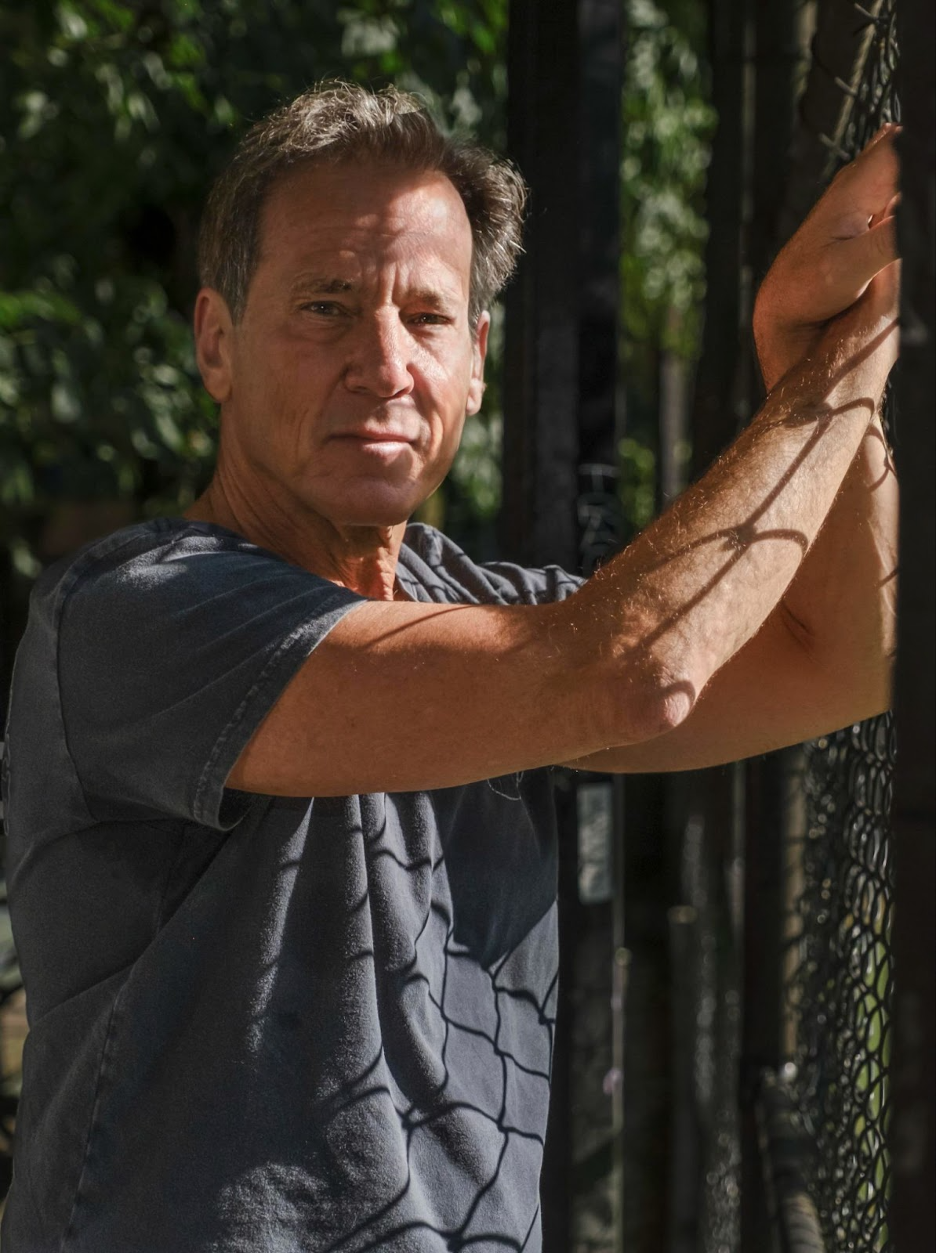
Howard Steinberg is a New York City-based entrepreneur, writer, mentor, and advocate. The son of Holocaust survivors, Steinberg was the solo founder of three companies before dedicating himself to exploring personal and spiritual growth. He has been a passionate voice for improved diabetes care and supply access. He finds joy in walking his dog Tico through Greenwich Village, kayaking off the Connecticut shoreline and cherishes time with his three daughters and two beautiful granddaughters. Steinberg is a graduate of both the undergraduate and graduate business schools at New York University.