Apple Podcasts

 YouTube

 Spotify

 Amazon Music

 iHeartRadio

 TuneIn

 Goodpods

 Podchaser
 RSS Feed
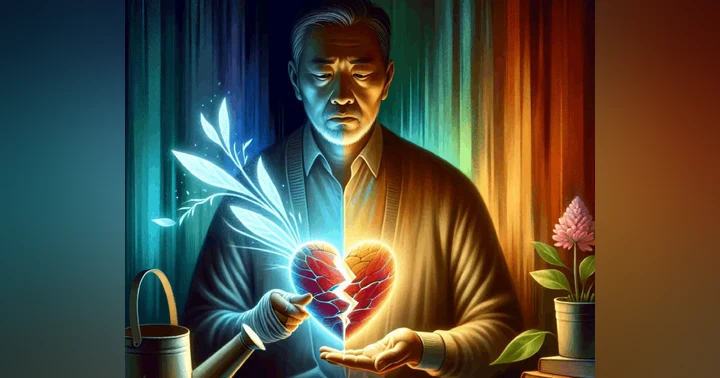
Healing from Emotional Abuse: Breaking the Chains of Trauma

The Journey to Emotional Healing with Patrick Doyle
In this episode of Real Men Feel, host Andy Grant interviews Patrick Doyle, a bestselling author and expert in emotional abuse recovery, addiction counseling, and spiritual leadership. Patrick shares his profound personal experiences with trauma, abuse, and addiction, which led him to help others on their paths to healing.
The discussion touches on the dangers of avoiding pain, the impact of childhood trauma on emotional expression, the complexity of emotional abuse, and the importance of creating safe spaces for honesty and recovery.
Patrick also shares his transformational journey, how he coped with an abusive upbringing, his unexpected path into counseling, and the profound insights that have shaped his life and work.
00:00 Welcome to Real Men Feel
00:19 Meet Patrick Doyle: Expert in Emotional Abuse Recovery
01:33 Patrick's Traumatic Childhood
04:12 Turning Point: A Religious Experience
06:02 The Struggle with Addiction
09:37 The Power of Care and Overcoming Denial
20:56 Understanding Emotional Abuse
24:51 The Dangers of One-Size-Fits-All Advice
25:57 Impact of Childhood Trauma on Men
27:11 Addressing Core Lies for Healing
28:07 Recognizing and Documenting Abusive Patterns
32:01 The Importance of Safety in Healing
32:54 The Harm of Labeling in Psychological Counseling
34:41 Trust and Value in Relationships
37:03 Invisible Scars of Emotional Abuse
39:47 Gender Differences in Abuse Recovery
42:59 Resources and Support for Abuse Survivors
49:37 Conclusion and Final Thoughts
Connect with Patrick
Patrick Doyle -- https://www.patrickdoyle.life/
Facebook -- https://www.facebook.com/patrickdoyle.life
Instagram -- https://www.instagram.com/patrickdoyle.life/
YouTube -- https://www.youtube.com/channel/UCNn5kNXoeuPPZLhuNpWLXIA
Resources
Death of a Thousand Cuts: The Impact of Emotional Abuse, Patrick Doyle -- https://amzn.to/4gnc5cE
Connect with Andy and the Real Men Feel Podcast:
Ready to create your best year yet? Book a Clarity Call with Andy at https://theandygrant.com/talk
Instagram | @realmenfeelshow & @theandygrant
Personal Website | https://theandygrant.com for coaching, healing, and book info!
Podcast Website | http://realmenfeel.org for all things podcast-related!
RMF Facebook Group | http://realmenfeel.org/group
YouTube | https://youtube.com/realmenfeel
#RealMenFeel ep 338
0:00 Hello and welcome to Real Men Feel. I'm your host, author, coach and healer, Andy Grant. Please visit theandygrant.com to learn more about me. Real Men Feel reminds the men that they are human beings and have the right to experience and express all of their emotions. We have conversations that most men are not having, but that all men can benefit from. My guest today is Patrick Doyle. Patrick is a best selling author and a seasoned expert in emotional abuse recovery, addiction counseling, and spiritual leadership. With over three decades of experience, he has dedicated his life to helping abuse survivors and those battling addiction to find their path to healing and freedom. Patrick shares some of his experiences of trauma, abuse, and addiction.
0:43 We discussed the importance of safety, the danger of labels, and problems associated with avoiding pain. Patrick tells us the one thing he'd remove if he were king of the world and one thing he wishes more men knew. Let's do it. So Patrick, I know that you are an expert in emotional abuse recovery, addiction counselling and spiritual leadership. And I imagine 1 does not end up there without having some personal experiences with those. So, you know, maybe the best place to start is if you could tell me a bit about what life was like growing up. Yeah. Oh good, I'm glad you asked that because what you just said is so true. The vast majority of my understanding of these difficult and nuanced things is personal experience and then having the privilege of walking with thousands of others through the very difficult waters. I was born into a very destructive alcoholic family. My mom was an alcoholic.
1:39 My dad was a three war veteran, PTSD alcoholic and violent and dangerous. Later in my life, he was a kneecap breaker for the mob. If you didn't pay your gambling debt, you got to see my dad, you know? So when I was 10 years old, my mom died of alcoholism on Christmas morning, which was pretty tragic 'cause I'm the youngest of four and I am 10 years younger than any of my siblings minimum. So my mom had me when she was 42. She died when she was 52. So in essence, I was alone with the lunatic by the time I was 10. And that's when I, you know, 10 years old. I started, I started smoking pot as a way to cope. And by the time I was 11/12, I was went to the library to research how to poison my dad 'cause I wanted to stop the harm.
2:37 I didn't want him to die, but I didn't want to get beat up anymore. I don't want to get it was he was dangerous. And then, you know, I'm a kid and he'd like go on benders for two or three days or who knows what he was doing. I'm a 11 year old kid at home by myself. I don't know if he's going to come home. I don't know how to get food. I mean, it was it wasn't enjoyable. Well, can we just say that? Yeah, yeah, that's the understatement of the year. What's that? The understatement of the year. Yeah, right, right. So that set a trajectory for me early on. And by the time I was like 14, my dream in life was to be the head of a drug cartel. And at 16, I was living in my own place, my own apartment in Florida, well on my way to accomplishing my goal. So think about it for a second.
3:28 What does a 16 year old with money and lots of drugs do become a pillar of, of the community? No, at least that's not what I did. And then at 17, there's a lot, a lot of story there that I'm leaving out. But at 17, my sister, who's 13 years older than me, invited me to move back to Oregon. I'd already lived with her once and I, I was so terrible the first time that she kicked me out knowing that I was going back to my dad. And it could be a death sentence, but I just because she had a young family, she couldn't handle my drugs and all the stuff I was doing. And so at 17, I went to live with her again. And then I had a religious experience. And that's when I started to try to do some things differently instead of be self-destructive. So by the time I was 18, I was in the military. And here's a funny story, Annie.
4:19 So I was so high one day on the way to school. Now I was trying to get sober. Don't get me wrong, I was, I was, I was in the throes of trying to stop. But one day I just got I hadn't been smoking much. And then one day I just said I was going to smoke and I went to school and I was like realizing I'm way too high to go to class. So I can't go to class and I can't, I don't know what I'm going to do. So I'm walking through the school and I noticed there's a sign that says, you know, ask fab today in the in the auditorium. So the military aptitude test, they were giving it in the auditorium like perfect, I can go take that test. I can just chill out. And by the time that's over, I'll be sober enough to go to class.
5:01 Well, I had a thing. I hated the military. My dad was a three war veteran. He taught ROTC. You know, I, I, I had sworn to myself I would never go in the military. Long story short, I'd get out of the S Fab and then a few weeks later I start getting all these calls from recruiters and they're like, man, your S fab scores are really good. I'm like, what I was. So I remember none of it, but evidently I did pretty good. Or it's a pretty easy test. I don't know, but Long story short, they, they recruited me and they said, you know, there's this program where you can go from high school to, to chopper school and, and learn to be a chopper pilot. And they were at, at that time they were trying to, you know, I think try to bolster that or whatever.
5:44 So they're like, if you can pass the aptitude, blah, blah, blah, then you can do this program. And I'm like, awesome. And my sole motivation was 'cause, you know, chopper pilots got more chicks. That was, that was my 18 year old version of the world. Like, that'll be awesome. I'll be able to fly choppers and I'll date Well. And so I pass the app to see everything. And so I'm, I'm on my way to, you know, get signed up and, and I at the, at the station there, they, they do two more tests to do a color vision test and some physical something. Well, I couldn't pass the color vision test. And it's the ones where that's all the dotted circles and you got to pick up the numbers in the circles. Couldn't do it. And I, I'm not color blind, but I couldn't do it. Maybe I got too high the day before, I don't know. But Long story short, I'm sitting down the guys, well, if you can't see color, you can't be a chopper pilot. And I'm like, well, I don't want to be in the military. Then he's like, well, that's not really how it works. You already signed up.
6:37 And I'm like, what are you going to do? If I just walk out of here? He's like, well, nothing, we'll just dishonorably discharge you. And I'm like my dad's face in front of my. I'm like, well, is there anything else I can do? So in 10 minutes, I went from being a chopper pilot to being a behavioral science specialist, which is basically a counselor in the Army. And I'd never wanted to be a counselor. I was barely inside my own brain. Like, what? You guys are crazy. You're going to let me do that? Long story short, I got in the military, started doing the training, and that's when I finally got sober for the first time. Like for real. Like really like long term, no drugs, no nothing. I was never a drinker because of my dad, but I did a lot of drugs and I had a lot of pain, Andy, just so much pain and I didn't know what to do with it.
7:27 I had no model. My mom, she sat in a chair in the living room, rocked, smoked cigarettes and drank and that's it. That's all I remember. So I never had any example or any training of how to do anything. So here I am in the military, I'm in counseling school and I'm, I'm my, my own subject. You know, I'm like, Dang, I got problems. And fortunately I had a couple of really good supervisors in the military that really, really helped me. They, they really saw it and they, they really cared for me. And they, and, you know, I actually, the truth is I was the number one person in my counseling school and the, and the, and the, the guys were like, how do you know this stuff? You ever been to school?
8:17 You ever? And then I'm like, no, later I realized, 'cause I lived with a lunatic. So I know how to read people. You know, when he walked in the room, I'm like, like, how much alcohol can I smell? How angry is it? What does his eyes look like? What does his body language? I mean, I was all unconscious to me, but I still had those skills And they were like, you're really good at, you're really good at those reading people thing. I'm like, OK, but you know, I started to start to really pick into the reality, my own soul, my own, and that's how it started. And that's how I became who I am today is by dealing with the reality that was presented to me instead of denying my thing is one of my favorite sayings is the avoidance of pain is the beginning of all unhealthy behavior.
9:03 And you know, God bless my dad, but he never dealt with the trauma. And now he, you know, it was, he didn't know he, you know, lied about his age to go to World War 2 to fight for the country and got traumatized, came back, went to Korea, you know, came back, was in during Vietnam. I mean, like that, you know, like that's a lot of trauma. But he never knew how to do it. So I realized that, you know, I want to help people be unburdened from the lies that they were told. It just developed over time, like one job to a next and just picking stuff up. But that principle, not avoiding pain, has been my greatest gift. And then it's also something that's helped me help thousands of other people to help them move into the pain instead of avoid it with substance or, you know, religion or, you know, fill in the blank, working out, eating you.
9:55 You can turn anything into a compulsion. And I have a strong belief, Andy, that compulsion is always the result of a lack of peace. And so this is one of the reasons why I think a A has had such profound success, because the first three steps are about realizing you don't have control and turning your life over to somebody else who can help you. And the fourth step is I, I did a searching for fearless moral inventory, like I looked at what was wrong with me or what I perceived was wrong with me. And so that's something that most of us avoid. There's a couple reasons in my mind. One reason that I avoided is because there was no safety. I looked around my, I'm like, I'm not going to tell anybody anything. I'll get, I'll get a, I'll get beat up.
10:38 So that's the other part of one of the things I really am passionate about is creating a safety for people to be honest, because I don't believe anybody will be honest without that safety. And if you are honest, without safety, you'll regret it. So there's a lot to unpack there. I I appreciate you sharing so man, I appreciate you surviving it all and discovering that you didn't have to be high as a kite to do well in school. No. And and you know, one of the things I, I, I, I, I know you know this, but I, I did just publish my first book and very interesting story. It took four years. OK, but here's the caveat.
11:19 All the material was already done. I had built an online program and created a whole video series, which is basically this information. So it wasn't like I had to go figure it out. I already knew it, but it took four years. And the reason why I didn't understand this at the time, one of the things my dad used to say to me a lot when he was beating me was you're stupid. You're stupid. And obviously I believed him. What choice did I have as a kid, right. So I, I noticed that in my process with the book, every time I had a deadline, I just, I just had so much internal resistance. It's just, I'm like, what? I could find anything to do besides the thing I needed to do, right?
12:03 And as I started processing through it, it clicked my message in my soul was it still was there at some level I'm stupid. Well, you can't be stupid and write a book. Those don't, they're not, they don't go together. So I, I didn't know this, but subconsciously I was resisting the book because it went against my belief. And so there was actually me going through the, the books already helped heal me just because I went through the process. And so I see this all the time with people. They have subconscious strong beliefs that they're not really aware of, but if you look at their behavior it's a neon sign.
12:44 Like why are you so self-destructive? Oh I'm fine, but I'm not doing self-destructive. Well why are you 200 lbs every weighter? Why are you smoking a pack of cigarettes a day? Or why are you working 70 hours a week? Or fill in the blank. Why do you go to church 7 * a week? Whatever. Oh so this is the thing. Like if we don't have the willingness to look, then we just keep up the bad patterns, right? And if I had one power to, if I could do one thing to the world, I would eliminate denial. That'd be a chaotic world for a while, but we'd get to a better place eventually. Yeah, right on on the other side of that chaos. Yeah, right. We have some real utopia. So can you expand more on the religious experience that as a drug dealing with a your dream is to still run a cartel? Like what?
13:34 What? What stopped that in the tracks? Well, so, well, right before I moved back out here, I was in my apartment one day and the guy that was my supplier, I didn't know this, but he was in the mob and I'd been stealing some drugs from him. I thought, I thought I was being doing it in a way that he didn't know I'm 16 and I'm high. I didn't, you know, come on, it's lucky I was. I could, you know, wake up in the morning. But anyway, he came to my house one day and he took out his gun. He pointed it right in my head and he said, Lo, if you steal from me, anything else, I will kill you. And I want everything you've stolen from me. I'm like, you can have everything.
14:15 Just take whatever it means, whatever we need to do to be square, take it. And of course he did. But at that moment, I was like, I got to get out of here 'cause he's going to kill me. I don't know that I can control myself. I don't know that he's being honest. I don't know what it is, but I knew it wasn't bad. I mean, it wasn't good. I was bad. So simultaneously, my dad had also gotten himself in some hot water and he asked if I could drive him to another part of the country because he wanted to be around some other people and he was too incapacitated from alcoholism to drive. So I I said, yeah, but you have under one condition, which I never said this to my dad, like under one condition, I'll do something for you.
14:57 I was always looking how high. And he's like, what? And I'm like, you got to get my sister to take me back because I knew I could get out of here. And I was in Florida. She's in Oregon. That's enough space. I think I'll be all right. And so sure enough, it worked out. I came here on a Friday in 1980 and on a that, that same Sunday I went to church with her for the first time. In the interim of me being gone, her and her husband have had gone to church and become strong Christians. And so the first time I was went to church with them and I'm like, OK, I'm, I don't want to die. I want to live forever or whatever. I was like, let's do something different cause what I've been doing ain't working out too good. And that started a process for me of really starting to change my life and gave me motive.
15:45 And it certainly helped that I was living with them. And they were people that cared about me. I'd never had that before. I had never been cared about. And I say this all the time, but I don't believe that information changes people, Andy. I think that care does. Information lets you know there's a problem, but being cared about is what gives you the courage to face it. And that's what happened. I didn't know that at the time, obviously. Did your dad ever get help? No. He died an alcoholic. And The funny thing is it's like when I was in the military, he got really sick and none of my siblings wanted anything to do with it. So the military would move me.
16:27 So I moved back to and I took care of my dad while he died and it was horrible. I mean, here's The funny thing is just this is just something I think people need to know when you're talking about trauma. Like here I am, I'm 2021. I'm, you know, five, 760 lbs of ripped muscle. I'm in the military, I'm trained. I could snap the man's neck. He's old, he's feeble, he's dying, not like he used to be, but who was? Who was the one that was afraid? It was me, even though I had all the power. He's psychologically, if he looked at me sideways, I'm like backing up against the wall, like I was afraid of him, but I took care of him and I don't, I don't know how I did that, but I, I did it.
17:20 And one of the last times I saw him before he died, 'cause he didn't want me there when he died, he, he didn't say that, but he had me go back to see my sister and to drive a car back. And he was standing on the steps of his house and he was waving goodbye to me and he was crying. First time in my life I've seen that because I was leaving. Nothing was ever said. But that was important to me. Like, oh, maybe he does care, But I think he was crying about himself because he knew he was going to die. I don't know. He never talked. But you know, those were.
18:02 Whoever the tears were for, you hadn't seen them before. I had not seen them before and I didn't know it was possible. To be honest with you. I didn't he because he always told me that crying was weak. And if I was, if I was strong, I wouldn't need to cry. And I was always a very sensitive soul. I just was born that way. It's just part of my, that's one of my gifts. I wish I'd have known that many years of my life instead of feeling like I'm some sort of weirdo. Because I am sensitive and I want to. I have a feeling. But that's everybody. All of us have them. It's about how you handle them is more important than whether or not you have them. Do you find that experiencing abuse makes addiction more likely? Great question.
18:46 I would say it this way, Andy, I mean, I don't know if he knows, but I worked in drug rehab for 20 years. I've worked in outpatient, inpatient, in between patient, you know, I worked in psych wards, I've worked in a lot of spots. So I've treated thousands of addicts. And one thing I will tell you is I don't, I no longer actually believe in the disease concept. So that's a whole conversation we could have, but I've never met an addict that from their perspective in which that's the perspective that matters, didn't have deep pain. And what the addiction is, is the symptom of them dealing with the pain. And so if I, if my leg is killing me and it won't go away and you give me an opiate, I'm like, Oh God, thank you keep coming.
19:39 Because that pain, I don't want to experience it. You think about that in emotional sense, but they're not saying they're in pain, you know, but I've, I've watched both my parents die from it. My sister died from it, 3 uncles died from it. I mean, like it's all, but when you start looking at the family system, there's just all this pain everywhere, but no one's talking about it. No one's talking about what happened. No one's talking about how to cope with it healthily. Everybody's just like sticking their head in the sand and taking another drink. So it's pain from my perspective that's undealt with and that we, I think our, I think our country in particular is like up to its eyeballs and that right now.
20:20 So you definitely experienced physical abuse growing up? Correct. How do you define emotional abuse? Well I also I was also emotionally abused because while my dad was beating me he was yelling horrible things at me. Then I got married in my late 20s and my ex-wife is profoundly abusive emotionally. So that's also how I know I lived in it and my religious belief structure kept me in it way longer than it would have been would would have somebody else would have been like, this is not tenable. We got to get out of here. But you know, I had lots of reasons and I was a personality in the community. I was on the radio and TV, blah, blah, blah, had all these reasons to justify staying.
21:05 But so emotional abuse is the systematic destruction of one person's soul by the person they're with. It's the systematic harming of another soul to the point where they feel like they're always the problem, no matter what the situation. And the problem with emotional abuse is, it's so nuanced. And that's why I called my book The Death of 1000 Cuts, because if somebody shows up my office and they get a black eye, everybody's like, OK, we know what happened. You show up in my office and you're smiling and you're acting like everything's fine, but you're you're dying from 1000 cuts. No one can see and you're bleeding to death. That's a much more difficult thing to, to deal with. And everybody who's in an emotionally abusive situation is is has a lot of denial because that's how we survive it.
21:49 I didn't survive all those years of being married to somebody harming me 'cause I was in the truth. I rationalized, spiritualized, minimized, justified, denied, you name it. I was give me a tool. I'm going to use it 'cause I was committed to staying for various reasons. And This is why I work with a lot of ladies. And they're like, well, I just like, I, I know I should leave them. Like, wait, wait, wait. You, you leaving is really up to you. And that, that everyone, it's like that time comes when it comes, there's no, there's no should I always say to people, I, I really encourage you not to should on yourself. It's a shame statement. I don't know, but I don't know what you should do. I'll be here for you, but I don't know.
22:29 I got some opinions but ultimately you could decide, not me. Are are some of those ways that denial is used? Are there also? Are those also the same kind of tools that that narcissists use to to twist the truth? Well, so one of the things that so let's talk. This is great. I'm glad you asked, brought this up because I, I tend to and if you read my book, you won't find a lot of the terminology in there. And the reason why is this, whether somebody's diagnosed narcissistic or not, narcissism, much like addiction to me, is the symptom of the problem. OK. The reason why a narcissist is harmful is because they believe their own lies.
23:12 They are convinced that what they're saying is true in spite of any evidence, which is why the people around them start to feel crazy. Because they teach you through all this activity that your perception of reality is wrong. And when you no longer can trust your own perception of reality, you're going to feel crazy. And meanwhile they're lying, rationalizing, minimizing, justifying, spiritualizing, whatever to make their narrative true. And you know it, it is, I always say it's, it's the courage of Olympic level. When someone has the ability to get out of that, it's always Olympic level courage.
23:55 There's just no way around it. There's no easy, there's no easy button on it. There's no three-step guaranteed plan because emotional abuse is so nuanced. So what's your belief structure? What's your spiritual life? What what's your family support? How much money, how much control? What's their thing? And there's so many things you have to look at, which is why when I see these one-size-fits-all, I'm like, danger, Will Robinson danger, you know, it's not going to work out. So you have to really get into the weeds of it to really understand it. And so that's why that's one reason why I also put off writing a book because I didn't want people taking these ideas and then thinking it was a cure. So I really, really worked at keeping things in a principal mindset, not in a, here are the four things you need to do. It's like, here are the principles. Well, how does that fit your circumstance? Because you have all the knowledge of your circumstance. I don't.
24:47 But if I'm in a counseling session and I have all the circumstantial knowledge, that's different. Like, I can really be involved in that because I know, but I, I get worried about advice to people that have very nuanced circumstances because, look, they're desperate for a fix, but it can also be harmful for them to go down certain roads because the person they're with is dangerous. In in your experience and in dealing with with with clients, how does childhood trauma impact emotional expression of men? Well, again, there's a lot of nuance there, but I would say this, the vast majority of trauma, with every trauma there's associated, there's an associated message, right?
25:38 And that message always boils down to one thing in my mind. You're inadequate, you're the problem, you're defective, you're not worth the skin you're printed in. That becomes the bottom line. If I believe I'm defective, I'm not good enough, how's that going to work out for me? Do you think I'll have a pretend propensity towards self destruction? For sure, yeah. Do you think I'll have a propensity towards towards being vulnerable and opening myself up? No. So all the avenues of healthiness are then shut down by that, by that lie that you're the problem. And so this is, there's a, there's a chapter in my book where I talk about how to actually deal with that. And there's, you know, there's a lot of nuance there, but you know, addressing that lie is the beginning of the healing. The healing is not from a technique. The, the techniques only work when I'm addressing that core lie.
26:37 And if somebody sees themselves as not valuable, then they are abusable because they believe it's normal. And and again, there's a, there's a continuum, right? Like, I might see myself as 5% not valuable. I might be seeing myself as 95% not, not valuable if I see myself as 95% not valuable. And I can help you move that from 95 to 94.5. That's a radical life change. And then we want to go to 94 and then on down. But I don't think 0 is possible in this world that we live in. Yeah. Yeah, I agree. What's the first step that someone should take if if hearing your story and hear this whole conversation, they are recognizing abusive patterns in their own behavior or in the relationship? What what?
27:24 What's something they can do? Well, you have to first of all congratulate yourself for recognizing it and celebrate. Wow. OK, there's problems. Then I would encourage documentation. What is it that you're realizing and why? Why is that? Is it because of that person's behavior? Is it because of your childhood? Is it because of this, this particular relationship? Whatever, whatever. Because here's the thing, in our heads, I write something down and guess what? And look at it in two days, it's exactly the same. It's never that way in my head. So This is why I really encourage documentation because it helps me gain some clarity.
28:04 And then when I'm saying documentation, I'm not like saying I'm going to sit down for 25 minutes and expose my soul. No, I'm like, I'm driving in the car. And for me, like, dude, the voice memo on my phone, lifesaver. I'm driving down the road in the car and this thought hits me. I'm like, hey, I was thinking about this. And then I thought this, and I thought that back to driving, you know, because that's how this stuff percolates. When you're traumatized, you're taught to suppress because when my dad's beating me and he's saying horrible things, what am I going to do? Allow myself to be open and present? No, I'm, I'm don't, you know, And so I'm, I'm shutting down. So suppression becomes like our number one go to mechanism and it and it's so it's so deeply embedded when there's trauma, particularly that it's not even conscious.
28:57 I'm 2 miles down the road of suppression before I even realize what's happening, right. So This is why I'm saying if you do have an awareness, you should celebrate because that means you're not suppressing and not suppressing is the pathway to freedom and what and whatever it happens, whatever, no matter how much. So that's why if I start to document it, then I can go back later and be like, oh, and then what happens is like a bread Trump crayol bread Trump breadcrumb trail that you oh, things start to connect. Oh, so when my dad's. Oh, and then. Oh, so that's why when my wife says that, I feel that. Oh, wait. Oh, OK. And even better if you can have a safe place with another human being without judgement to say those things like, this is what I was feeling. And this made me feel that way.
29:43 And what about this? The problem with, I find a lot of modern counseling is that it's too objective. There's not enough opinion involved. Like, well, so how did you feel? I felt angry. OK, well, tell me why. And well, I felt angry because, well, so where else do you feel that instead of. Oh, OK. And well, do you think maybe that that maybe you were feeling triggered because of the way your wife treated you? Yeah. OK. All right. Well, let's talk about that instead of everything's neutral. No, I don't need somebody that's neutral. I need somebody who's going to be with me. Not not judgmental, not controlling, but with me, and this is what I'm saying, like being with people, caring, That's what helps them change. They got the information.
30:25 I just want to be like, yeah, that seems like it makes sense. OK. Yeah. Let's talk about that. OK, and then they can do it, but without safety and particularly for the traumatized, because we are trained to keep it quiet. And every abuser tells us, don't you say anything in in whatever way they tell us. And so, you know, breaking through, that's always a courageous amazingness to me with anyone, whoever it is. And and I, I can't imagine there is, but let me let me ask it anyway. Is there kind of one thing that helps people breakthrough that and and learn to be or accept to be vulnerable again? Yes, it's safety, not the truth.
31:09 Once the safety, let's be clear, the person that we're talking about has to perceive the safety. It can't be the other person saying oh it's safe, it's safe. Those of us are traumatized. Like whatever bro, I'll determine that you know and it's not safe as a rule. So when that person like. Feels safety. That's when the wall starts to come down. But it's not until they feel that safety. So This is why I think a lot of information based programs are bad because every time I hear the information like, Oh yeah, I should have that and I'm not doing that enough to mention blah, blah. That's what my mind does with it because I'm a traumatized individual. What I need is somebody to be like, hey, school, let's just hang out. Let's be together. What? That's weird.
31:49 What do you mean just be together? I mean, you're not what you're not going to, you know what seem. And the other thing is, God forbid the labeling that we do. One of my old mentors, he taught me something. I thought it would just profound to me, but he said as soon as you label someone, you cease to love them because now they're that thing, they're no longer them. And in the psychological world, you can't. I mean, you got to label somebody to talk to him. That's insane. I don't label people. I don't do it anymore. I won't, you know, you're, you're Andy and you have a specific story. And that's what I'm interested in hearing what labels me. So if I say, oh, that guy's narcissistic, what does that mean?
32:31 What depends on the person you're talking to that some that person's bipolar. Well, everyone has their own definition of that stuff. So sometimes, like if I'm talking to a colleague, that person fits the criteria for narcissism. OK, that gives me an idea who what the what the behavior is. OK, In that sense, it can be helpful. But as a label, it's damaging. Right, 'cause even even a, you know, textbook narcissist is also other things. Right, right. And ultimately they're, they're still a human being. So, so the this is hard for a lot of people, but like, I've dealt with a lot of narcissists, but you know, there's still a human being that has value. Would I trust them?
33:17 Not on your life, But it doesn't mean I can't value them. But value them is also being honest about what they are. Your behavior dot dot dot dot dot dot dot has revealed this about you. So that's what I'm looking at. I'm not saying, well, you're a narcissist and putting you in some basket. I'm like, well, no, your behavior has been very clear and you're not trustworthy. And that's the other thing I teach people all the time, like trust is earned. Not, it's not something somebody's you owe, but in a lot in their culture, particularly in faith communities, trust is owed. And I'm like, no, somebody has to earn my trust and then I'll give it to them. But I always say it, it's on my social media all the place that you're better off being late to the party you trust than early. So the damage that's done by being early is way worse than the damage that's being done by you being late to the party. If the other person's offended by you not trusting them, that's a clue.
34:16 Maybe you need to back away. Patrick, with all of your experience and everything you've already shared, does anything stand out top of mind as as one thing you wish more men knew? That they were valuable, that they had value. And look, I talked to a lot of guys that are, I wouldn't trust me as far as I could throw them. They're bad. They're bad people. I've talked to a lot of bad people. Good, you know, women, men. I've talked to a lot of people I wouldn't trust, but I also value them as human beings. If I had some way to magically change it, I would. But but most men, what I see is just the struggle of devaluation. I don't have the right body. I'm not making enough money.
34:58 I don't. My wife's this, my kids, that one. If you start with I'm valuable, then everybody around you benefits, but I can't make someone believe that that's something that that has to be revealed to them. And so if you think about living your life from a place of value, that's a very different thing than on the treadmill of trying to get it. And so that's been, that's been one of the things that I have realized is like, I don't have to do anything to have value. I get to do things, and that's actually made me more productive as opposed to earlier in my life when I was on the treadmill doing all kinds of amazing things, but miserable and worn out. Now I get invigorated by what I get to do. Can you elaborate on recognizing the invisible scars left from emotional abuse?
35:52 Yeah, self doubt is one of the most profound scars. So I see it all the time. A woman just for example, goes through all the difficulty to get out and now they're out there away from the abuse. They're on their own. They have freedom, they have safety. And then they're like, I don't know who I am. I don't know what to do because they've been with somebody who's been telling them all these years, you're no good, you're the problem. What about this? You're too sensitive. You shouldn't that. And then they finally get free and then they're like, I don't know what to do. So the most difficult question I asked a lot of these people when they're on the other side, it was one of my most difficult questions.
36:36 What do you want? I don't know. I've been finished spending my whole life trying not to die. Thinking about what I want hasn't really been on the agenda. And that feels kind of selfish or it feels too whatever. But that's one of the things I would say is like, if you are valuable, then do what you want. Because if you're valuable and you do what you want, the world will be a better place instead of the lie that if you do what you want, everybody hurts. Now, in some cases that's true. But most of the people who have been harmed in an emotionally abusive relationship are not bad people. All the ones I worked with, It's amazing how loving, caring, generous, beautiful their souls are even after being harmed for so long. That's more often the case than not. I mean, now, you know, I could I, I hear this all the time from men particularly.
37:26 And something we should talk about maybe. But they're like, well, you know, I, I only act that way because of my way. My, I was raised and I'm like, excuse me, I was beaten, I was abused. That doesn't give me any reason, any excuse to do anything. In fact, that should be motive for me to never let anyone experience that. Why would I want somebody to experience what I experienced? My kids never knew anything about what I experienced in terms of from me. I was never violent. I was, I wasn't because I was determined to give them something way better than I got. So when I hear people say, well, you know, it's just a denial, It's just an excuse. It's just bull.
38:09 You can do something different. You had just as much availability to you as I do. Look, I'd crawled over hot coals and cut glass to get where I'm at. And that's the difference between people who have health and people who don't is are they avoiding the pain? I got the scars to prove it. I I know you work with more women because more women come forward of after being abused or in an abusive relationship than men do, right? But are are the results similar regardless of gender? Yes, but I think sometimes it's way worse with men when they're abused because I was abused, man.
38:52 So I, I get this, you know, there's a, there's a, a lot more internal stigma with being harmed as a man than it is with a woman 'cause, you know, she's under the authority or she's or the, you know, whatever the weird belief is about why she's not as good as the other person. But as a man, it's like very deflating. Like I'm less of a person 'cause I allow myself to be abused and I see that a lot. It's really men have a harder time getting back to their to their, their, their value. And I think it a lot of times it also it harms their masculinity. And when I say masculinity, I mean like their true natural power.
39:35 Not I don't mean that in a over the top way. I mean like who they really are because they've been undermined, undermined, undermined, blamed, undermined, blamed. And you know, eventually you just, you don't, you give away all your power. Is men not talking about it part of why men seem more likely to recreate the behavior that the the the abuse behavior as they grow? Up I think a lot of guys that get abused don't recreate the behavior. They just become a shell of themselves. There are men who are abusive, but they're they're doing a whole different thing. But guys who are in a relationship where they're being abused, they're just becoming less and less and less of themselves, just like a woman. But it's has a different.
40:17 Impact because they're a man, but I think that you know, I've listened I've taken a lot of harsh emails from men who are like you do a program for women. What about us? I'm like, like, I'm one of you. But dude, I mean, it's, you know, 8020, it's, you know, I, I, I, I can't spend the resources on everything. So I, I made the decision to do it that way. But it's not because it's not real. It's not because I can't help. I mean, I have lots of male clients who I talked to who are in this situation. I'm, I'm, I'm a daggone expert. I've, I've been there, done that and I've helped a lot of people. But it, there is it. And, you know, this is true with males who have sexual trauma. This is true with emotional trauma. It's just true across the board.
41:02 We tend to say nothing. And there's a lot of guys that are suffering because they're they're afraid to say anything. I'll be judged. I'll be seen as less of a man, Whatever, whatever, whatever. And I'm like, yeah, I get it. But there's no healing and avoidance. No healing and avoidance ever for anyone. That's just a rule of the world if you ask me. So I'm sure your book Death of 1000 Cuts can help men and women. Yeah, I in the intro, I talk about the fact, look, there's principles here, whether you're straight, gay man, woman, alien, you know, dog whores, I don't know. These principles work relationally no matter who you are.
41:46 So yeah, guys could definitely find benefit in it. But it's, you know, it's, it's written from me to a woman in a marriage. That's, that's the motif of it. Obviously I there's caveats, but you know, you have to, when you're writing, you have to, you have to pick a voice. You know, you can't just, you know, so, but yeah, it's, that was one of my concerns 'cause I, I kept trying to make it more broad. And the editors like, look, this is your audience. People who understand this are going to get the same thing out of it. They're just going to switch the word in their head from wife to husband or husband to wife or, you know, partner or boss or whatever. The principles the the principles are real, and they're going to work.
42:28 Your online program Pathway to Hope that is a a community for women. Community for women specifically, it's women only and one of the things that I discovered in the process was you know the information is great I mean I had YouTube videos that a lot of people were looking at and stuff and and I was like but they don't have any safety like there's no safe place for them to talk and particularly a lot of these women are in faith communities where every time they talk about it, they get scriptures, they get told what to do they get told to be try harder do more have more sex, be nicer, cook more meals and everything we find, which is absolutely absolutely a lie. So I realized what they needed was a safe community.
43:09 And so that's why I put together all the videos. But there's also a forum component and it's managed because safety to me is paramount. So if you go on and you say whatever you say, yeah, OK, tell us more. We're here. We're not going to give you a ton of advice and we're not going to. If you ask for advice, certainly we'll give it to you. But I just did, you know, 40 videos with full of advice. Just look at those, you know, so. But there's also lots of women's stories. And I think the most important thing that women get out of that thing is every month I do a live Q&A. And so it's real questions from real women in the community. And we're talking about real specific things. And I think the more you are specific about the story in the context, that's how people heal.
43:56 Like, oh, she was talking about that. I feel that. And oh, and he said that and no, that applies to me. And oh, OK, instead of here is the, you know, 4 reasons why I don't know. When someone's in their actual context, it just makes a lot more sense. This is why people flock to movies. It's a story and we relate to it. The better stories are more relatable. So when someone's telling their story that fits in all kinds of nuances that you can't describe, but suddenly you're listening, you're like, oh, wow, that's me. Oh yeah. So those Q&A's to me are like gold for the women. And it's real life stuff.
44:36 And then also the safety of being able to say whatever you want to say and not get judged or beat up, which for most of these women isn't, they don't, they can't say anything because they're in a relationship. If you say something, you're going to get armed. So that safety to me is so important. Yeah. And is, is that safety issue? Why, you know, one program can't address both genders? Correct. You can't have a, you can't have a man in a abused woman form. The, the fact that they allow me to be there is pretty miraculous because, you know, I'm unique in that I'm a man who's talking about emotional abuse from a man's perspective. Most of the people that are doing this are women that are talking about emotional abuse and have programs and so on and so forth. But I also have the the benefit of having been a pastor and having been somebody who gave the bad advice, somebody who would have pushed them back into a bad situation. So that's what woke me up, was watching the failure and the pain.
45:34 I'm like, this stuff's not working. We got what? And so I think that also helps because I understand the context of the communities, the faith communities. I was, I was a leader in them. I understand the thought process and I speak theological, theological language. I mean, in the sense that I understand if a Pentecostal woman comes to me or a, a Baptist woman comes to me or a Presbyterian woman comes to me, those are all three different languages. They're all Christian, but they all have their own nuances. And if you don't understand that, you could really make some mistakes. And I have that benefit having been, you know, neck deep in it for a long time.
46:15 So, Patrick, what's the best way for people to find out more about what you're up to and, and to to get the book and, and everything else you're doing? So Patrick Doyle dot life is my website, Patrick Doyle Instagram, Patrick Doyle Facebook, Patrick Doyle YouTube, you know, go to my website and sign up for emails. That's the most guaranteed way you'll know what's coming. And you know, we'll be putting stuff like the, you know, the podcast that I'm doing and stuff on that. We'll also do social media and that kind of thing. But yeah, that's the thing.
46:55 And I'm currently working on the Audible version of the book, so I'm pretty excited about that. But. And is the book available just at your website or at Amazon or everywhere? Amazon's probably the best place to go out isn't available everywhere, but Amazon's probably the people I think have the, that's the quickest shipping. They they figured that one out. So yeah, Amazon's a good place to go to get it. And, you know, I am been so fortunate. The feedback that I've gotten has been so good. It's so wonderful to hear people say that they're being helped.
47:35 You know, it's what I've been doing my whole life, but you know, it's not, you don't normally get that feedback, but with the book, there's a lot more feedback. It's just kind of one of the ways it works, you know, I mean, you comment sections on YouTube, you do get some good feedback, but you also get, you know, a comment section, which isn't wasn't always pleasant. So I've just been really fortunate and I'm just really grateful for it. And I hope, I hope that people continue to get freedom and, and clarity and hope and healing. And I'm just, I'm excited about it. Yeah, Amen. Patrick, thanks so much for joining us today. Absolutely. Thanks so much for for sharing what you've been through so that you can help other people get over what they've been through. You.
48:19 Know I find one of the most healing things is to be of service to others and I'm sure you're experiencing that you know, tenfold every day. 100%, you're 100% right on that and I appreciate what you're doing. Like you, you don't have to do this, you know, you don't have to take your time and energy to put this stuff out into the world, but this is what we need. We need more conversations. We need more people talking. We need, we need this. And not just the negative side of the world of the Internet, but like this kind of stuff where the more we do this, the better off it isn't. The thing I love about the Internet is it's 24/7, man. Somebody in the middle of that deep dark soul night can come across something like this and be like, oh, wow, OK. Yeah. And I discovered that early when I had all those YouTube videos. And I'm like, people would say to me, yeah, I was 2:00 in the morning.
49:04 And I don't know how it happened, but it came up on my feed. And, you know, this, This is why we do this. It's. And like I said before, you don't get the feedback, but you know what's happening. That's why I'm so grateful for the book, because I'm getting the feedback. I mean, how many thousands of hours of videos have I made? And I don't know, you know, but the book I know. Thanks everyone for joining us today. Please visit realmenfield.org. See the blog post for this episode, which will have all the various links and resources that were shared and mentioned by Patrick. Wherever you're discovering Real Men Field, please subscribe, follow, like, share this episode with someone, post a review or comment. You know, if you're not sure where you're going, it's almost impossible to get there. If you want 2025 to be your best year yet, I invite you to book a free Clarity call with me. We'll explore what you want, what's in your way, and what can be done about it.
49:54 Visit theandygrant.com/talk to book yours. And until next time, be good to yourself.

Patrick Doyle is best-selling author and a seasoned expert in emotional abuse recovery, addiction counseling, and spiritual leadership. With over three decades of experience, he has dedicated his life to helping abuse survivors and those battling addiction find their path to healing and freedom. Patrick's unique approach combines practical strategies with deep compassion, empowering individuals to overcome their past and embrace their future.