Apple Podcasts

 YouTube

 Spotify

 Amazon Music

 iHeartRadio

 TuneIn

 Goodpods

 Podchaser
 RSS Feed
No Competition, Just Growth: The Lez Bro's Take on Men's Work
Breaking Down Barriers with the LezBro
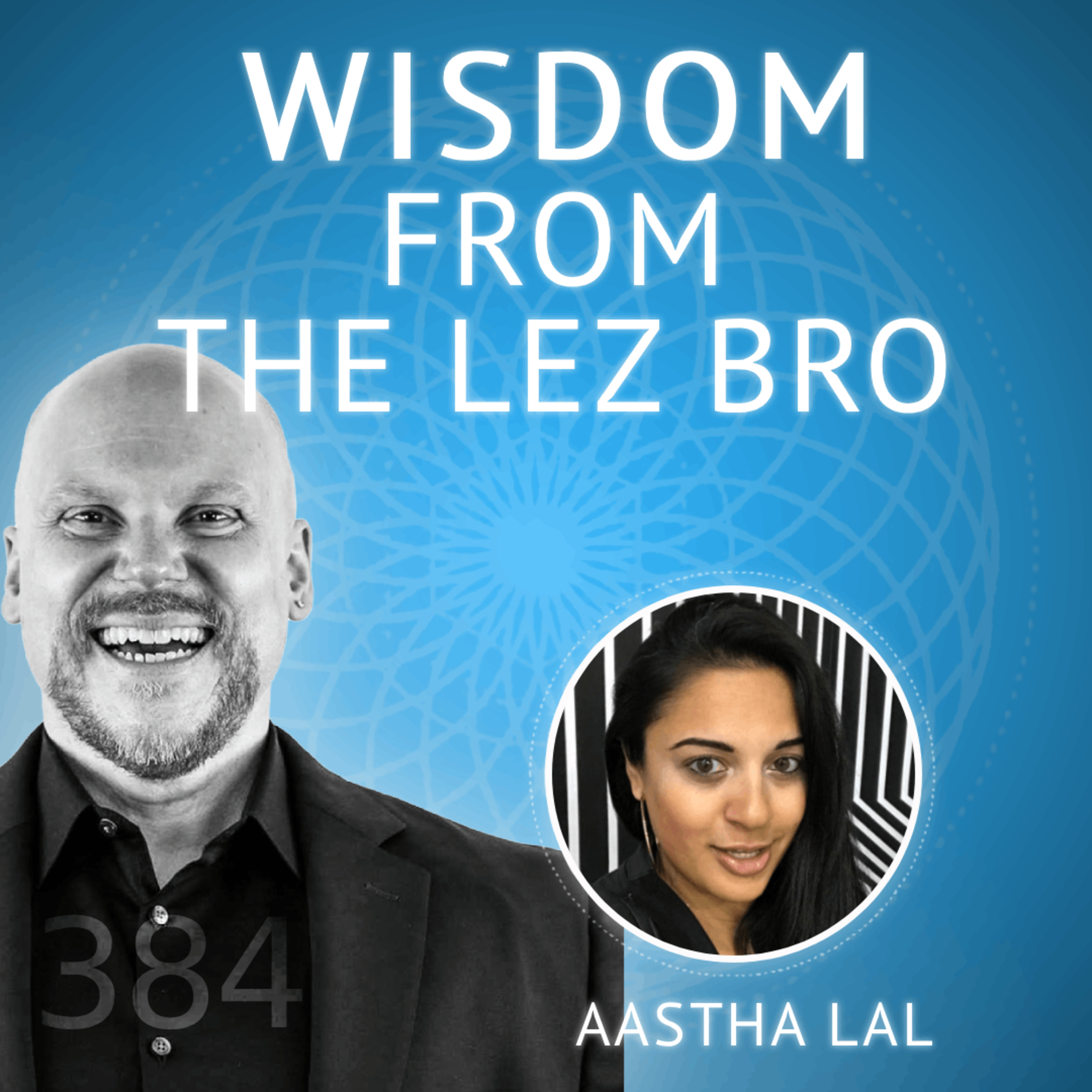
In this episode of Real Men Feel, host Andy Grant talks with Aastha Lal, a lesbian coach who is transforming men's relationships by providing a safe, non-competitive, and non-judgmental space for growth. Aastha shares her journey in creating the LezBro, a coaching practice where men can explore vulnerability, emotional honesty, and mindfulness.
They discuss common challenges men face, such as reactivity and the need for connection, and highlight practical solutions through mindfulness and meditation. Aastha's unique approach bridges the divide in how men approach emotional openness and mental well-being, creating a ripple effect that benefits their relationships and communities.
Join Andy and Aastha as they dive deep into the importance of emotional safety and the unexpected benefits of having a lesbian coach for straight men.
00:00 Introduction: The Starvation for Connection
00:29 Meet the Guest: Aastha Lal, The LezBro Coach
01:17 The Birth of LezBro: A Safe Space for Men
03:00 Common Reactions and Client Experiences
04:46 The Importance of Vulnerability and Mindfulness
09:43 Challenges Men Face: Emotions and Reactivity
12:38 Mindfulness in Practice: Real-Life Applications
17:12 Connection in Relationships: Single vs. Married Men
19:18 Outdated Masculinity and Emotional Expression
27:35 Practical Steps for Men: Starting the Journey
31:29 Conclusion: Final Thoughts and Resources
Connect with Aastha
TheLezBro — https://www.thelezbro.com/
Instagram — https://www.instagram.com/the.lezbro/
Connect with Andy and the Real Men Feel Podcast:
Join me and connect with other like-minded men in the
Authentic AF Community | http://realmenfeel.org/group
Instagram | @realmenfeelshow & @theandygrant
Andy Grant | https://theandygrant.com for coaching, healing, and book info!
Real Men Feel | http://realmenfeel.org
YouTube | https://youtube.com/realmenfeel
#RealMenFeel ep 384
0:00 There's a starvation for connection, there's a starvation for vulnerability and just finding out like who they truly are. Like deep, deep down, like a lot of men don't get to really truly understand who they are because they're always in go, go, go. They're in action mode, right? And so like, when does man stop and like actually breathe and pause and think about, you know, who am I truly? And I think that it's just it's, it's a societal thing that these these spaces were never set up for men. Hello and welcome to Real Men Feel. I'm your host, author, coach and healer Andy Grant. Today's guest is someone who's flipping the script on men's relationship work in the most unexpected way.
0:40 Ostalao is a lesbian coach who works with straight men, both single and married, helping them build deeper connection, emotional honesty and grounded confidence. Through her coaching practice, the Lesbro men are finding something they really experience. A space with no sexual tension, no competition, and no pressure to perform. Just real honesty, mindfulness and growth. We explore why men are choosing a lesbian coach, what emotional safety actually unlocks, how mindfulness and presence can transform the way men show up in love and life. Let's do it. So First off, I want to know about the moment of realization of the need in the creation of the Lesbro.
1:26 The Lesbro the the moment of the need came. I was I was with sitting with a bunch of male Co workers. This was about 10 years ago. I was sitting with a bunch of male Co workers. I was the only woman in the room and they were asking me so many questions. Just questions about why isn't this girl texting me back? Does this shirt match these shoes? Like what happens? Like what do I do for our first anniversary? Like all of these questions and it was very simple of me to answer them. I, I was dating men at the time and, and I've now, you know, dated, I've now I dated Whitman, but they were asking me so many questions and I didn't realize the need that I was just so happy to be like answering those questions.
2:09 And they were so happy and they were so relieved and they got answers to the questions that they wanted and they would thank me over and over again. They would come back to me and thank me. And this kept happening over and over again until literally earlier this year where I was, I got a dream actually, where I thought about those scenarios again. And I was like, there is still a need for this even years later. Because this happened in multiple workplaces actually, where I would become really good friends with the men in the workplace and they would ask me questions. And I think the moment they heard that I was a lesbian, all of the guards went down, right? We're not competing. They're not trying to impress me. I'm not trying to impress them. And so they go straight into vulnerable questions, which I absolutely loved. And I think the need came during that, during those moments of vulnerability.
2:58 And that's how the Lesper was born. Now, when you tell people that you're a lesbian who coaches straight men about love and relationships, what's the most common reaction you get? When I tell women, straight women, the first reaction is, Oh my God, my husband needs this. That is literally the first reaction with men, with straight men, they're like, huh, interesting. Like they, they, they're a little curious. They're a little like, huh, I've never, I've never thought about this concept before. But then they do ask me more questions about what it's about and what can we talk about? And is it confidential? They're more about privacy related questions and where the women are like where does my husband sign? My husband needs this right away. And so those are the top 2 reactions I get. So do you think spouses are interested in this because they they see it as a safe place for them to send their man to as well?
3:49 Like you're not going to steal their husband or anything like that. Yeah, I mean, to be honest, like there's, there's there is a, a real vulnerability with straight women, right. When oh, you have a female therapist or there's like there's female Co workers, there's always that type of vulnerability there. But I think with straight women sending their husbands, and this has happened to me a couple times, they thank me after because they know it's a safe space. They know it's a safe space where they're not talking to their wives sometimes, but they do talk to me and they feel it's, it's kind of like broing out in a way, but in a way that just feels safe. And I'm not going to report back to their wives. And so there is this level of comfort and privacy and secrecy, but in a very safe place.
4:34 And so and the women know I'm not going to steal their man, which is which is really comforting thought for them. Is it that notion of the safe space of the no sexual tension or competition? Is that what makes this sort of thing work for guys who like resist coaching or therapy to begin with? Think so. You know, I don't offer a group therapy because I do think there's a dynamic in Group therapy that is a little bit more competitive and people can't be themselves. It's just me and another man on Zoom. And they don't have to pretend, they don't have to perform, they don't have to impress. And I think with all of those barriers removed, there is a vulnerability that comes out that you can't get when you meet a man on a street or in a coffee shop. The performativeness doesn't need to be there. They're not trying to hook up with me. They're just trying to fix whatever is going on in their life, either with their wife or their spouse, or they're trying to connect with women, Right.
5:30 So I work with single men, straight men and also married straight men. Now, when we first talked, you said that it was this, there's no sexual tension. And I was like, oh, come on, like every guy I've met. And you might speak for myself. If, if, if I'm having some sort of, you know, if being a lesbian is part of the, the lower the marketing, the name of what I'm into. I, there's going to be a sense of that. Can I turn her? Can I hook up? How can I make this work? Anyway, I'm just got to, that's got to be the back of everyone's mind at some point. And, and actually ask this in, in my online group, authentic AFI ask guys and only half the guy, I was surprised like half the guys like, Oh yeah, yeah, I could see that I'd be, you know, turn her and all that sort of stuff. But then half the guys like, no, that thought wouldn't have crossed their mind and they, they would feel more comfortable talking to a lesbian coach. So you.
6:15 Know, you know what's so crazy? I used to have a best friend. I was dating women at the time and it was a male best friend who just spent so much time with me. We were best friends and, and at one point he was like, Hey, like, would you ever give me a chance? And I was like, where did this even come from? Because I just thought we were friends. I never thought in the back of my head that he had a crush on me or he liked me or something. But I think you're 100% right. There is this notion in the back of of the mind for some men that are like, hey, I, I, I think she would turn for me, which is so, so interesting actually to hear. I mean, a lot of times in my sessions there maybe is that, but I think there is like this social boundary where where they don't cross that, which is which is great. I think 'cause we talk about like way deeper things and more vulnerable things and get to the heart of the issues, whether they're trying to find a mate or they're trying to fix things with their wife.
7:11 Even if there is that tension in the back of their head. So far so good. They haven't told me about it, which is good. Yeah. And it could just be like, wait, I've just seen too many of that type of movies or, you know, you know, pop culture has influenced me in this way. Yeah. And and I imagine the the Zoom like do you, do you meet anybody in person? No, it's all all on Zoom. OK. Yeah. So that makes it less possibly intimate as. Well, yes, yes. So what they do off of the Zoom call is, you know, none of my business, but but on the Zoom call it's it's pretty professional. Yeah. So do do you find that men are starved for advice or conversation or just like judgment, free witnessing and someone hearing them?
7:53 What? What? I love, I love the use of your word starve, because I would say that is an accurate word because if you take a look at women in general, straight or gay, it doesn't matter the way that we've been socialized growing up is very communal, right? We get together, we have sleepovers growing up. We have we we talk to each other about our intermo innermost feelings. We go to brunch. We, we talk about our baby showers that we have these social gatherings and we go to book clubs. There's a lot of women in yoga classes and meditation classes. There are these communal spaces and these intimate friendships where women, and you will probably already know this, but we discuss very intimate details about our lives with our closest friends. And I feel like when you use the word starve, it kind of like it was like a such a, it was such a perfect word because men don't have those spaces built in even from childhood, right? It's always just like boys playing on the playground. And it's like playing the sport, not talking about feelings, like how, how you show how good you are is, is the performance of the action that you're doing.
8:59 And, and as you grow up, that doesn't change as well. There aren't a lot of social places where men can have these conversations with other men or with women. And I think you're absolutely right. I think there's, there's a starved, there's a starvation for connection, there's a starvation for vulnerability and just finding out like who they truly are. Like deep, deep down, like a lot of men don't get to really truly understand who they are because they're always in go, go, go. They're in action mode, right? And so like, when does man stop and like actually breathe and pause and think about, you know, who am I truly? And I think that it's just it's, it's a societal thing that's a these, these spaces were never set up for men. Are there particular emotions that you see most men struggling with?
9:50 I think there's there's two, I would say, I would say obviously vulnerability is a big one, right? It's like even finding a safe place where a no one's going to make fun of me and BI feel I will feel heard if I'm actually even going to tell you about my deepest emotions. So that vulnerability is like a big one. The second thing, it's less of emotion but more of an action is a lot of my clients struggle with reactivity where where a lot of times there's a stimulus and there's an immediate response and that response gets them in trouble, right? That immediate response gets them in a lot of trouble. Whereas when when working with with me, I try to integrate mindfulness as much as possible where there is a stimulus and there is a gap, a pause, breathing, thinking about the situation, understanding and then the response.
10:44 So I think those are the two big ones actually for my clients. It's like the vulnerability aspect, but also like how to reduce reactivity. And this is a common theme for the past year of shows. I'm realizing that the guys that come to me and the times I reached out for help, I have to be at rock bottom and I'm trying like why? Why do so many guys have to? You know, all hope is lost before they reach out. So are you finding guys pre disaster or have most of your clients hit rock bottom of some level before they've come to you? Yeah, it's more, it's more angled towards the the line of rock bottom only because I find that men are fixers, right?
11:26 They will try to fix in so many different ways before trying to reach out for help. And I think it's more towards the spectrum of like, I'm giving up now. I don't know how to find a girlfriend. I don't know how to do this anymore. I've tried all these different ways. I don't know how to fix things with my wife. I've been together with her for years. But we now we feel like roommates. And now it feels like we're on the verge of divorce, right. And always towards that breaking point. Because I feel like they think that they have tried every single thing. And it just comes from that fixing mentality where it's like, oh, now I need help because I've tried everything that I could do. Yeah, a lot of it's just, it's like preventative stuff isn't really a big thing with with men.
12:06 Whereas women we're like, let's just make sure that this is going to go great, let's do all the preventative care right now so that we don't screw up this marriage or whatever, right? Whereas like men, it's kind of like a last resort. Yeah. And it makes sense. And as you were pointing out that we're fixers, Yeah, if it's not broken, nothing to fix. And especially when it's our inner world, our relationships, it's really going to be obviously broken before we will do something. 100%, I feel that. Yeah, I feel that a lot actually. So I know that you emphasize mindfulness and groundedness. Why is that so critical in in relationships and and love overall? Think that first of all, I've been meditating for a really long time.
12:48 It's changed my life and I'm sure that you, you've been doing it for a really long time. And the, the benefits of it are so, so intense. And a lot of times men aren't trained to, to meditate. They're, it's not a, a thought that even crosses most men's mind. Maybe it's fear of humiliation. Maybe they, they don't have the right teacher. Maybe they've never thought about the benefits of it, right. There's a plethora of reasons, but I find that with my clients, some of them are a bit hesitant actually to even jump into this realm of mindfulness and meditation. But I take a very practical approach where I like have them think about something that is stressing them out in their relationship or even at work. And I have them just breathe through it.
13:30 And I then I ask them how their body responds. And it's literally like the evidence speaks for themselves because they always feel better, right? So now like, like a lot of times men, I have to be very practical, very logical. It's like, OK, let's do a thought experiment. Let's, let's actually do the experiment. What was, what was the result of that? How does your body feel now? And they're like, oh, so much better, right? And so I can't take them through it theoretically. I have to take it practically. And then they understand why it's important and how does it show up in their relationships. I'll give an example of of a married man who super react, like very, very reactive. A lot of times, a lot of the fights that they had was because both of them are undergoing stress with the kids and having very reactive responses.
14:17 And so we just did a little bit of meditation and infuse that into his decision making as well. Right where it's like, OK, there's something that has been said that from your wife that has triggered you. And So what is your immediate response? And he tells me what usually happens. And this pattern repeats and repeats and repeats and repeats. And so, OK, what do we do now? What happens when your wife says this? And now you're going to go through this entire breathing technique, which is so foreign to most men actually, which is so foreign. And they're like, they sometimes they fight me on it initially. But once we get into it and then, OK, now how is your response going to be to your wife? It they, you can literally see the hamster in their head going, whoa, I feel so much better. I feel so much more calmer.
15:02 I can see this from different angles now. And this is how I would respond. So like literally taking them through the process practically of how mindfulness can fix a situation has been, has been so amazing just to watch because then they come back to me to be like, hey, this happened again. But instead of blowing up, this is what I did instead. And then we actually connected afterwards. And so that I think is just the proof. The proof is in the pudding, right? But you have to, what I find a lot with a lot of my clients is you have to take them through it practically. And it's been really helpful. Yeah, when I I think it was like 2008, I finally really got a meditation practice going and until that had tried it here or there or just as a blunt, I can't sit in the Lotus position for hours in the corner.
15:47 I'm not going to meditate that. When I finally did find a practice that that worked for me, the first thing I noticed was not being so reactive. Like I really noticed that like 'cause it, it was always at work and like emails, oh, why these people stupid asking how long? That's the same question. Would I be less furious from an e-mail? I'm like, yeah, be like, hey, where'd my fury at emails go? And I just realized, Oh yeah. So that that reactivity just just decreases. And you know, I think another thing for for guys, especially in a competitive work environment, that reactivity can seem like a good thing, like a fast action and make quick decisions. But but mindfulness, slowing things down actually makes better reactions, better decisions. Is that what you find? Oh my God.
16:27 And I, I feel like even just coming back from my clients, like taking this practice, taking it seriously, doing it every single day, even when there's nothing wrong, even when there's nothing wrong in their marriage. And then them just doing it. It's a, it's been a game changer for them, right? Because it's something new that they have never even considered. And now they have a way to actually process their emotions and think about it and breathe through them. And it doesn't just affect them, it affects their relationship with their spouse. That affects their relationship with their children, their Co workers, their communities. I think like 1 little Pebble has so many ripples when it comes to meditation and and men actually and mindfulness in men. That is just you can see the ripples. You don't see them right away, but you eventually see you see them throughout the community.
17:12 You mentioned working with married men and single men. Are they coming to you with the same issues? Do you see the same patterns in them or is it different? Mostly different because their goals are different. I think with single men, they are starving for connection and finding the right person and dealing with rejection, whether it's like they're meeting people in real life. A lot of my clients are meeting people on apps. And so that reaction that the dealing with the rejection of that trying to find connection through all of the the ups and downs of like dating, online dating is, is a big one. So I think the, the connection is the big one, right?
17:55 And just finding someone that they want to be with. A lot of these people, a lot of these men like want to find long term connection, but they don't know how. And I guess, Oh no, when you, when you put it that way, I think with the married men, it's also connection, right? It's like, how do we get back to the two people that fell in love, right? I mean, so a lot of a lot of times, you know, school drop offs happen and dropping kids off to swim care and getting them bath time and getting them ready for bed. And it just becomes this monotonous routine. And how do we stop being roommates? Like how do we connect again? How do we become those two people that have fell in love? And I think at the end of the day, you're, it's about connection on both sides, right? But it's just in different ways.
18:39 I was reading this article last week about how marriages, a lot of them can survive without sex, but they can't survive without touch. And I find that a lot of my clients are actually talking about like, we don't even touch anymore. And so that is when like the danger zone kind of happens, right? It's like, how do we build that connection again so that we can even be sitting in the same room and after bath time and after the kids are down? It's we're not just on our phones or just staring at a screen like 6 feet apart. Like how do we connect and touch again? And so I think to answer your question, it's connection on both sides for straight men that are single and straight men that are married. What sort of outdated ideas about masculinity do you see that keeps guys stuck in their heads? I think that a lot of times they think that the right way to deal with uncomfortable emotions or any feeling of discomfort is to shut down and not showcase it.
19:46 I think they've seen that whether through their, their father or other male role models. It's just like I keep it together and I become the, the rock of the family because no one can guess my emotions. I'm always strong. I'm always like steady and I keep the family steady. And so keeping my emotions to myself is a sign of strength, whereas it's kind of the opposite because when you keep those. Those emot, you know this very well, when you keep those emotions like buried, buried, buried, buried, buried, they're going to come out in different ways and it's going to be unhealthy ways for the most part. And I think the outdatedness of that is like, oh, I need in order to be a strong masculine man, I need to keep my emotions to myself. So people see me as a very secure, confident leader of the family, right?
20:37 I think that is a big one that shows up a lot. Yeah. Even that notion of I keep it together, the more accurate is I'm pretending to keep it together. Yeah. That's and then. Other people buy the ACT until you fall apart, hit rock bottom and seek help. Yes, 100 percent, 100%. And I wish that I wish that society would change like even from like when, when little boys like are in like the playground, right? Like, I wish that things were set up so that there were more opportunities for men to talk about these things from an earlier age where women, like, I remember being a little girl playing with Barbies. And just like even through playing with Barbies, we would talk about what's going on in our day and like, what's like, what did, what did she say?
21:18 In the playgrounds, there's like, still communication and still, like emotions being dispersed. Whereas like there's constantly a need to hold your cards close to your chest for men and for boys, that is just so it's so hard because these these emotions need to be let out in some way. How do you help your clients reframe vulnerability from being seen as a weakness to something that's actually attractive in a relationship, perhaps? Yeah, I think the reframe comes what the, the technique that I use is the is more is more through mindfulness, right? It's like, let's just take these two situations, right? You could go through this date and not share anything vulnerable and then both of you feel disconnected and both of you have a bad time and then you're back to where you were before you even went On this date, right?
22:09 Or you could go and like talk about some things that happen in your life that are maybe a little bit more comfortable, but at least you feel connected to this person that you're going on a date with this woman, this new woman feels connected to you because you've shared something very, very nice and very vulnerable and you've both have level you, you both left with some level of connectivity, right? Let's play through both of those situations. Situation A will leave you back where you started, where situation B, yes, it might be a little bit just it might be a little bit more discomfort actually talking about certain emotions, but at least you'll have greater connection. And then we go back to like, what is the goal of you even being here? It's like, I want to find a wife. OK, well, that means being vulnerable and having those moments of connectivity where it's like, OK, so like it's kind of like very scientific.
22:58 How I take some of my clients is like, OK, let's go through situation A, situation B. And what is your eventual goal? And this is what we need to do in order to get to this goal. You can try it both ways and then let's try it in the way that gets towards your goal. You know, a a lot of men that I meet and myself, we can be very black and white thinkers. It's it's all or nothing. So I want to get your thoughts. Can you be too vulnerable? Like being vulnerable doesn't mean on that first date, I regurgitate all of my traumas that I can am conscious of to someone. Is is that the proper sense of vulnerability? I mean, definitely not. I think it's takes a balance. I think what advice that I give for men on the first date is curiosity, right? And I think a lot of complaints that I get from my straight girlfriends who go on these dates is like, he never asked me a single question.
23:49 He just kept talking about himself for the whole 45 minutes that we were at that restaurant or hour and a half, right? That is the number one complaint. He never asked me one question about myself where So going in there and regurgitating everything about yourself and kind of peacocking and being like, OK, this is who I am. I'm going to be this amazing person, fall in love with me. It's like it's not the right approach, right? And I think the advice that I give to a lot of my my straight men who are seeking whether a girlfriend or a wife or whatnot, is to be curious, right? And so ask questions, but also when you feel it's appropriate to share, feel free to share about your life. But I think curiosity is the key for those first dates. Is there anything that stands out as being the biggest surprise to men after you've worked with them for a while, Like a a result from their own mindfulness or their own vulnerability or emotional honesty? What?
24:39 What surprises them? You know, what's so crazy is that the, the techniques that some of them have learned throughout the, you know, the lesbor process, it's just not just a for romantic love. They're surprised that it actually strengthened their relationship with her dad or with her mom or with her brother that they haven't talked to in five years. And I, that is like the biggest surprise to them. Or they're like, holy moly, like I'm now more reflective and more vulnerable and more and more open to connection with my brother who I haven't talked to in five years. And I think that is so beautiful because it's it first starts out as connecting in a romantic way.
25:23 Whether it's single men who want to connect, who want to have a girlfriend or a wife or married men who want to connect with their wife again and have sex more and like become those people that they were once. It always starts off with the goal of romantic love. But the moment these techniques are utilized on in a routinely basis, they use it for other relationships in their life and that actually really surprises them because it helps strengthen other relationships. Do you think, and if so, why, that this work is needed now more than ever? 100% yes. I feel like there's just, there's so much junk on the Internet of like, like young men consuming content that is so riddled with toxic masculinity. And, and I'm sure that you, you our understanding of this as well, right?
26:15 I'm not a young boy. I don't know all of the, the terrible things that are out on the Internet that have to do with like what it means to be a man. And this is how you be a man. And this is not how to be a simp or like all of this stuff. There's so much out there and I feel like it, it's, it's only getting worse. And I feel like men have to go through this process and then hit rock bottom to be like, oh, everything that they told me wasn't real, wasn't true. It actually got me into more trouble. And it's going to keep happening right? When it's, if it's like a, like a little boy finding a, a teenage boy finding a YouTube video of a, a toxic podcast, which there is a lot of them out there, and then trying to follow that advice and then not succeeding in whatever they were trying to do.
27:02 And then doing that over and over again because until they crush their own spirit and it happens over and over again. And I think until men get to that place of rock bottom, they're not going to reach out to some something like the Lesboro, right? They're going to follow the advice of other toxic men. And I feel like there's now more than ever a need for this stuff because there's so much other garbage out on the Internet. And if if there was a man listening to us right now, feeling disconnected, feeling isolated, perhaps he's not. He can sense rock bottom is coming, but he's not there. What's a a gentle first step you might invite him to take? I, I mean, obviously go to thelesbro.com. That's what that's, that's my first, maybe that's a not too gentle, but the lesbro.com because I'd love to do even a free 15 minute consultation just to see where his head's at. A lot of times in those free 15 minute consultations, like a lot of men just talk to me about what's going on in their head. And a lot of times they solve their own problems because it's the first time that they've articulated what's going on in their heart.
28:06 And they're like, oh, OK, I just need to do this and do this and this because there is this, this, this notion that so much emotion is suppressed the moment that they say it out loud, even in a 15 minute consultation there, there's like a weight lifted off of their shoulders because it's the first time it's being articulated out loud. And we work and sometimes they don't even become a client. And I'm totally OK with that because it solved an immediate need or immediate problem that they had because it was a safe space to just say things out loud. So I think that is like a gentle first step, but also just, if you don't want to, you don't feel secure in that or just just, it's not for you. Even just sitting and breathing would be a gentle first step, right? It's, and it's hard because you're just, you just want me to sit and breathe, just sitting and breathing. And one of the, one of the first techniques that we use is like literally just inhale through your nose, exhale deeper, longer through your mouth and just do that for like 3 minutes. Let us set a timer on your phone and do that for three minutes. And that's a gentle first step.
29:09 And and then book a consultation on the lesboro.com. What do you really want us to do? And and that's, and I want to point that out that, you know, meditation can be as simple as a few deep breaths. It doesn't mean go sit by a candle for an hour, right? Yeah, and I think there's there's so much clarity that comes from just sitting for three minutes. You know what I mean? You could be stirring about like a problem that's something that happened at work or a fight that you just had with your wife. And if you just stay for three minutes, it literally, it's like biology is magic. It literally changes everything in your body and you can make better decisions. So that is the gentle first step that I would suggest. Yeah, and when it comes to just again, sharing someone, telling someone, getting something off your chest, all that great stuff, or even journaling it out, I I often find that the worst place for our thoughts is in our head. Those darkest thing.
29:58 We just room it over. But yeah, if you say it, you share with somebody, you'll feel that relief. If you write it down, journal it. You can then read it like, well, that's ridiculous. And you can be that witness from your be be less reactive by not just keep thinking that that repetitive thought. Yeah, one of my friends actually mentioned something. He's like the opposite of depression is expression, right? Literally expressing getting things out of your body is literally one of the antidotes to depression. It's like just saying it out loud. What's the best way for people to connect with you and are you like most active on any social media platforms? Yeah, I mean, I have an Instagram at the Lesbro and but most likely the website isthelesbro.com LEZB ro.com.
30:40 I was tempted to say Zed because I'm half Canadian, so I have a LEZB ro.com, thelesbro.com. But yeah, that's the just book a free consultation. You don't have to be a client, doesn't matter. I just want to talk to you. And sometimes I just sit and listen for 15 minutes and it and, and give a little a, a few remedies here and there. And I don't even mind if you don't become a client. If you walk away with a simple meditation technique and a few practical solutions for your problem, then then I'm happy. It's not about money for me. It's literally about I just want to make this a better place because I do see the ripple effect throughout so many of my clients lives. Not only are they better with themselves, they're better with their spouses, they're better with their kids, they're better with their Co workers. So if 115 minute session can make that that ripple effect happened, then I'm happy to do it. Cool.
31:29 And finally, what's one thing you wish more men knew? Oh, that you don't need to perform to feel seen. I think so many of us, you know, we, we, we crave validation, men or women, we crave validation. And a lot of times I find like with a lot of men, they, they have to perform, they have to be this other person that they are not in order to feel loved and connected to. And they don't need to do that. They just need to connect to themselves, that's all. Well, thanks so much for joining us today, Asta and I wish you fantastic luck and possible franchising for the Lesbro, whatever comes good for you. I love it.
32:11 I love that so much. Thank you so much Andy for having me. This was a great. Thanks so much to Asta for such a a fun and lively conversation. You know what we talked about today? Emotional safety, mindfulness, honesty. Real connection is exactly what I'm creating inside my authentic AF community. It's a space for men to drop the masks, slow down, and be real without competition or posture. You can learn more about us and join us at realmenfield.org/group. If today's episode stirred something in you, don't wait for rock bottom. Act on it. Connection starts with presence. Presence starts with you choosing yourself, so until next time, be good to yourself.

Men's Coach
Aastha Lal is the founder of TheLezBro.com, a one-of-a-kind coaching service where straight men turn to a lesbian coach for honest, practical guidance on love, relationships, and personal growth. With years of experience in coaching, facilitation, and mindfulness practices, Aastha helps men build confidence, emotional intelligence, and authentic connection in every aspect of their lives.
Through The LezBro, she offers a perspective men often can’t get elsewhere: the candid insight of a lesbian best friend who understands what women truly want and what helps relationships thrive. Her approach blends compassion with clarity, weaving in tools like breathwork, meditation, and mindset work to help men feel grounded, present, and magnetic—whether they’re navigating marriage, dating, or self-doubt.
Born in New York and now based in Los Angeles, Aastha has spent her career helping people step into their most authentic selves. She’s been featured as both a coach and a storyteller, and her work reflects a commitment to connection, growth, and breaking old patterns that hold men back from intimacy.