Apple Podcasts

 YouTube

 Spotify

 Amazon Music

 iHeartRadio

 TuneIn

 Goodpods

 Podchaser
 RSS Feed
Redefining Strength Emotional Fitness and Vulnerability

Emotional Fitness: Redefining Strength Through Self-Love and Vulnerability
Host Andy Grant welcomes Shaun Zetlin—master fitness trainer, motivational speaker, and author of Emotional Fitness—who defines “emotional fitness” as empowering yourself emotionally through exercise and releasing emotions stored in the body. Shaun shares how being born with club feet, being picked last, and a humiliating kickball incident where a camp counselor yelled, “What a loser,” led him to survive on shame and fueled his mission to help others not feel ashamed of their bodies. He reframes strength as facing and befriending childhood pain, accepting “Little Shaun” and recognizing that “You wouldn’t be Big Shaun without Little Shaun.”
Shaun describes a turning point in high school theatre when he found belonging and confidence, and explains why men avoid vulnerability out of fear of being unlovable and cling to familiar belief systems. Viral quotes: “Shame…is the cruelest emotion of all”; “Surviving on shame”; “Everybody suffers in their own way.”
00:00 Shame and the Mission
00:18 Meet Shaun Zetlin
01:01 What Emotional Fitness Means
02:08 From Outcast to Training
03:19 Redefining Strength
07:06 Finding Belonging on Stage
09:39 Kickball Trauma and Shame
12:12 Why Men Fear Vulnerability
16:31 Using the Gym to Avoid Feelings
18:42 Turning Pain into Service
24:00 How to Connect and Final Wisdom
25:52 Closing Message and Community
Connect with Shaun
Shaun Zetlin — https://www.zetlinfitness.com/
Instagram — https://instagram.com/zetlinfitness/
LinkedIn — https://www.linkedin.com/in/shaun-zetlin-96167270
Resources
Emotional Fitness: Empower Yourself Emotionally Through Exercise by Shaun Zetlin — https://amzn.to/4tnXcxm
Connect with Andy:
Join other like-minded men in the
Authentic AF Community | https://www.realmenfeel.org/group
Instagram | @realmenfeelshow & @theandygrant
Andy Grant | https://theandygrant.com for coaching, healing, and book info!
Real Men Feel | https://realmenfeel.org
YouTube | https://youtube.com/realmenfeel
#RealMenFeel ep 403
0:00 And I just remember thinking to myself and that Norman, once more, I do not want anybody to feel like what I feel like right now because what I felt when then was embarrassment and shame. We all know I think it's men to feel. And I've read about this emotional fitness shame. It is, I think, the cruelest emotion of all the emotions. And I just survived on it. Hello and welcome to Real Men Feel. I'm your host, Andy Grant. Today my guest is Sean Zetland, a Master Fitness trainer, author, motivational speaker, and continuing education provider with the National Academy of Sports Medicine. Sean has spent more than two decades helping people transform their health and performance, and he's a six time Best of Brooklyn winner for Best Personal Trainer. Sean is also the author of Emotional Fitness, and through that work, he's helping redefine strength by blending physical training, emotional awareness, authenticity, and resilience. He describes emotional fitness training as learning to empower yourself emotionally through exercise. Let's do it.
0:59 Hello Sean, and welcome to Real Men Feel. When men first hear the phrase emotional fitness, what do you mean by it, and what's the most common expectation of what it means? Oh, great question. I what I mean by it is empowering your body through emotions. I think when men first hear it, the word emotions, I think for most men that the stereotype makes them feel very uncomfortable. The uncomfortable part about feeling their feelings. And for me, you know, my journey is all about not hiding from your feelings, but facing your feelings because that's where the root is, that's where the work is. And that could be very scary, whether we're talking about anxiety or depression or just stresses, childhood trauma, etcetera. But the idea to release the emotions that are stored in our body through fitness for me personally and the men that I work with, has been absolutely so rewarding. Yeah, when I first heard it, I thought it was a metaphor. But you're.
1:52 Truly think access your emotions via physical exercise. Yes, yes, cool. And so I know you've spent decades as a personal trainer. Yeah. Have you always had this connection between physical and emotional? So I think it was always there subconsciously. So I was a kid picked last in gym class. I've been on book tour last year and been telling everybody my horror stories and camp and growing up and just how the kids were very bullish to me and how I really wanted to be good at sports by his warm club feet. I was born with really horrible gross motor skills and that prevented me from really feeling wanted. It felt, it felt growing up that I just was sort of an outcast or any even a freak where I wanted to be with my peers.
2:35 I wanted to be accepted by my peers. And I think physically, especially as a boy, when you can't do the same things that maybe your peers are doing, you question your you stop and you say, what is wrong with me and why is this my path? And so it wasn't really until 1314 years old, I sort of rode into my body. I worked really, really hard and I sort of started to understand. I think this was all subconscious though, the connection between the emotion, the physical. Because the first time I ever worked out was my dad, who was a professional bodybuilder. And I remember laughing and he was so worried, like, you know, we're doing a bench press. And he said, you know, you don't hurt yourself. And I, it was the first time my life at 14, I was physically good at something. And that feeling I just wanted to duplicate for everyone else, especially for those who struggled with fitness. What does being a strong man mean to you now? And perhaps, what did it mean at 13 and 14? Great question.
3:27 A strong man means now to me where I can face childhood demons. I can face, you know, sort of any pains that I went through and befriend them. That's number one. I, I used to, you know, go back and especially when I moved to New York and no one knew my origin story. And I really grew into my body physically and was a different version of myself, a version of myself that was accepted and beloved. And people didn't really know anything about me. Of course, my childhood, with the exception of my brother at the time when I moved to New York. But I really, I didn't want to accept that little boy. That was really hard for me. I, I was being probably crueler to him. And I write about this emotional fitness and I think some of the bullies and the counselors and the teachers and everything else that he had to endure growing up in my childhood, I was the one who was so still judging him silently. I was the one who was still struggling with him, not accepting him, treating him like he was just an awful, awful person and not worthy of any unconditional love. And so now when I think about being a strong man, I think about that was the opposite.
4:29 I mean, I, I'm, I'm so proud of him. I'm, I'm so I, I, I'm enamored by him, his strength, his will. He had many traumas. I mean, I had, and I read about this in the book and I'm very transparent about Amy, where he had everything from again, physical abuse, sexual abuse, couldn't kick a ball. I mean, I, I, I think about him in general and he survived. He brought me here. Maybe he's not my authentic self. I mean, he was obviously when I was first born, he went through all that trauma. But maybe as your word, authentic is a great is great shirt that you're wearing. But maybe he he wasn't as confident and had it all together as Sean does now. But the difference for me when it comes to strength is really extending my harm to him and saying to him, thank you for bringing me here because Big Sean and little Sean are equally one and the same.
5:14 And so that that for me right now. And I think, you know, going back to it, when I was strong then to answer your question where I had all this compiled trauma, it was I just need to survive. I mean, and I, and as a kid, I mean, this is before working with my therapist or working with, you know, different people who had helped me and guided me, former mentors. That kid was just trying to survive. So I think about man, he, he survived. And more importantly, I mean, I think you're going to agree with this. He was kind as far as I know intentionally. I never hurt anybody on my journey. And I, I say this a lot where you know, the hero and you know, for any show you're watching or any comic book you may love, there's always a hero.
5:55 Of course, there's always a villain. And for me, early on, I realized if I'm really am going to be a hero to myself, and I knew early on I had to be, if I'm going to be the hero of my own story, as cliche as it sounds. Well, number one, I want to be kind to everybody else, Andy. I don't want to hurt anybody along the way because that's what a villain does, right? Their origins are always the same, right? Whether it's, you know, Batman versus Joker or Superman versus Lex Luthor. Where are the parents? Where is the family? You know, we, they all have trauma. Hero has plenty of trauma, but again, the difference is he's trying to help other people. Like how I felt during that Kid Ball story that I mentioned briefly. I didn't want anybody else to suffer. That has always been my goal. I don't want people to feel the way I feel. I want it to be the opposite though. That little boy will survive.
6:37 He'll survive, you know? I'll be a shy kid, He'll be shy, you know, which is now I realize it's not a negative thing. That's just the way to survive and he'll be quiet, but he's not going to intentionally bully or hurt others even though he was bullied. So talked about just wanting to survive a lot, or perhaps not just wanting to, but that's how you were living in just survival mode. Was there one particular point or was it a lot of varying circumstances that that got you to shift to? I'm worthy of more than just surviving. It's a great question. So I took you to junior year of high school and a lot of my friends were going out for the School Musical. And I was, you know, quiet in class. I was, you know, I wouldn't say I was like an A student, but I was a good student and didn't make waves, never had attention. And I was watching, you know, my peers. And I thought, that's something I want to do. I want to prove that I could do something so grandiose, so big, so outside my comfort level.
7:28 And of course, it helped that my friends were doing it and watching them do it gave me confidence that I could do it. My sister was a former actress and she did the high school plays even though she was older than me. But I wanted to do something to really prove to myself that I could do something so grandiose and out of the spectrum that anything I could really, even with Adam about myself. And so, Long story short, I'm proud to tell you I'd, I, little Sean got up there and I had the really I, I did 3 shows in high school. I was the lead in all three shows. People told me I stole the show and brought the house down. But it was a, it was huge for me. It was because, you know, I was so comfortable in, in survival mode of just being quiet and shy and not making waves. And even though I had some groups of friends, of course, in high school, but to me that was something that was so big. And then the most incredible thing happened, Andy. I really felt like I belonged.
8:12 I really felt like I found my niche of people and I wanted more of it. And it gave me so much confidence. It really was my authentic self. It really was showing myself. I don't want to say showing other people, but it really was showing myself who I really was at that time where I was more than even what I realized. And I really did believe myself. I really had that confidence that I can do this. And then from there, the most amazing thing happened where I thought, Oh, my goodness, is this something I want to do in my career? And that's what really brought me to New York from Delaware, where I grew up. It really made me realize, wait a minute, maybe I could do this for a living because it was very thrilling to get applause and get feedback and free people to tell you, Oh my God, are you really good at what you do? Or it really fueled me. And for the first time, I mean, to not have the confidence to be shy into survival mode.
8:57 I realized what it really meant to wait a minute. Is this really my authentic self? Because I think when you're young, if you know when I had the camp counselor and I know you were there for my previous presentation December, but you know when it, when you had somebody tell you you're a loser. And over, over again, if you have teachers that are very bullish, if you have classmates that are very bullish, as a child, you're still emotionally driven by what they think of you. And the prefrontal cortex again is not formed till you're 2627. You start having these false belief systems about yourself, and I just knew I wasn't what they thought. I knew that I was more than what people were saying, more than what I even saw, more than what I even believed. And so that was just a catalyst for me to go to New York and start a whole new journey.
9:39 You mentioned being told you're a loser and I don't want to just because I've heard a story, I don't want to skip it over for for everybody else. So you know who Who told you you were a loser? Right. Well, so this was camp and I was 11 years old and I was at the time, you know, sort of a chubby kid and really bad at sports, like I mentioned from club feet and gross motor skill issues. And so it was kickball and you know, to be fair, I was excited about it at that moment. I, I didn't actually go into a trepidation. In fact, I went into it thinking like, I'm going to do really well. I, I, it's funny because I, it's almost like a dichotomy where it's, it's, it's survival motors. I was in, there was still that one or 2% of me that still believed in myself, which is everything, you know, to my healing. So as much as I doubted myself, I almost believed in myself. And so it's kickball.
10:25 And the counselor, to his credit, rolls the ball really slowly and I'm anticipating it. Then I have one of those complete Charlie Brown moments, Andy, where I literally fall on my smile and I literally like just missed it completely. It's like Lucy took the ball from Charlie Brown. Same thing happened to me. And I'm there lying on my back and I'm looking at the sky and everybody starts laughing. And I couldn't believe it was almost like an everybody experience. And the counselor, whose name, by the way, I still don't remember, literally said at the top of his lungs, what a loser. And there was three other counselors and they started laughing. And then the kid started laughing and everybody started laughing harder and harder and harder. And my brother was there. He was the only one that didn't laugh, of course. And I picked myself up and he puts his arm around me and I sit on the bench. And I just remember thinking to myself and that Norman, once more, I do not want anybody to feel like what I feel like right now, because what I felt when then was embarrassment and shame. And you certainly know, we all know, I think it's men to feel. And I've read about this emotional fitness, Shane. It is, I think, the cruelest emotion of all the emotions. And I just survived on it.
11:25 I mean, I, I, I know I mentioned earlier in this interview how I thought little Sean was, you know, somebody I didn't really want to get in touch with. But the more I had to heal myself, I realized that kid is a badass because he was surviving on shame. I mean, wow, what a badass surviving on shame. Like literally like that's how he survived because he was told so many times that, you know, you were a loser or you're this, you're that. And to survive on shame and look back at it now as somebody who doesn't survive on shame. So my perspective has completely changed for him. So yes, to answer your question, that was not the first time I was called a loser, but that's what also fueled me to want to get into the world of fitness. What's more, I didn't want people to feel ashamed of their bodies. I don't want to feel people, if they weren't an athlete growing up, that they had no business back in the gym. That's a misconception.
12:10 Absolutely. Not everyone belongs. So you are very vulnerable in in your, in your book, in your speaking and the telling of your own experiences. Yes. Why do you think so many men still see vulnerability as a weakness? I think it comes down to not feeling lovable. I mean, I know when I was a little kid and you know, going back to it, you know, whether I was overweight or not that, you know, not good at sports or you know, didn't have the confidence I is people keep telling you over and over again that you're not good at something or you're this and you're not certainly believe like I mentioned earlier, but then you don't feel lovable. And that was my issue where when I moved to New York, nobody missing me, my past, no one knew my struggles, you know, you know, the underdog story, you know, I grew into my body and my looks etcetera.
12:55 And so I'm never working with a client for the first time. I went to New York originally for acting. And then I realized that through helping a friend at the gym that this is truly my passion. Like, this is something I really want to do. And I made this whole shift in 2005. I moved to New York in 2000 and two, 2003 at the start of 2003. And then, you know, I got hired as a personal trainer in 2003. I never looked back. But I think, you know, early on I realized, wait a minute now the shame that I had as a little kid and not feeling lovable, That's now a a, it's a story that is just such a strong residue where this is an old belief system that just doesn't fit anymore. And I had to go back and I had to be vulnerable with myself. And that was the hardest thing because it was really, and I read about this emotional fitness is my 5 master monsters, but the first one is really accepting your path. And so I had accepted.
13:45 And I remember I, I got myself a therapist at the time who I still see and who wrote the Ford in my book, who's just lovely and helped me so much. But I remember telling her, it's like, why did I have to have that childhood? Like, why was that my path? And she made it really clear to me, you can't have the yin without the Yang, meaning you love yourself now, right? And I said yes. And she's like, you're so proud of yourself that you're so confident now. I said yes, and you're so powerful, and you have this authentic voice. And I said, yeah, I'm proud of my authentic voice. I really feel like this is who I am right now. And she's like, OK, you wouldn't be Big Sean without little Sean. You would not be who you are without him. And I think I always was going to be an empath. I think I always had a very sensitive disposition.
14:25 But of course, I'm more of an empath. I'm more sensitive. I know now what it really feels like to struggle and to struggle hard, right? I have more appreciation for, you know, movies and shows that really feature the underdog for that matter. So I think for a lot of men, the idea of sharing what I've shared, whether it's brief or I go into full detail, is so scary for the fear of, oh, I think it's two things. One, like I said earlier, well, I'm not going to be lovable. And we all want to be loved and accepted no matter what age. And I think the second part is the idea of really stepping outside your comfort zone, Andy, and really feeling like what it would it feel like to break a belief system. Well, first of all, you have to face those demons. But what would it really be like to break belief system?
15:06 That we're just not true about yourself because we hold on to these old belief systems because they're familiar and that feels comfortable. But the truth is not being your authentic self is really not comfortable. And to me, I think there's nothing worse in life to not be your authentic self because I know what it's like for years to be in survival mode and that's not your authentic self. I also know what it's like to not feel strong and what a terrible thing for somebody to not feel strong physically. And so when you sort of think about it as if I can just allow myself, if I can look in the mirror and say to myself, you know, I love that little kid or I love former versions of myself, they brought me here. I'm not going to agree with that. They said I'm going to change that Dichon me. It all goes back to self love.
15:48 And if we can get into that realm of self love and not be as judge mental as everyone else was and stop again those belief systems that were just lies, then I think we all have the power and the ability to get vulnerable because that leads you to your authentic self. One thing about belief systems, at least my missing step or the first step I had to have happen, was, was an awareness that my belief system wasn't reality like there was it? If so, you know, just because you believe it doesn't mean it's true. Right, right, right. And, and we have all these thoughts that happen every day. I mean, you have tons of intrusive thoughts that happen all the time, but when we start attaching to them, it's really easy to believe them because they're, again, familiar. Yeah, yeah.
16:31 And a lot of guys are encouraged to get physically fit. Gyms are rather recession proof. There's always someone, you know, trying, trying to make the best of it. Have you ever seen men use physical fitness as a way to distance themselves from their emotions? Yes. Oh, absolutely. I remember seeing, you know, a gentleman at the gym in Brooklyn that, you know, I wasn't necessarily friendly with, but you could just see the raw aggression. But even with that, you know, you're getting anger out. And that's helpful and useful. And I think for a lot of men, they're, they easily can get angry, which is great. I know for for me personally, that was very difficult for me. If I was an angry child or I acted out with anger, I would associate that with not being love.
17:11 And so I think for a lot of men when they're the gym and they're like full of aggression and testosterone and it's great that they're there doing that because I'd rather them take out that aggression on the weights or something else, of course. And I think it's really easy, again, to not sit in your feelings. It's really easy to go over it and under it, but it's hard work, as you know, Andy and and all the guests that you've had on to go through it because that's the root, you know, I can say, well, anxiety and depression are big distractions, of course, but if you go lower than that, if you like peel back the layers of the onion, what's underneath that, you know, what's underneath? I mean, anxiety and shame for me, as I mentioned earlier as a kid, those were just coping mechanisms. But what was I really shameful about? What was I really anxious about? Being terrorized again, being bullied again, not being accepted again for people to see my true authentic self. I mean, sort of breaking that down in the same thing again with anxiety.
18:00 OK, so anticipating again, the worst constantly or you know, or depressions the other side of the coin, as you know, you know, not allowing yourself to feel because it's just easier not to because it's so damn painful. But I will say, as hard as it is and I and I believe that I feel like I've been on the other side and back. I encourage all my clients or encourage, you know, every show I'm on or people to read my book to say that if I could truly do it. And I don't need this to be cliche or cache. Anyone can do it. I really truly believe that because it's really it goes back to again, just trying to find 1% of you that still truly loves yourself. It's all the roads. We're back to self love no matter what. I I, I fully agree.
18:42 And you know, I, my history is, you know, abuse and multiple suicide attempts. And I often get asked I'm like, yeah, well, would you change anything in the past? And I'm like, no, because, you know, I don't know what ingredient out of order would not make me like love who I am today. So I can't risk like, oh, get rid of that trauma. And then nothing else changes. Like, well, no, you, you don't know that. And when going through horrible experiences, it can feel like there's no point. There's no reason. What did I do wrong? You can have that shame, but in all of our shit, there's a gift. Absolutely. You're right, yeah. And, and until you're willing to explore that and just see the possibility that maybe there was a plus side to all the crap I went through, then you'll you'll never find it. I mean, it's so beautiful because think about all the men that you help every day to listen to your podcast and Little Andy and I think about me and like the worst place for Little Sean to be was going to be in a gymnasium. You know, it was going to be, you know, on the baseball field or whatever.
19:44 And now and my whole world is like, you know, not necessarily sports and athletics, but of course has so much to do with the body. And so you're right, it it's something as terrible that could happen to you or me or somebody else listening. You can't absolutely make it your superpower. I mean, that's just it. And not only that, not only, you know, are you healing yourself? And I'm healing myself every time we talk and every time we give. But then the opportunity and the privilege. Help somebody else and then it's this amazing butterfly effect, right? Somebody listens to your podcast, listens to this interview or previous interview. They go about their day and they said, wow, somebody gets me or I don't understand that, you know, I'm going to try that or and he said something that really stuck with me. But that is the gift that keeps on giving. That's the true gift.
20:24 Yeah, yeah, yeah. And that that's something that, well, maybe if people told me I was a kid, I ignored it. But I did not grew up believing that. Like how much being of service how how much getting out of my own crap and poor self opinion would change by me focusing on somebody else doing doing anything for somebody was enough. It doesn't have to be some big thing, but just exactly. I don't, I don't think enough men realize how valuable, how good they can feel by being of service. 1000% because that goes back to my thinking then about being worthy. Because again, if you've had a horrible past or horrific past, it's like, well, I'm I'm that's who I am, that's who I am. So you're Andy the past, I'm Sean of the past and that's it. It's already written in the sand. Why even try to be anything else? Why even try to be anything else? I mean, Can you imagine?
21:17 I mean, your life, my life would have gone totally different direction, if not ever. I mean, so I think the bottom line is my hope is that somebody listening to this can can take what you said briefly about your past and listen to my past and say simply as it's not the end of the book, it's not the last chapter. You have choice here, you have decisions here, you have free will here. You can absolutely turn it around. And I I'd also say this to an emotional fitness that I encourage men to talk to just somebody, one person, if I think the fear is if they talk to a guy at friend or acquaintance, like, oh man, you just do that, you know, they're going to be judgement again. And that's the last thing that any man wants who's afraid to feel or afraid to face their inner demons judgement. That is the absolute worst thing. That is, that is the devil right there. I always encourage, whether it's a client of mine or somebody meeting for the first time at a presentation. I, I asked them, there has to be one person that you trust. You know, if you trust that one person, I think you'll be really shocked and surprised because what I have learned, and he is, and I'm sure this has been your experience too, especially with your show.
22:16 When I am vulnerable with another man, they're vulnerable back. There's this reciprocation just like how you were just briefly now. And Oh my God, talk about acceptance, right? Then we start accepting each other. Then we start realizing I'm not the only one and that this is OK and this is safe. Because that's really what it is. You're now in a safe place. I am now in a safe place. Growing up, it probably was not safe for you. As you mentioned briefly, I realized that's how little Sean coped. Now those are double traits. Those were my best friends. That's how I survived. That's why I'm here. So wow, so I think if men could realize your demons are not necessarily your demons, your demons, yes, they're uncomfortable now because it's a belief system doesn't fit anymore. It's a coping mechanism.
23:02 And I'm sure you would agree that doesn't fit anymore. But if you could go back and say to yourself, oh, wait a minute, my body or my brain or my emotions were only trying to protect me. I understand now. I understand that they were just trying to be my best friend instead. Can I take again those painful emotions like shame or anxiety, depression, and retool it to say, OK, that's how I survived, it doesn't fit anymore. What strategies can I use now to survive to get me to my authentic self? If more men would put that work in, I think we'd have a less hostile society. I think that men would be able to complement each other. I think there wouldn't be any of this ridiculous competition that keeping up with the Joneses even.
23:44 I think if men could really see each other for not the car they drive or the money, their back account or their race or their sexuality. Just like this is my neighbor and he's here and I see all the good in him because I did my work. It'd be a peaceful society. John, what's the best way for people to connect with you? Get the book, Learn more about everything that you're up to. Thank you. So it's Zetlin Fitness, ZETLIN fitness.com, and I'm also on Instagram and Facebook and LinkedIn, Zetlin Fitness, Sean Zetlin and. Finally, Sean, what is one thing that you wish more men knew? Great question that everybody suffers their own way.
24:28 I know I said it earlier, but it's the truth. Nobody you meet, whether again, they come from this society or they live in this state or they're this age, nobody's problem. 3 and people, I really believe it's the old adage we've all heard. Everyone's fighting their own battles. I believe that. And I also believe that people that have hurt you and me, Andy, along the way, I want to believe that that's a byproduct of, again, you know, generational trauma. They, I think a bully really does suffer. I think, you know, bullies are trying to survive also. I look back at the counselor, the bullish kids growing up and all that. And I just, you know, I, I don't have the same anger or resentment anymore. I don't have the same, you know, want them to get there, as you know, kind of thing. And now I look at it as it was my path. I accept it.
25:14 But more importantly that they were suffering too. They were suffering too. Well, Sean, I appreciate you taking your suffering and turning it into service to yourself, to your family and to all of your clients and all, all, all the readers, all the people that hear you speak again. We, we need more men in touch with everything. There. There aren't some emotions for men and some somehow make you and not not a man. It just it's just not the case. Thank you, Andy, and thank you for appreciating me. And I want to say back to you as well, thank you for doing what you do because you're helping and guiding so many and you're a voice for so many as well. John, thanks so much for joining me today and for your mission to help people redefine strength through emotional awareness, resilience, and authenticity.
26:01 You can learn more about Sean and his work at zetlandfitness.com where he shares training options and his emotional fitness based work. If this conversation spoke to you, please share it with another man who needs to hear this. That vulnerability is not weakness and that honesty is not failure. Real strength includes emotional truth. If you want a place to go deeper, join us in the authentic AF community, visit realmenfeel.org/group and until next time, be good to yourself.
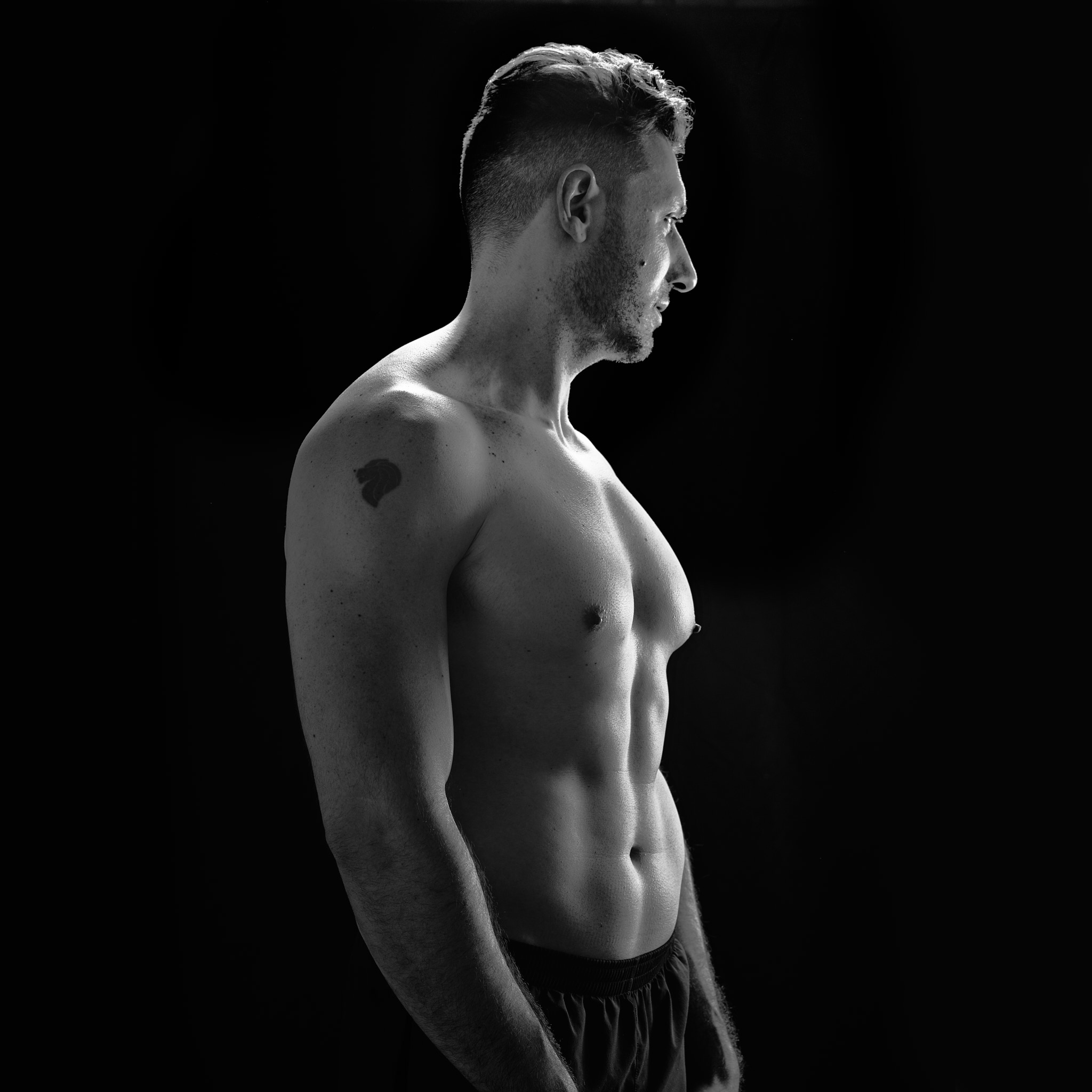
Author, Master Fitness Trainer, Motivational Speaker, and CEU Provider
Shaun Zetlin is a master fitness trainer, author, and motivational speaker with over 22 years of experience in the NYC Metro area. He is a five-time “Best of Brooklyn” Best Personal Trainer winner (2020, 2022–2025) and a CEU provider through the National Academy of Sports Medicine. Shaun is the author of the Push-Up Progression series and Emotional Fitness, and is currently touring with his work. He has been featured in outlets including the Chicago Tribune and has appeared on television, radio, and podcasts, including the Discovery Channel and FX. Shaun has also presented alongside Tony Robbins, Michael Beckwith, and Sai Maa at the Global Consciousness Summit, and was a keynote speaker for Ernst & Young. He now resides in Fairfield County with his wife and two daughters.