Apple Podcasts

 YouTube

 Spotify

 Amazon Music

 iHeartRadio

 TuneIn

 Goodpods

 Podchaser
 RSS Feed
Reinventing Yourself: Autonomy, Competence, and Connection
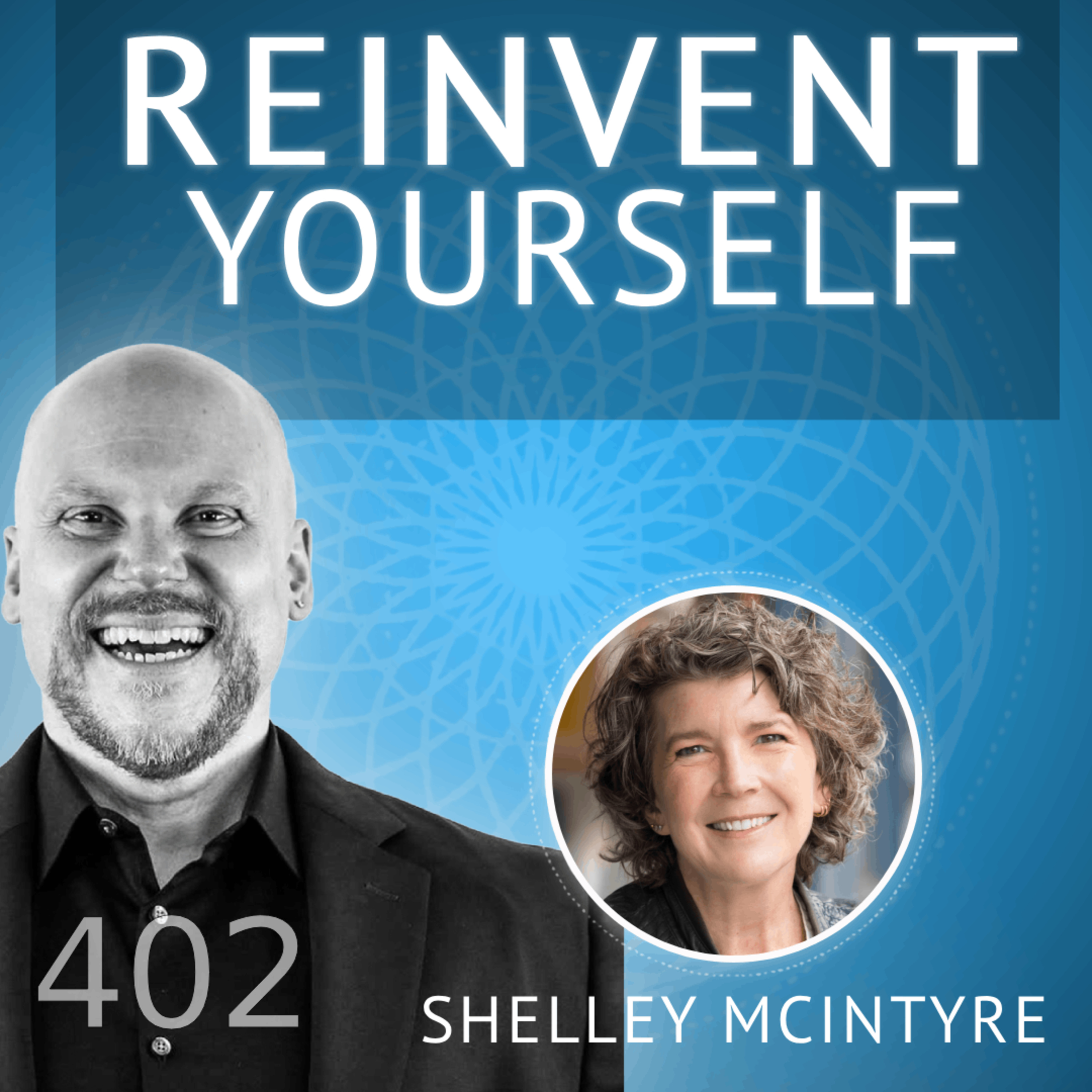
Reinvention, Grief, and Identity After Corporate Life
On Real Men Feel, host Andy Grant talks with reinvention coach Shelley McIntyre about why workplace change triggers resistance rooted in grief and fear of loss, explained through self-determination theory’s three needs: autonomy, competence, and connection. McIntyre distinguishes reinvention coaching from career coaching by focusing on identity questions—when high achievers feel they’ve “masked” themselves with competence, status, and titles, and fear they won’t matter without them.
They discuss the hidden grief of losing a career path, the “invisible contract” of loyalty for security that companies don’t actually honor, and signs it’s time to move on, including not liking who you’ve become, loss of belief in the work, and body sensations like “soul rot.” McIntyre outlines phases of reinvention (identity crisis, rebuilding foundation, experimentation) and emphasizes vulnerability, emotional vocabulary tools like an emotions wheel, and low-stakes steps like talking to people who’ve left corporate life, while reminding men that their value is inherent.
00:00 Three Needs Triangle
00:44 Meet The Guest
01:26 From Strategy To Coaching
02:10 Resistance And Grief
03:31 Self Determination At Work
04:45 Reinvention Not Career Coaching
06:11 When Competence Becomes Mask
07:57 Title Status And Terror
10:19 Layoffs Threaten Autonomy
10:49 Signs It's Time To Leave
12:55 Annihilation Fear And Culture
14:45 Invisible Contract Myth
17:33 Razor Blade Comfort Zone
18:20 Four Phases Of Reinvention
20:02 Crisis Versus Pre-Growth
24:15 Vulnerability Fuels Change
27:16 Emotion Wheel And Vocabulary
29:01 Low Stakes First Steps
30:42 Where To Find Shelley
31:11 Inherent Value Closing
31:55 Final Takeaways And Invite
Connect with Shelley
Shelley McIntyre — https://burnthemapcoaching.com/
Burn The Map Podcast — https://burnthemapcoaching.com/podcast/
LinkedIn — https://www.linkedin.com/in/shelley-mcintyre/
Connect with Andy:
Join other like-minded men in the
Authentic AF Community | https://www.realmenfeel.org/group
Instagram | @realmenfeelshow & @theandygrant
Andy Grant | https://theandygrant.com for coaching, healing, and book info!
Real Men Feel | http://realmenfeel.org
YouTube | https://youtube.com/realmenfeel
#RealMenFeel ep 402
0:00 Here's where I love turning to something called self determination theory. It's like, imagine just a triangle and it is the three pillars of what we really need to feel content in our lives. And that is autonomy, competence, and connection. We always need that in any part of our lives. So let's say you've got some big change that's coming in at work. You're going to be on a new team. There go your connections, your relationships, you have to do slightly different job. There goes your competence and you're going to be reporting to a new boss. There goes your autonomy.
0:44 Hello and welcome to REAL Men Feel. I'm your host, Andy Grant. Today's guest is Shelley McIntyre. Shelley is a reinvention coach with a focus on corporate professionals in their 40s and 50s who have outgrown their roles and are trying to figure out what comes next. She helps people answer who am I without blowing up everything they work for in the process. Today we're talking about why competence can become a mask, self determination theory, the hidden grief of losing a career path. And while vulnerability and honesty may be the fuel for meaningful change, let's do it. Hello Shelly, and welcome to REAL Men Feel. Thank you for having me. It's my pleasure.
1:26 So what made you go from decades in corporate strategy and high tech into coaching? What I noticed over time in corporate strategy is that, you know, I would work for these firms where we would spend a really long time creating this beautiful strategy for clients and we would work with their executive teams. And then when we went to roll it out to the people who had to implement that strategy, they were like, no, thank you. And there was so much resistance that I didn't really understand that I wanted to dig into essentially the nature of resistance itself.
2:10 And what I started discovering is that below the resistance to change was a lot of grief. People were really just scared of losing something familiar. They were scared of losing relationships that they had built. They were scared of losing the competencies that they had created over a long period of time. And it made them very averse to change without really understanding why. So if for me it was like, this is the nut, this is the thing that we have to figure out, or none of these changes that people are introducing are going to work, no matter how well researched they are or no matter how well intended they are that they would fix a million problems if we didn't address the underlying fears of loss.
3:04 Below, new ideas. We're cooked. Fear of loss in the workplace. I, you know, I get it with certainly with layoffs or fear or restructuring all that, but not just around here comes some changes. What are are their most specific losses that it was? I mean, you mentioned relationships. Is it status? Is it, you know, how people are tied to the role and afraid of changing anything about it? Yeah, here. Here's where I love turning to something called self determination theory, which is a super simple theory. It's like imagine just a triangle. And it is the three pillars of what we really need to feel content in our lives, and that is autonomy, competence and connection.
3:58 So we always need that in any part of our lives. So let's say you've got some big change that's coming in at work. You're going to be on a new team. There go your connections, your relationships, You have to do slightly different job. There goes your competence. And you're going to be reporting to a new boss. There goes your autonomy. So if we are faced with a threat in any one of those 3 pillars, we're going to push back if we don't have a sound replacement strategy for that thing. So a lot of the fears that people have about any change can usually be tied back to one of those three things.
4:44 Interesting, and you make it clear that what you do with people is not career coaching but reinvention coaching. Can you explain the difference? Yeah, career coaching, I think is super important and valid, especially if people are like, I need to get a new job. I have to figure out how to present myself well. I need to maybe update the language that people in the market are using today to describe their abilities. Fantastic. There are a lot of people who do that. People tend to come to me and say I don't like who I've become. I don't remember what I like anymore. I want to keep working, but not in this corporate environment. I don't know what the world looks like on the outside of it. Am I good?
5:32 They have these deeper questions that really go to the root of identity. So we do some excavation. In my work, it goes a little deeper that a lot deeper than career coaching so that we find like, what is the juice that's under there that may have been dampened down by like years of corporate flogging that has sapped you of this beautiful personality and these great interests that maybe you've parked in order to adapt to this corporate environment. And is there most common reason or reasons that like especially high achievers just merge their own identity with the the output the competence? Yeah, because that's how they've been incentivized for years. I mean, they've been rewarded for dulling their, you know, dulling their weirdness.
6:31 They've been rewarded for getting mean and scrabbling up the corporate ladder. And if you had told them ten years ago like this is what you're going to be like in another 10 years, they probably would have blanched a little. And I think there's usually something that happens. There's they maybe they see like, I don't know, some terrible news story or they turn 50 or something happens with their kid that is like a wake up call. And they go, you know what? I my soul, I'm feeling soul rot. I'm feeling like I'm not in this anymore.
7:11 I can't pretend to like what I'm doing. And the mask is starting to come off. And when the mask drops, like it's hard to put it back on when when you feel like, oh, I've turned a corner here. I see this system for what it is. I can't Unsee it and I don't have any ideas yet for what might need what might be next. When a man comes to you and says I'm I'm still good at what I do, but I just don't feel alive in it anymore. Yeah, is it is it doesn't seem like it's grief underneath it at that point.
7:53 Is it is it more fear or, or is it grief? Yeah, we don't. We don't use the G word a lot and I feel like we should because, because really especially like high achieving men. And I work with a lot of high achieving men. They, they get so much of their self worth from their status and their title. They're in a culture where people are like, whoa, you're AVP. Hey, you must be super important. I don't understand your job at all. But it sounds real fancy and they get to go, Yep, I'm real fancy even though they're feeling like all I want to do is play my guitar and play Legos and I don't want to be here anymore. Right?
8:38 They they have they tend to buy into the external perception of their value. So when other people say you are fancy and important, some little part inside them starts believing that. And then when they are faced with this idea of you will of stepping away from the affiliation with that title or with that company, that's when Terrors sets in because how are they going to introduce themselves? Are they just going to say, I'm Dirk and I like riding my mountain bike like that can be really scary. And if we dig under, OK, what's scary about that? Well, people won't know that I'm good at stuff. OK, great.
9:28 What's the worst thing about that? Well, then I'm just going to be like any random person. OK, what's the worst thing about that? Like, well, that I just don't matter. Like, OK, now we're getting somewhere. So we go very quickly from I don't have that title to hang onto anymore to it doesn't matter if I'm in the world. So that's going to be why layoffs or even a fear of layoffs or restructuring talk, it can feel like a personal assault, not just a business decision, because it's all rooted in, Yeah. So it's all rooted in how we're rewarded, how we're recognize what we and the narrow box we perhaps put ourselves into for, for our identity.
10:18 That's right. And if we go back to that self determination theory, if some, if you have the threat of a layoff, and I've talked to so many people who are like, it might be today, it might be in a month. I'm not in control of this. That's that autonomy piece where you are so accustomed to being in charge and then you have this like hand of God that's going to come down and make a decision for you that's going to affect your entire life. That is deeply scary thing. What are some of the signs that someone isn't just in a a rough patch at work, but they're really doing something that they'd really be best served by moving on to something else? Yeah, I think there there's a couple, one that you don't like yourself anymore, Like they're you're observing your own behaviors, maybe at work, maybe with your family, because it's easy to bring this stuff home with you where you're like, you know what, I think I'm getting mean and I don't want to be mean.
11:22 Or you go to work and you deeply no longer believe in what you're doing. Like I've had clients who say I can't stomach the idea of what my company does to make money. And I think paying attention to where these feelings land in your body is great. People will say, like, I've soul rot, I feel it in my stomach. And if it's becoming like an identifiable body sensation, that is such valuable information. A lot of people have trouble identifying really precise feelings.
12:05 It's a very normal thing, but they can sometimes access sensations and the sensations are really great indicators of what you're actually feeling. If you're saying like I feel, I feel it in my stomach, well, you might be feeling disgusted, you might be feeling resentful. Like if you can get specific about how you feel going to work each day and name it aloud, then you've got something to work with. They mentioned anger showing up as a sign to perhaps that you know this isn't where you should be anymore. Or you've. I don't want to say I don't wait. Wow.
12:47 So here what comes my mind. I was going to say you've outlived your usefulness, which isn't true, but is that really the fear? Yeah, yes. So this is like essentially the fear of annihilation, right? I'm not useful anymore. Is a deeply scary idea, but it's not true. It's never true. This is some, this is somebody else's voice that is coming up and squawking at you from your shoulder. So maybe you feel ineffective in the corporate system that you're part of, but that's an issue with the system, not with you, never with you. And it really feels like if it was ever true, it was generations ago that you got a job, you worked there till you retired or died.
13:36 And so that's no longer the world we live in and haven't for some time. But is that still, you know, this deep seated ancestral attachment that that makes every restructuring or job loss so scary? Of course, because it's probable that dad did and it's hard to shake. Like you probably grew up and you had a parent who said just we're going to get, we're going to get a great job. You're going to stay there for 40 years. My dad worked at IBM for over 40 years. And so we had, we came from this culture and this generation who is trying to teach us you, we can't easily shake that, right? It's we can look at the Gen.
14:21 Z folks out there who are in the workspace and they're like, maybe I'll give a job two years, but if I don't get these promotions, I'm leaving. Or if I feel like going to Tibet, I'm leaving. And our minds are kind of blown. And we wish we could be like that, but we can't just like hop away from our culture, hop away from our training. It's hard. I've heard you talk about invisible contracts at work, and can you explain what what that is? Yeah. So, and, and we inherited this idea from the previous generation, from the boomers and the older folks. The contract is I'm going to be super loyal to this company.
15:04 I'm going to give it my all. I'm going to work on the weekends. And in return, this company will reward me with safety and stability and advancement and pay at some companies that works great for quite a long time. Like, I have friends who work at Microsoft for over 25 years, and they could just hop around and they were rewarded for their loyalty and their tenure. That contract actually never existed because the company does what's in the company's best interest. So if at some point they go, you know what, we're going to actually abolish this team and we're going to reorganize this team because I think that's going to increase the shareholder price and that's going to make the shareholders happy.
15:53 It's going to make our board happy. So let's just press a couple buttons. And these 300 people are laid off and these 400 people are restructured. OK, great job. And meanwhile, the people who are affected are like, wait, wait, wait, wait, wait. I thought we had a contract and the company's like contract. Nope, no, no, we kept you on at the pleasure of the company. That was always the contract. So it can be a rude awakening for people to realize that this contract was only in their imagination and only they were upholding it. So is that similar to being on the emotional payroll? Because to me, it's, it was always important that I be on that payroll.
16:40 So I cared and kept showing up. But there also becomes a point where it's a detriment. Yeah, that's right. And it's not to denigrate the idea of the contract or the idea of being on the payroll, because we also benefit from that. We get a sense of community. We get to feel like we're improving our skills. We get to feel like we're working toward a higher purpose with other people. Those are all super important things that we that we can't and we shouldn't easily let go of. But I think when we've get emotionally hooked into that system and into the idea of the contract, the stakes become very high and it makes it so that we don't easily walk away from something that's bad for us.
17:34 So is it sort of like the comfort zone? Even though I know this position is no longer good for me, I'm used to it, so I'm going to stay here until I'm almost forced out. Yeah, and, and comfort. Comfort is like a wolf in sheep's clothing in a, in a way, it's a familiarity zone. Like I, I like to think of it as like I've got this cloak and the cloak protects me and I'm going to wear the cloak everyday. The cloak is made of razor blades. However I am, I'm used to the feeling now. The blood doesn't bother me anymore. So I'm just going to keep putting this razor blade cloak on and we're going to call it comfort. It's really familiarity.
18:20 I believe you. You talk of four phases to reinvention. So yeah. What are they, and is anyone more difficult than the others? Sure. Yeah, Identity crisis usually is like the first one of who am I? Why? I thought I was going to be a, you know, veterinarian. And now here I am as a business analyst and I don't recognize myself anymore. So the first is just like, how did I get here? And and then it's more like, OK, we have to build this new foundation of remembering who we are and practising a new, which could be an old way of being in the world to reconnect what we love.
19:12 And then we've got to like explore some possibilities. We have to go out and test like, oh, do I like pickleball? I don't know. Do I like playing the ukulele? I don't know, do I like, like, what do I like? And that can be a scary thing for people to do because they've spent a really long time just getting up and going to work and working 10 hours a day and then maybe dealing with kids stuff on the weekend. And they've had, they have no hobbies, they've had no time for themselves. And even carving out that time for that kind of experimentation takes a lot of effort and dedication. But it's the only way out because we have to get, we have to get information in our bodies to know whether it's a good Ave.
20:00 to pursue. Was that why so many men have to hit some sort of crisis in order to even consider making changes in not not just work, but in in their overall life? Yeah, I think it's while it's like post traumatic growth is clarifying and you can point to something like you have a story to tell. This thing happened or I turned 50 or my wife got a breast cancer diagnosis. Like there's some major precipitating event that that becomes your narrative that is untouchable by others.
20:44 So if somebody says this thing happened and as a result I changed my job or changed my life, other people will go, oh dude, that totally makes sense. It's like us. It's like a protection, like a protection from critique from the outside. However, pre traumatic growth is more interesting. If you say I see where I'm headed here, I see that there could be a heart attack in my future, I see that I'm at risk for stroke. I am pre diabetic. I don't want to experience that trauma. So how can I grow?
21:30 How can I address this identity crisis? How can I do some, you know, foundation building? How can I start some experimentation now while I'm still employed so that I can stave off this crisis and have something that I am drawn to rather than pushed to? Because being drawn to something new, it's so much more powerful and joyful than being pushed. You see a difference between men and women and their ability to see the opportunity of pre traumatic growth. That's a good question.
22:15 I see a difference in opportunity to act on it. A lot of men have the luxury of being able to explore and dabble because they tend to not have as many caretaking responsibilities. It can be a great thing for men to go all right, I have this window of calm in my life where I hate my job. I need to get out of there. Things are kind of handled at home. So I do have the bandwidth to take on a new hobby or to do a little exploring. So I I do tend to see that they have some more opportunities with their time than women do.
23:05 Interesting because in in my lived experience and about 90% of the men that I ever encounter, it's been a theme this this whole year on the show. Like why do men, mostly so many men have to hit rock bottom before they will make a change or or even just ask for support or help? But you but you simply you, you see it differently. You see, maybe it's the kind of people that are coming to you. There they are. They do see, you know, the the train headed their way and they're willing to ask, like, what else can I do instead of get hit by it? Yeah, I mean, that's not the majority of people. I think I I do agree with you that a crisis is just, it's just permission to move is a crisis.
23:49 But you always could give yourself that permission at any moment. It's just that you are in this culture that tells you that you can't, that tells you that the only way, the only valid reason to make a dramatic change is the crisis. But that was always untrue. You could just do it when you wanted to. In the show, I talk a lot about the power, the power of vulnerability and authenticity. Still, so many men think that being vulnerable, especially high achieving men in the workplace, think that will make them seem weak. They'll get less respect. What do you see as the real fuel that that's needed for reinvention?
24:37 Well, it's such a funny thing that keeps getting perpetuated about vulnerability and weakness when it's actually the bravest possible thing. Like, Can you imagine, you know, a man, any man that can say, I'm feeling really scared about this and I'm not sure how this is going to go. I've got to do some experimenting. I'm worried about how I'm going to be perceived like that takes a lot of balls to be able to say that out loud. Those are the bravest people who can say that and feel secure in who they are and and want to build something better for themselves. I think.
25:29 I think a lot of times when when people react so like let's say somebody is getting super emotional and they're sharing their feelings and you've got somebody else going. Oh my God, who is this Sissy? What that person with that critiquing person could be feeling many layers below. They have what they have access to is why don't I get to express my feelings in this way? I don't want you to be able to do this because it means that I would have to feel my feelings, and my feelings are really scary and I don't know how to deal with them. So it's going to be a lot easier and supported by my culture if I call you out for being weak.
26:16 Yeah, that's one of the I've had the pleasure to be in lots of different men's groups and that's where the competitive competitiveness of men can really benefit because it's just like one person to to lead with vulnerability, to be open, to get emotional. And then other guys like that's what we're doing here. OK, I could do this, but out of that, yeah, it it is often the opposite and there's judgement and and shutting down. And what a beautiful thing if you're in a group with other men or if you're in a group at work, to be the type of leader who can normalize that kind of emotional way of being in the world. You get to set an example for other people that it's OK to feel your feelings.
27:00 Yeah, and it was stressed. That doesn't mean that we are suggesting every CEO should open every meeting. Crying like men feel their feelings does not mean you're walking around bawling all the time. It's just open and honest with whatever's going on. You know, I in my work, I use this emotions wheel a lot, which is just lists, you know, dozens and dozens and dozens of emotion words. And it's such a handy tool to hand to somebody and say, how are you really feeling where they get to go? You know, 2 layers deeper than mad, sad, and glad, right? Because mad, sad and glad are the ones people have access to. But like, feelings are neutral.
27:46 You know, people say there are bad emotions and good emotions. Nope. They are all valid experiences of being a person in the world. But if we can get specific and name them, we'll see that there's like, I don't know, 50 words for happy and there's 50 words for like, I'm not sure about that. So if we increase our emotional vocabulary, I think we'll be able to see that feeling or being emotional is such a wide panoply of different things. And Once Upon a time, I was a struggling screenwriter, and I discovered the Emotion wheel. Just to give me more, you know, to act as a, a thesaurus of, of emotions and character traits.
28:36 And, and now, yeah, I, I, that's one of the first things I, I share with a new client. I, I send them a copy in the mail or hand it to him in, in person. But like here, this will help you put what's going on inside of you. Give it, give it a word like, 'cause, yeah, so many guys hungry, horny, happy, you know, that's it. Or angry. And you know, Cappy is rare for a man to be allowed to feel or ever encourage to feel that. So yeah. So you you've mentioned such things as exploring, you know, pickleball and your hobbies. What are some low stakes way for a man who's questioning and asking, well, who am I? And is this, you know, have I lived? My is, is my usefulness, is my identity, all the different fears, the grief, It's, it's all bubbling.
29:23 What are some low stakes first steps that someone can take? They probably know somebody who has gotten out. Maybe they were, maybe it was a colleague who was laid off. Maybe it was somebody who left to start a business or buy a franchise or whatever. They, whatever it is, just start calling people on the outside and say, hey man, can I buy you a beer and talk about and just hear about their journey. You know, I remember the first time I left a long term job and I was driving around during the day and I was going to an appointment or something and I'm and I had been accustomed to just being trapped in an office from 8:00 to 6:00 every day for years and years. And I'm driving around.
30:10 I'm like seeing all these other people on the street like, who are you people? Where did what, Why aren't you at work? What are you doing? And it was such an eye opener to start talking to people and realizing there are lots of ways to live. There are lots of ways to earn money and everybody's been through some kind of transition that you can get some knowledge and wisdom from. So a super low stakes way is just start talking to people who aren't in your corporate environment anymore. And Chilli, what's the best way for people to connect with you and learn more about all that you offer? They can check out my podcast, Burn the Map, or they can look at my website, burnthemapcoaching.com. Tell me a bit about your podcast. Insights for about 7 minutes at a time. They're super short episodes where it's just me talking about one small topic related to lots of what we've been talking about here.
31:12 And finally, Shelley, what is one thing that you wish more men knew? I wish more men knew that their value is inherent because they are a person on this earth. Beautiful, awesome. Couldn't agree more with that. And you know, I really love so much of the reframing work that that's that that's the best label I can think of right now that, you know, no matter how much you've achieved, you're not just your resume and there's a, there's a whole bright world that's available to you. Absolutely. Thanks again, Shelly, for this powerful conversation.
31:53 So many men have been taught to measure themselves by productivity, performance, and how well they can hold it all together. But when a job changes, a title disappears, or life starts asking deeper questions, that identity can crack. Reinvention is not failure. Honesty is not weakness. And there could be real power in asking what comes next. If this conversation hit home for you and you're looking for a place to dig deeper, join us in the authentic AF community, visit realmanfield.org group, and until next time, be good to yourself.

Reinvention Partner / Podcaster
Shelley McIntyre is a reinvention partner for GenX professionals who are ready to leave corporate life and build something of their own.
She’s a certified coach with a background in strategy and tech, and the creator of Burn the Map, a podcast and coaching practice that helps midlife professionals drop outdated identities and design a work life that actually fits.
Shelley brings a rare mix of clarity and creativity to the messy, exhilarating process of starting over. Whether you’re planning your exit or already out the door, she’s here to help you stop performing roles you’ve outgrown and start building something that’s truly yours.